
Urban Driving vs. Highway Driving: How the Rules of Attention Change
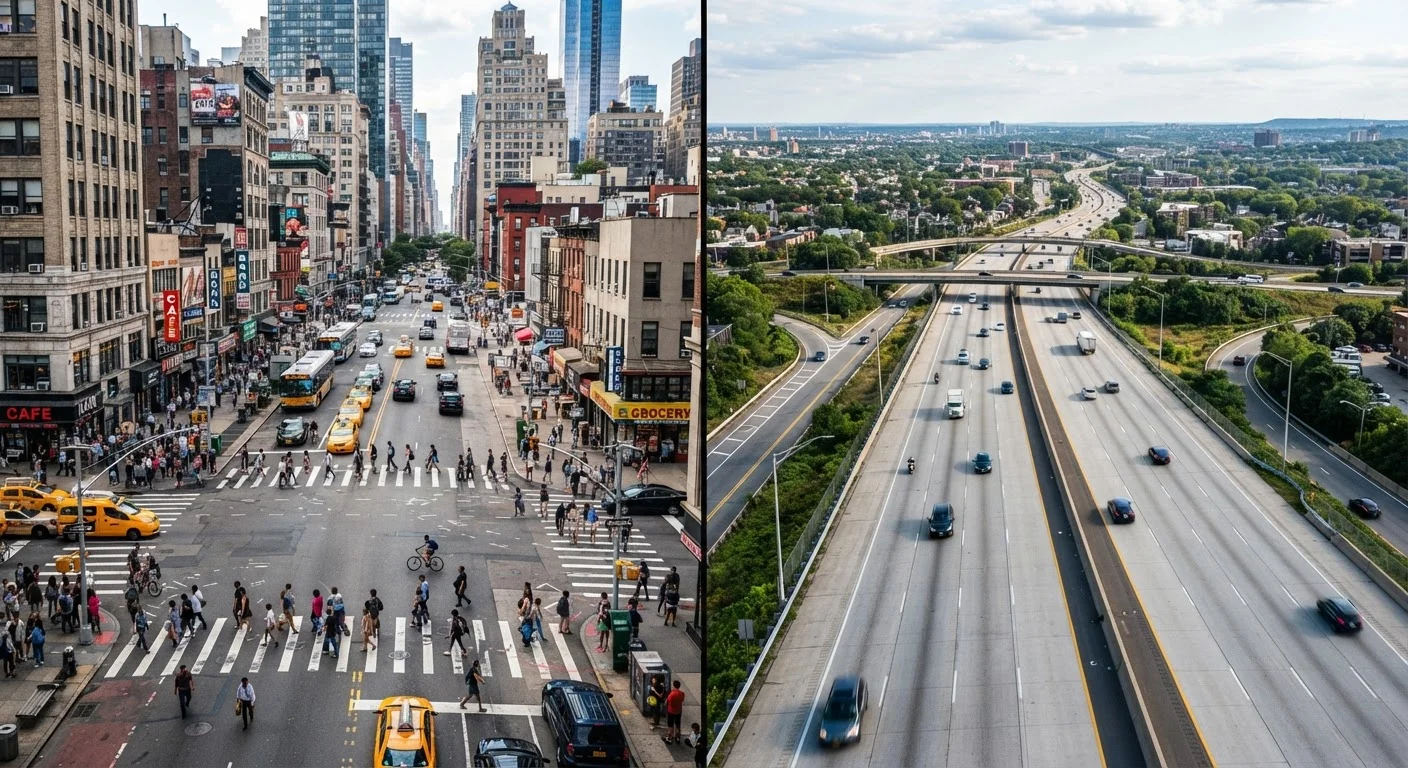
Photo credit: InfoHorizon.net | Access To Informative Content
In this article
City streets and open highways demand very different mental models. See how hazard types, speed management, and scanning techniques shift between environments.
Key Takeaways
- Urban driving demands rapid, frequent attention shifts across many simultaneous hazard types.
- Highway driving requires sustained focus and early hazard detection at much greater distances.
- Speed management strategies differ fundamentally - city driving is reactive, highway driving is anticipatory.
- Scanning techniques must adapt: city drivers scan intersections constantly, highway drivers scan far ahead and monitor mirrors.
- Monotony is a unique highway hazard; complacency can be just as dangerous as distraction in the city.
- Both environments reward defensive driving habits, but the specific skills needed in each are distinct.
The Core Difference: Hazard Frequency vs. Hazard Severity
Urban and highway driving are not simply fast versus slow versions of the same task. They represent fundamentally different cognitive environments. In the city, hazards arrive frequently and from many directions - a cyclist filtering through stopped traffic, a pedestrian stepping between parked cars, a double-parked delivery truck forcing a sudden lane change. Speed is low, but the mental workload is intense and nearly continuous.
On the highway, hazards arrive less often but carry far greater consequences when they do. A tire blowout at 70 mph, a vehicle stopped in a travel lane, or a sudden merge from a shorter-than-expected on-ramp leaves little margin for error. The challenge shifts from managing volume to managing severity - and that distinction should shape how every driver allocates their attention.
Understanding this difference is the starting point for defensive driving in either environment. The goal is always to see hazards early enough to act calmly rather than react desperately.
Scanning Techniques: Where and How Your Eyes Should Move
The mechanics of where a driver looks - and how often - must change between environments.
In Urban Settings
City drivers need a wide, close-range scan pattern. Effective urban scanning involves:
- Checking intersections well before reaching them - looking left, center, and right for crossing traffic and pedestrians.
- Monitoring sidewalks for people who may step into the road unexpectedly.
- Watching for the gap between parked vehicles, where cyclists or children may emerge.
- Glancing frequently at mirrors to track vehicles approaching from behind during stops.
On the Highway
Highway scanning is longer-range and more rhythmic. Key habits include:
- Keeping your eyes focused 12-15 seconds ahead - roughly a quarter-mile at highway speed - to detect slowdowns or debris early.
- Checking mirrors every 5-8 seconds to stay aware of traffic building behind you.
- Monitoring your lane position continuously, since small drifts at speed have larger consequences.
- Being alert at on-ramps and exit zones, where traffic speed differentials create merge conflicts.
Highway drivers should also be aware of how blind spots form - particularly critical before any lane change at speed.
| Criterion | Urban Driving | Highway Driving |
|---|---|---|
| Primary hazard type | Frequent, close-range, multi-directional | Infrequent but high-consequence |
| Typical speed range | 15-45 mph | 55-80 mph |
| Scanning focus | Wide, close-range; intersections & pedestrians | Long-range; 12-15 seconds ahead |
| Recommended following distance | 2+ seconds; adjust for stops | 3-4+ seconds; increases with speed |
| Key cognitive hazard | Distraction from dense stimuli | Monotony and highway hypnosis |
| Speed management style | Reactive - frequent acceleration/braking | Anticipatory - early detection, gradual adjustment |
| Merge/intersection risk | High - complex right-of-way situations | High - speed differentials on ramps |
Speed Management and Following Distance
Posted speed limits are only part of the equation. How drivers manage speed within those limits differs sharply by environment.
In urban driving, speed management is largely reactive: traffic signals, crosswalks, and sudden stops require frequent, controlled deceleration. The recommended following distance of at least two seconds may need to be extended when road surfaces are wet or traffic is unpredictable. Weather conditions compound this - slick city streets with frequent stopping are particularly unforgiving.
Highway speed management is more anticipatory. Because stopping distances at 65-75 mph are measured in hundreds of feet, drivers must increase following distance significantly - a three-to-four-second gap is a reasonable baseline in clear conditions, with more space needed in rain, fog, or heavy truck traffic. Driving too close to commercial vehicles at highway speed is one of the more dangerous habits common on American interstates. Construction zones add another layer of risk; navigating work zones safely requires dropping speed well before reduced-speed signs, not at them.
~40%
Urban share of U.S. traffic fatalities
According to NHTSA data, urban roads account for a substantial share of fatal crashes despite lower posted speeds, reflecting the frequency of pedestrian and intersection conflicts.
3-4 sec
Recommended highway following distance
Traffic safety guidelines broadly recommend at least a three-to-four-second gap at highway speeds, increasing further in adverse weather or when following large trucks.
~88 ft
Distance covered in 2 seconds at 30 mph
A two-second distraction at typical city speed covers nearly 88 feet of road - sufficient to miss a pedestrian stepping into a crosswalk or a vehicle stopping ahead.
The Hidden Hazards: Distraction in the City, Monotony on the Highway
Each environment has a characteristic attentional trap that drivers tend to underestimate.
Urban driving is saturated with stimulation - storefronts, pedestrians, navigation prompts, other drivers making unexpected moves. That density makes distraction particularly costly. Even a glance away from the road for two seconds at 30 mph covers nearly 90 feet of ground. The full landscape of distraction extends well beyond phone use; common overlooked distractions include eating, adjusting in-vehicle controls, and conversations that absorb cognitive bandwidth.
On the highway, the hazard runs in the opposite direction: monotony. Long stretches of uniform road, consistent speed, and minimal visual change can induce a form of highway hypnosis - a state of reduced alertness where drivers cover significant distance with diminished conscious awareness. Regular breaks (roughly every two hours on long trips), adequate sleep before driving, and keeping the vehicle interior cool and well-ventilated are practical strategies. Aggressive driving behavior also surfaces disproportionately on highways, often triggered by perceived slowdowns or lane blocking - understanding what triggers road rage can help drivers stay measured rather than reactive.
Transitioning Between Environments
One of the least-discussed attentional challenges occurs at the boundary between environments - for example, exiting a highway onto city streets. After sustained highway speed, 35 mph can feel deceptively slow, leading drivers to carry more speed into urban conditions than they realize. Allow a few minutes of conscious adjustment when transitioning, and treat posted speed limits as a ceiling, not a target, until your speed perception recalibrates.
Merging, Intersections, and the Right-of-Way Minefield
Where traffic streams converge, misunderstanding the rules creates risk in both settings.
Urban intersections are among the most statistically hazardous locations on any road network. Four-way stops, uncontrolled intersections, and left-turn conflicts account for a large share of city crashes. Right-of-way rules are more frequently misapplied at complex urban intersections than almost anywhere else - and the low speeds involved can create a false sense of safety, since even low-speed pedestrian collisions carry serious injury risk.
Highway merging presents a different challenge. Drivers entering from an on-ramp must match highway speed before the merge point - slowing or stopping on a ramp is a known hazard. Drivers already on the highway should facilitate safe merges by adjusting their speed or position when safely possible. At night, both urban intersections and highway ramps become significantly more difficult to navigate, as depth perception narrows and the timing of other vehicles' movements is harder to judge.
In both environments, the most effective tool remains consistent: look further ahead, build in more time, and treat unexpected behavior from other drivers as the rule rather than the exception.

Author
Cars Editorial Team
Cars Editorial Team is the collective byline for our editorial team and contributor network. Articles published under this byline or an editorial pen name are researched, written, and reviewed according to our editorial standards for clarity, consistency, and independence before publication.
View all articles →