
Closing Costs Explained: What Buyers Pay and Why
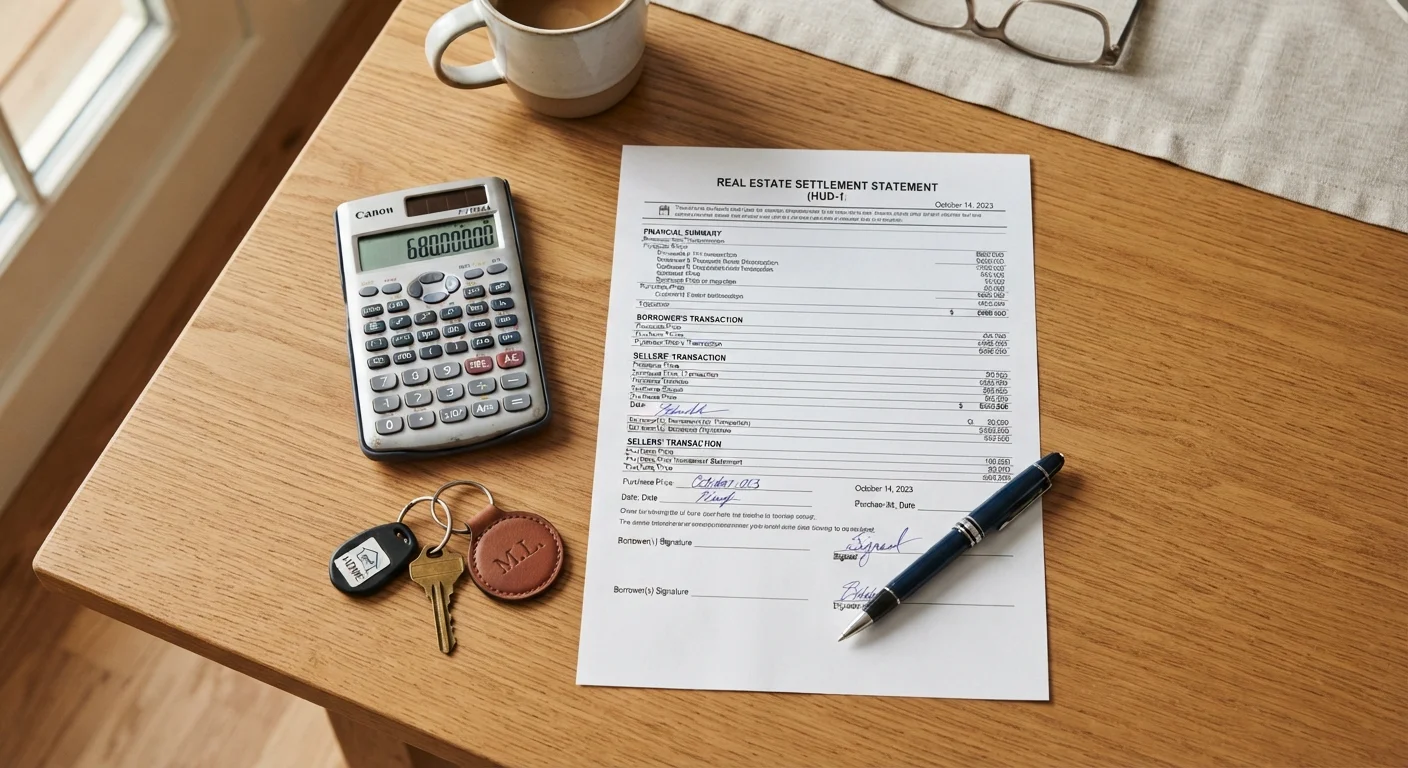
Photo credit: InfoHorizon.net | Access To Informative Content
In this article
Closing costs can add thousands to your purchase. Here's a plain-language guide to every common fee you may see on your closing disclosure.
What Are Closing Costs?
Closing costs are the fees and prepaid expenses you pay on the day you finalize a home purchase — separate from your down payment. For most buyers, they total between 2% and 5% of the loan amount. On a $350,000 home with a conventional loan, that's roughly $7,000–$17,500 due at closing.
You'll see every charge itemized on the Closing Disclosure, a standardized federal form your lender must provide at least three business days before closing. Comparing it carefully against your earlier Loan Estimate is one of the most important steps in the homebuying process — and one that many first-time buyers rush. See our stage-by-stage homebuying guide for context on where closing fits into the full timeline.
| Typical Closing Cost Range | 2%–5% of loan amount (Consumer Financial Protection Bureau (CFPB)) |
| Required Disclosure Form | Closing Disclosure (CD) (CFPB TRID rules) |
| Minimum Notice Before Closing | 3 business days (Federal TRID regulation) |
| Fees Buyers Can Shop For | Title, settlement, pest inspection, surveyor (CFPB Loan Estimate guidelines) |
| Seller Concession Limit (Conventional) | 3%–9% of purchase price (varies by LTV) (Fannie Mae guidelines) |
| Prepaid Interest Timing | From closing date to month-end (Standard mortgage practice) |
The Most Common Fees — Defined
Closing costs fall into two broad buckets: lender fees (charged by your mortgage provider) and third-party fees (charged by outside service providers). Here's what you're likely to encounter:
Loan Origination Fee
A charge from your lender for processing the mortgage application and underwriting the loan. It's often expressed as a percentage of the loan amount (e.g., 0.5–1%) and is one of the larger lender fees on the Closing Disclosure.
Title Insurance
A one-time policy that protects against ownership disputes or defects in the property's title history. Lenders require a lender's policy; buyers may also purchase an owner's policy for their own protection.
Escrow
A neutral third-party account that holds funds during the transaction and, after closing, collects monthly contributions from the homeowner to pay property taxes and insurance when they come due.
Appraisal Fee
Payment for an independent, licensed appraiser to assess the property's market value. Lenders require an appraisal to confirm the home is worth at least the loan amount.
Recording Fee
A government charge to officially record the new deed and mortgage lien in the county land records. Amounts vary by jurisdiction but are typically modest.
Discount Points
Optional upfront payments made to the lender to permanently reduce your mortgage interest rate. One point equals 1% of the loan amount and typically lowers the rate by a small fraction of a percent.
Transfer Tax
A state or local government tax on the transfer of real property from seller to buyer. Rules on who pays — buyer, seller, or both — vary by state and sometimes by county.
Attorney Fee
In states that require a real estate attorney to oversee closings, this covers legal review of documents and representation at settlement. Requirements and costs differ by state.
Some of these fees — particularly lender origination charges and title insurance — can be significant. Buyers are permitted to shop for certain third-party services, such as title companies and settlement agents, which can produce meaningful savings. Your Loan Estimate will flag which services are open to comparison.
Prepaid Items vs. One-Time Fees
Not every line on your Closing Disclosure is a fee in the traditional sense. Prepaid items are costs you pay upfront to fund ongoing obligations — they aren't lost money, but they do require cash at closing.
- Homeowner's insurance premium: Lenders typically require the first year paid in full before funding the loan.
- Prepaid interest: Interest that accrues between your closing date and the end of the month. Closing earlier in the month means more prepaid interest due.
- Escrow setup: An initial deposit into your escrow account for future property tax and insurance payments — usually two to three months' worth.
Understanding the difference between a fee and a prepaid helps buyers avoid the surprise of a larger-than-expected cash-to-close figure. Review our foundational concepts guide if you're still building your understanding of how mortgage payments work.
Loan Estimate vs. Closing Disclosure
Your lender issues a Loan Estimate within three days of receiving your application — use it as a budgeting baseline. The Closing Disclosure arrives at least three days before closing with final, binding figures. Review both side by side: lender fees should match closely, while third-party fees may shift slightly. Flag any unexplained increases immediately, as some changes are limited by federal rules.
Which Costs Can You Negotiate or Reduce?
Closing costs are not entirely fixed. Several strategies can reduce your out-of-pocket burden:
- Negotiate seller concessions: In a buyer-friendly market, sellers may agree to cover a portion of your closing costs. Loan programs cap how much sellers can contribute, but even 1–2% adds up significantly.
- Shop lender fees: Origination charges vary between lenders. Getting multiple Loan Estimates lets you compare total costs — not just the interest rate.
- Shop title and settlement services: Your Loan Estimate will identify which services you can shop for independently.
- Ask about no-closing-cost loans: Some lenders offer options that roll fees into the loan balance or offset them with a slightly higher rate. This can make sense if you plan to sell or refinance within a few years, though it costs more over the full loan term.
Be cautious about waiving financial protections in pursuit of cost savings. Our article on buyer contingencies explains which safeguards are worth protecting even in competitive markets. And if you want to avoid common first-timer mistakes, traps that catch first-time buyers off guard is required reading before you make an offer.
This article is for general informational purposes only and does not constitute financial, legal, or tax advice. Consult a licensed real estate professional, mortgage lender, or financial adviser regarding your specific situation.

Author
Real Estate Editorial Team
Real Estate Editorial Team is the collective byline for our editorial team and contributor network. Articles published under this byline or an editorial pen name are researched, written, and reviewed according to our editorial standards for clarity, consistency, and independence before publication.
View all articles →