
How Blind Spots Form and What Drivers Can Do About Them
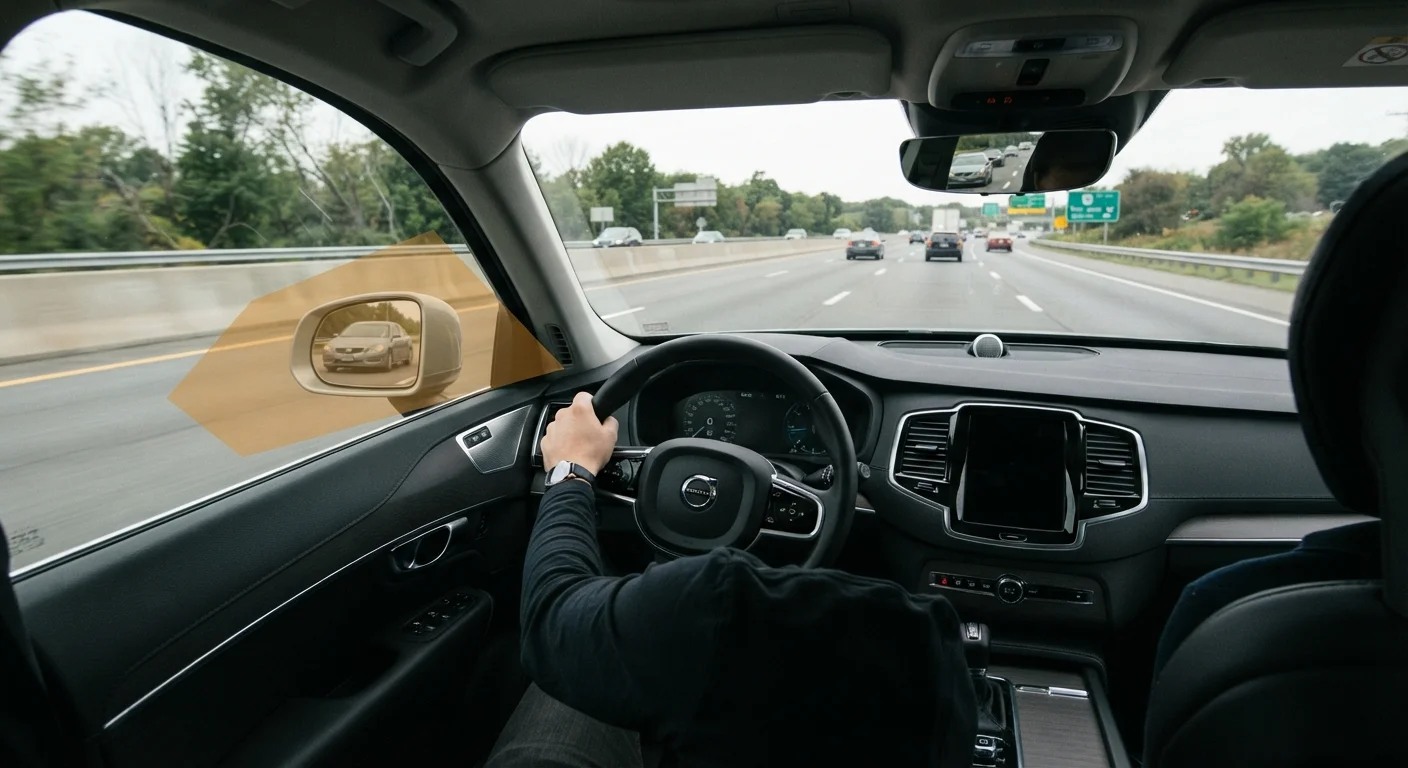
Photo credit: InfoHorizon.net | Access To Informative Content
In this article
Every vehicle has blind spots shaped by its design. Learn where they form, how to adjust mirrors correctly, and when to physically check before changing lanes.
Key Takeaways
- Blind spots are shaped by your vehicle's physical structure, not driver inattention alone.
- Mirrors set correctly reduce blind spots but cannot eliminate them entirely.
- A quick shoulder check before lane changes remains the most reliable blind-spot defense.
- Larger vehicles - SUVs, trucks, vans - have wider blind zones than sedans.
- Blind spot monitoring systems assist drivers but should not replace active checking.
Why Blind Spots Exist in Every Vehicle
No matter how carefully a vehicle is engineered, its own structure creates areas the driver simply cannot see. The A-pillars (the posts that frame the windshield), B-pillars, C-pillars, headrests, and roof all block portions of the driver's field of view. The result is a set of predictable dead zones around every car on the road.
The size and location of blind spots vary by vehicle type. A low-slung sedan has different obstructions than a tall SUV or a pickup truck with a full-size bed. Aftermarket additions - roof racks, cargo carriers, and rear-window decals - can make blind spots even larger. Understanding that these zones are structural, not random, helps drivers predict where to look more carefully.
840,000+
Annual U.S. crashes linked to blind spot zones
According to the National Highway Traffic Safety Administration (NHTSA), hundreds of thousands of lane-change crashes occur annually, with blind spots cited as a primary contributing factor.
~20 ft
Rear blind zone length on an average sedan
NHTSA testing has found that the rear blind zone on a typical passenger car extends roughly 20 feet directly behind the vehicle, relevant when backing out of driveways or parking spaces.
4x
Larger blind zones on pickup trucks vs. sedans
Consumer safety research indicates that full-size pickup trucks can have rear blind zones up to four times larger than those on compact passenger cars.
How to Adjust Mirrors for Maximum Coverage
Most drivers position their side mirrors so they can see the rear quarter panel of their own car - this feels reassuring but actually narrows the field of view into the lanes beside you. A more effective technique involves angling each mirror outward so your own vehicle barely appears in the mirror's inner edge.
Here's the approach: before driving, position your head toward the driver's window and adjust the left mirror until the left side of your car just disappears from view. For the right mirror, shift your head toward the center console and repeat the process. Combined with the rearview mirror, this creates a nearly seamless panoramic view behind the vehicle.
Even with this adjustment, a gap remains near each rear quarter panel. That gap is precisely where a shoulder check - briefly turning your head to look over your shoulder - becomes essential before any lane change.
Check Your Mirror Position Before Every Trip
Mirror alignment shifts over time, especially if multiple drivers use the same vehicle. Make it a habit to verify your side and rearview mirrors are properly positioned as part of your pre-drive routine. It takes under 30 seconds and ensures you start every trip with maximum visibility.
The Shoulder Check: Why No Technology Replaces It
A physical shoulder check takes less than a second, but it covers the one zone that mirrors reliably miss. Before merging or changing lanes, signal first, check your rearview mirror, check the appropriate side mirror, then quickly glance over your shoulder in the direction of travel. That final glance often reveals a motorcycle, bicycle, or compact car that was invisible in the mirrors.
Defensive driving emphasizes anticipating hazards before they escalate - and the shoulder check is one of the simplest habits that embodies this principle. The few seconds it takes to signal, check, and look can prevent a sideswipe collision entirely.
Blind spot monitoring (BSM) systems, now common on newer vehicles, use sensors to alert drivers when another vehicle enters the zone beside them. These systems are genuinely useful but have known limitations: they can struggle with fast-closing vehicles, cyclists riding in certain positions, or sensor interference in heavy rain. Treat BSM as a backup layer, not your first line of defense.
Special Situations That Make Blind Spots Worse
Certain driving environments amplify blind spot risk. On multi-lane highways, vehicles can close distance quickly, meaning someone can enter your blind spot in less than a second at speed. Urban and highway driving demand different attention strategies, and lane changes require proportionally more care at higher speeds.
At night, reduced contrast makes it harder to detect a vehicle in your peripheral vision even when you do glance. Night driving introduces visibility challenges beyond just lower light - depth perception and reaction time both suffer, making accurate shoulder checks even more important.
When driving near large trucks or commercial vehicles, remember that their No-Zones - the areas directly behind, directly in front, and along both sides - are substantially larger than those of a passenger car. If you can't see the truck driver's mirrors, assume they cannot see you, and avoid staying in those positions any longer than necessary.
Including mirror checks in your pre-trip safety routine takes seconds and ensures your mirrors are properly adjusted before you encounter traffic.
Backup Cameras Don't Cover Side Blind Spots
Federal regulations now require backup cameras on all new passenger vehicles sold in the U.S., which addresses the rear blind zone when reversing. However, backup cameras do not help with the lateral blind spots beside the vehicle during forward travel. Mirror adjustment and shoulder checks remain the tools for those zones.
Frequently Asked Questions

Author
Cars Editorial Team
Cars Editorial Team is the collective byline for our editorial team and contributor network. Articles published under this byline or an editorial pen name are researched, written, and reviewed according to our editorial standards for clarity, consistency, and independence before publication.
View all articles →