
Before You Start a New Recipe: A Kitchen Prep Checklist
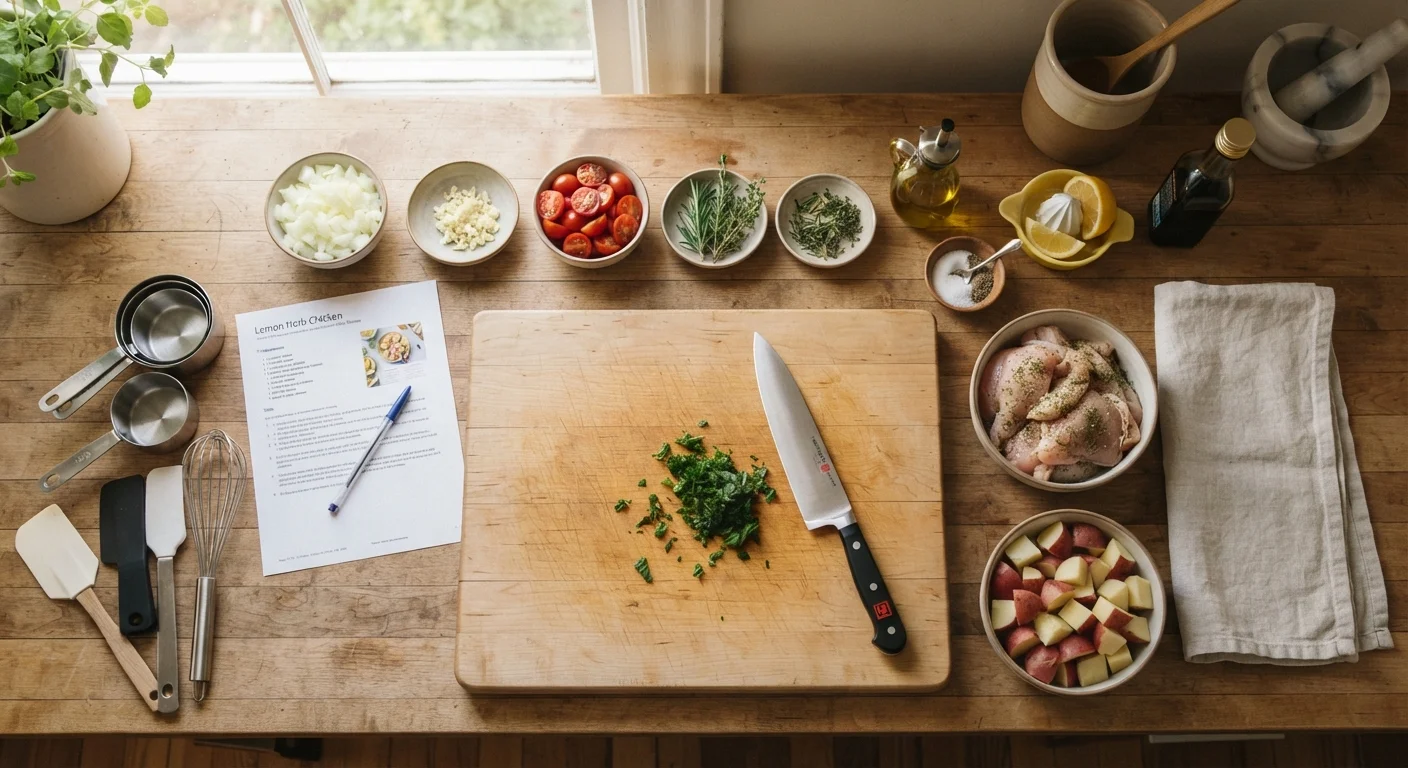
Photo credit: InfoHorizon.net | Access To Informative Content
In this article
Run through this checklist before cooking anything new — equipment, ingredients, timing, and temperature checks that prevent mid-recipe surprises.
Key Takeaways
- Reading a recipe all the way through before touching anything is the single most important prep step.
- Checking equipment and ingredient quantities ahead of time prevents mid-cook surprises.
- Temperature matters before you start — preheat ovens, soften butter, and temper proteins as the recipe requires.
- Mise en place (everything prepped and in place) keeps your workflow calm and consistent.
- Knowing where substitutions are possible gives you a smart exit plan when something is missing.
Why a Pre-Recipe Checklist Matters
Most kitchen mistakes don't happen at the stove — they happen in the five minutes before cooking starts. You're halfway through a sauce when you realize the shallots aren't peeled, or you've started a batter only to discover you're out of baking powder. These aren't skill failures; they're preparation failures.
Professional kitchens solve this with a practice called mise en place — French for "everything in its place." Every ingredient is measured, prepped, and staged before cooking begins. Home cooks can apply the same principle without any culinary training. This checklist gives you a structured way to do exactly that, no matter how complex or simple the recipe.
Run through these steps before you start anything new and you'll cook with more confidence, waste less food, and actually enjoy the process.
Skipping the Read-Through Is the Costliest Shortcut
Many home cooks jump straight to step one without reading the full recipe first. This is how you discover — at step seven — that the dough needed to chill for two hours, or that a component had to be made the day before. A full read-through takes three to five minutes and prevents the most common mid-recipe emergencies.
What You'll Need at Your Station
Before diving into the checklist, gather the basic tools that support organized prep. You don't need a fully stocked professional kitchen — just the right items for the job at hand.
Chef's Knife
Used for the majority of ingredient prep — chopping, slicing, and dicing before cooking starts.
Cutting Board
Provides a stable, sanitary surface for all prep work; use separate boards for raw proteins and produce when possible.
Dry and Liquid Measuring Cups and Spoons
Ensures accurate ingredient quantities, especially critical in baking.
Instant-Read Thermometer
Confirms internal temperatures for proteins and candy/sugar work, removing guesswork from doneness.
Kitchen Timer
Tracks multiple cook times simultaneously so nothing is forgotten on the stove.
Prep Bowls (Ramekins or Small Bowls)
Holds pre-measured ingredients staged and ready to add in sequence — the physical foundation of mise en place.
If your knives feel uncertain in your hands, brushing up on fundamentals pays off immediately. Our guide to knife skills every home cook should know walks through the core techniques that make prep faster and safer.
The Full Kitchen Prep Checklist
Work through these groups in order — each builds on the last. The whole process should take 10 to 20 minutes for most recipes, and it will save you at least that much stress once the heat is on.
Recipe Review
Ingredient Check
Equipment Setup
Temperature and Timing
Active Prep (Mise en Place)
Food Safety Starts at Prep
Keep raw proteins separated from produce throughout your prep process — on the cutting board, in bowls, and in the refrigerator. Wash your hands after handling raw meat, poultry, or seafood before touching anything else. Prep surfaces should be wiped down between tasks when switching between proteins and ready-to-eat foods. These habits aren't optional niceties; they directly reduce the risk of cross-contamination.
Handling Gaps Before You Start
Even a thorough prep pass sometimes turns up a missing ingredient. Don't abandon the recipe — assess what's actually needed. Baking is less forgiving of substitutions than stovetop cooking, but many swaps are reliable. Our baking substitutions reference covers the most common ingredient swaps and explains how each one affects texture and flavor.
If you're finding ingredient gaps before you even start shopping, that's a sign to revisit how you stock your pantry week to week. The weekly grocery shopping checklist is a practical starting point for building a kitchen that supports varied cooking without constant last-minute runs to the store.
Once you've made this checklist a habit, it fits naturally into a broader weekly routine. If you're ready to batch-cook and plan ahead, building a weekly meal prep routine shows you how to extend organized cooking across the whole week without burning out on Sundays.

Author
Food Editorial Team
Food Editorial Team is the collective byline for our editorial team and contributor network. Articles published under this byline or an editorial pen name are researched, written, and reviewed according to our editorial standards for clarity, consistency, and independence before publication.
View all articles →