
Merging, Yielding, and Right-of-Way: The Road Rules Americans Most Often Get Wrong
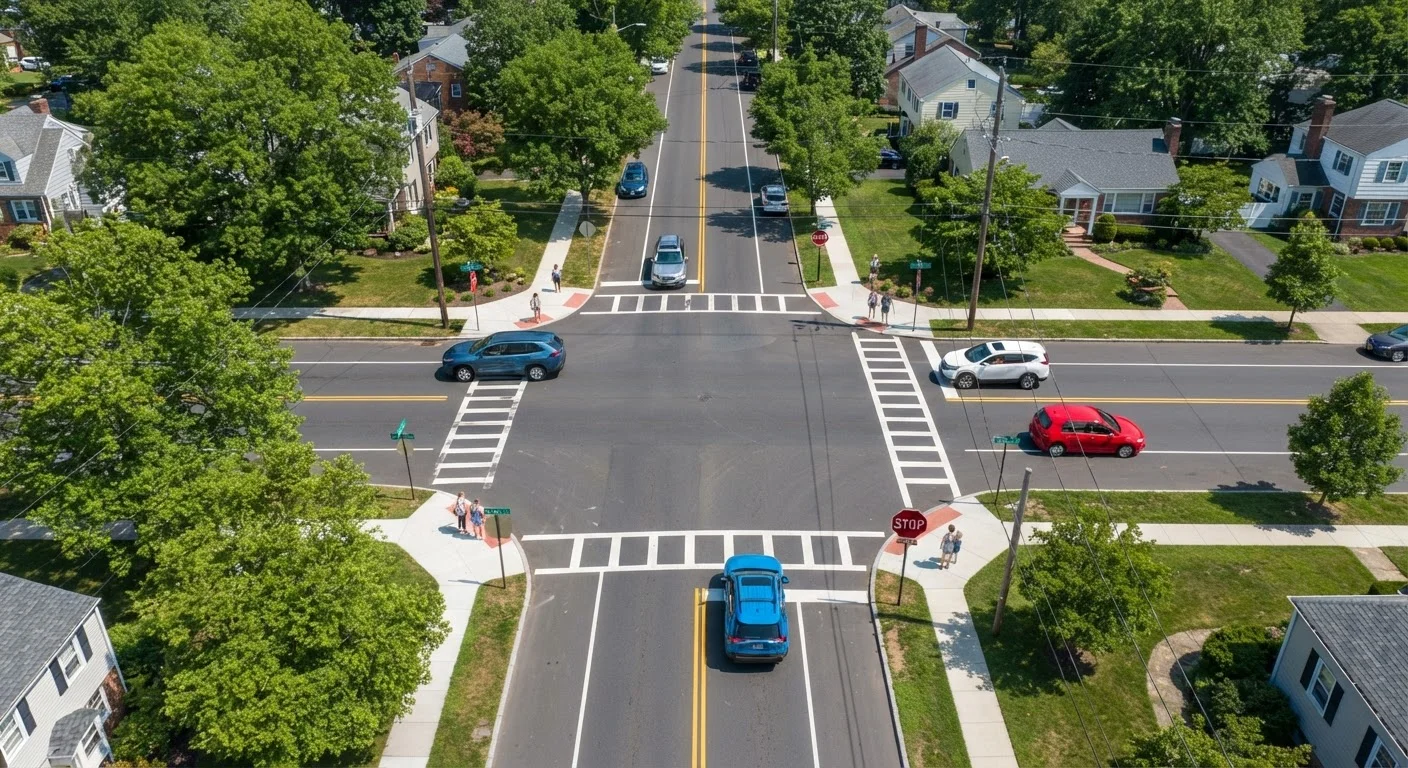
Photo credit: InfoHorizon.net | Access To Informative Content
In this article
Confusion about right-of-way contributes to thousands of crashes yearly. Clarify the rules on merging, four-way stops, and roundabouts.
Key Takeaways
- Merging drivers must yield to traffic already in the lane - not the other way around.
- At a four-way stop, the first vehicle to arrive has the right-of-way; ties go to the driver on the right.
- Roundabout traffic circulates counterclockwise; entering drivers always yield to vehicles already inside.
- Right-of-way is never "taken" - it is granted by other drivers following the rules.
- Misreading these situations contributes to thousands of preventable crashes in the U.S. each year.
Why Right-of-Way Confusion Is a Real Safety Problem
Right-of-way errors are among the most common contributing factors in intersection and highway crashes across the United States. Drivers confidently act on rules they half-remember from a driver's education class taken years - sometimes decades - ago. The result is a daily mix of aggressive merges, stalled four-way stops, and near-misses at roundabouts.
Understanding these rules isn't a formality. It's the foundation of predictable, cooperative traffic flow. When one driver misreads the situation, every other driver around them has to react. See how these dynamics also shift between city and highway environments in our piece on urban versus highway driving.
Myth
Highway drivers are required to move over and let merging vehicles in.
Fact
The merging driver is legally required to yield to traffic already traveling in the lane.
This misconception leads to dangerous forced merges where drivers accelerate into occupied lanes expecting others to yield. While courtesy moves - like shifting lanes or adjusting speed to aid a merge - are encouraged, they are not legally required. The on-ramp driver bears the responsibility to match highway speed and find a safe gap before entering the travel lane.
Myth
At a four-way stop, the driver going straight always has the right-of-way over a turning vehicle.
Fact
Right-of-way at a four-way stop is determined by arrival order first, not by intended direction of travel.
Direction of travel only becomes a tiebreaker when two vehicles arrive simultaneously from different roads. In that case, the driver intending to go straight does yield over the left-turning driver - but only if they arrived at exactly the same time. If one driver arrived first, that driver goes first, regardless of direction. When two vehicles facing each other arrive simultaneously and both intend to go straight, they may both proceed.
Myth
In a roundabout, you should yield to vehicles entering from your right.
Fact
Inside a roundabout, you always yield to vehicles already circulating - not to vehicles trying to enter.
Roundabouts operate on a simple priority rule: vehicles inside the circle have the right-of-way. Drivers approaching the entry point must wait for a gap in the circulating flow before entering. There is no right-of-way advantage based on which entry point you're using. Stopping inside the roundabout, or yielding to entering traffic, breaks the intended flow and can cause rear-end collisions.
Myth
If no stop sign or traffic light is present, drivers approaching from the right must yield.
Fact
At an uncontrolled intersection, drivers yield to the vehicle that arrived first; simultaneous arrivals yield to the vehicle on the right.
The "yield to the right" rule applies specifically when two vehicles reach an uncontrolled intersection at the same time - it is a tiebreaker, not a blanket rule. If one driver arrives clearly before the other, that driver has the right-of-way regardless of which direction they approached from. Treating yield-to-the-right as an automatic rule can cause drivers who arrived first to pause unnecessarily, creating confusion for everyone involved.
Myth
Hazard lights signal that you can stop anywhere, including blocking a lane.
Fact
Hazard lights indicate a temporary emergency stop - they do not grant permission to obstruct traffic lanes indefinitely.
Hazard lights are a communication tool, not a parking permit. They alert other drivers to an unexpected, typically brief hazard - a sudden stop, a vehicle breakdown, or a slow-moving situation. Using hazard lights while parked in a travel lane during non-emergency stops (picking someone up, waiting in traffic) is either illegal or inadvisable in most states, and can confuse drivers behind you about whether your vehicle is moving. Always move to a safe pull-off when possible.
Merging: Who Really Has to Move?
Few situations generate more frustration - and more dangerous behavior - than a highway on-ramp. The core confusion: many drivers believe that highway traffic is obligated to make room for a merging vehicle. In reality, nearly every U.S. state places the legal burden on the driver entering the roadway.
That said, cooperative merging is both legal and encouraged. Drivers already on the highway who can safely move over or adjust speed to allow a smooth merge improve safety for everyone. The key distinction is obligation versus courtesy. The entering driver must not assume a gap will appear; they must create one by adjusting their own speed.
~40%
Of U.S. crashes occur at intersections
According to the Federal Highway Administration, roughly 40 percent of all crashes in the U.S. involve intersections, many linked to right-of-way errors.
2x
Crash risk increase from speed mismatch during merging
Traffic safety research consistently shows that large speed differentials between merging and through-lane vehicles significantly elevate the risk of rear-end and sideswipe collisions.
This dynamic becomes especially dangerous when drivers merge at significantly lower speeds than highway traffic - a behavior that creates the kind of sudden speed differential behind you that tailgating analysis identifies as a primary rear-end collision trigger.
Four-Way Stops and Roundabouts: Getting the Order Right
The four-way stop is a daily ritual for millions of drivers, yet it consistently produces hesitation, honking, and accidental simultaneous movement. The rules are straightforward once stated clearly - which is exactly what the myth-and-fact pairings above are designed to do.
Roundabouts, meanwhile, remain genuinely unfamiliar to many American drivers despite their growing presence in suburban and urban planning. The single most important principle: yield before you enter, not after. Vehicles already circulating inside the roundabout have the right-of-way. Entering drivers must wait for a safe gap, then proceed counterclockwise without stopping inside the circle.
Never Stop Inside a Roundabout
Stopping your vehicle within the circulating lane of a roundabout - even to let an entering driver in - disrupts traffic flow and creates serious rear-end collision risk. If you miss your exit, complete another loop rather than stopping or reversing. Entering drivers are responsible for finding their own gap in circulating traffic.
When in doubt in any of these scenarios, the safest move is to pause briefly and confirm the situation rather than act on an assumption. That small delay is far less costly than a collision. If you're planning a longer drive and want to put these skills to use, our guide to planning a well-structured road trip covers route strategy and situational awareness on unfamiliar roads.

Author
Cars Editorial Team
Cars Editorial Team is the collective byline for our editorial team and contributor network. Articles published under this byline or an editorial pen name are researched, written, and reviewed according to our editorial standards for clarity, consistency, and independence before publication.
View all articles →