
Night Driving: The Visibility Challenges Most Drivers Underestimate
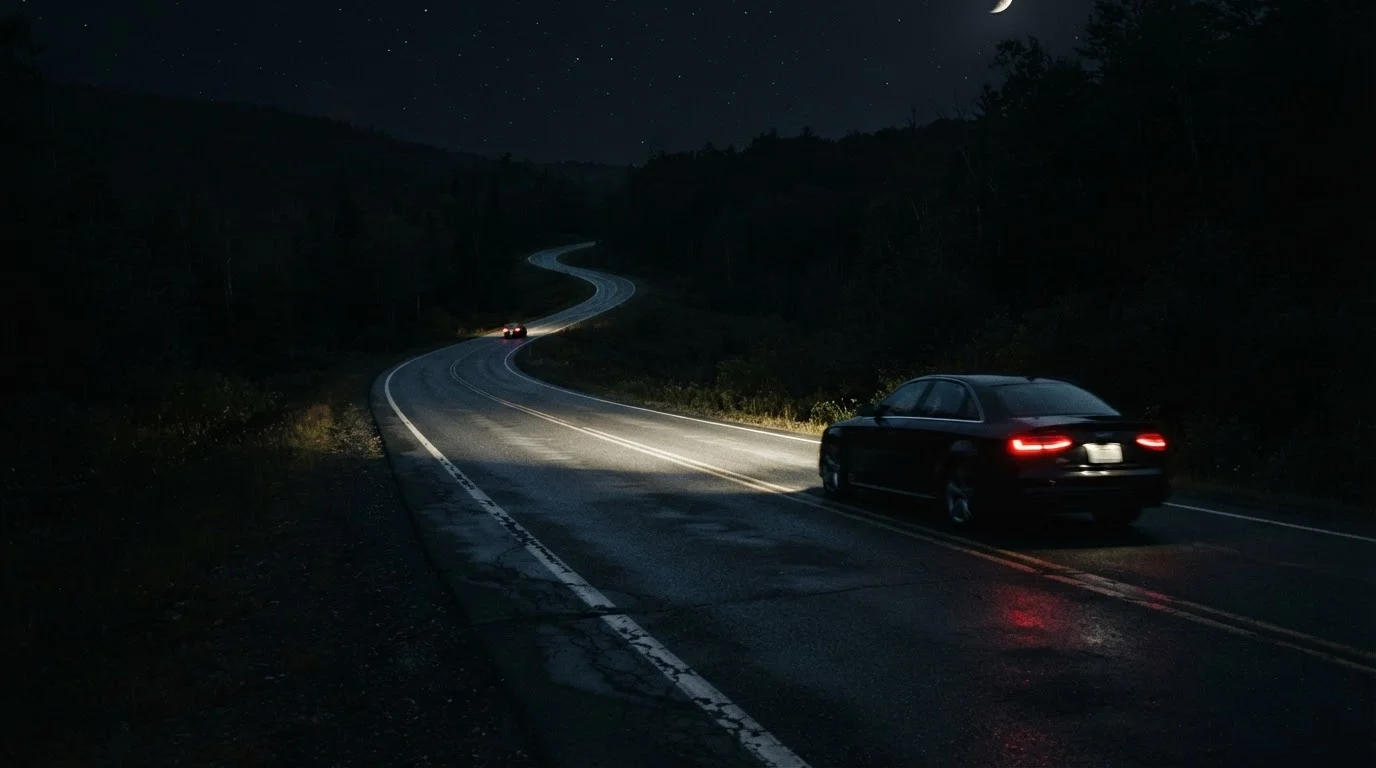
Photo credit: InfoHorizon.net | Access To Informative Content
In this article
Darkness dramatically narrows reaction time and depth perception. This guide covers headlight use, eye adaptation, and common night-driving errors.
Key Takeaways
- Night driving accounts for a disproportionate share of fatal crashes relative to traffic volume.
- The human eye takes up to 30 minutes to fully adapt to darkness after bright light exposure.
- Overdriving your headlights - traveling faster than your stopping distance allows - is a leading night-driving error.
- High beams should be used far more often on unlit roads, switched off within 500 feet of oncoming traffic.
- Fatigue compounds every night-driving risk; drowsy driving impairs judgment comparably to alcohol impairment.
- Simple pre-trip checks on headlights, mirrors, and windshield condition significantly improve night visibility.
Why Night Driving Is Genuinely More Dangerous
Most drivers feel reasonably confident behind the wheel after dark. That confidence is often misplaced. According to the National Highway Traffic Safety Administration (NHTSA), roughly half of all traffic fatalities occur at night - despite nighttime representing only about a quarter of total driving time. The math alone signals something important: darkness multiplies risk in ways that sheer familiarity with a route does not cancel out.
Three core factors drive this elevated danger. First, reduced visibility limits how far ahead a driver can detect hazards - pedestrians, debris, animals, or stopped vehicles. Second, diminished depth perception makes it harder to judge the speed and distance of other vehicles accurately. Third, the overall environment changes: more impaired drivers are on the road late at night, and pedestrian activity shifts to less-lit areas.
~50%
Fatal crashes occurring at night
According to NHTSA data, approximately half of all U.S. traffic fatalities occur during nighttime hours despite far lower traffic volume.
30 min
Time for full dark adaptation
The human eye can take up to 30 minutes to fully shift from cone-based daylight vision to rod-based night vision.
Up to 80%
Headlight output lost to oxidized lenses
Yellowed or cloudy headlight lenses can reduce usable light output by as much as 80%, severely limiting visibility range.
Understanding these risks isn't about creating anxiety - it's about calibrating your attention and technique to match actual conditions rather than a false sense of normalcy.
How Your Eyes Adapt - and Where They Fall Short
Your eyes use two types of photoreceptors: cones, which operate in bright light and detect color and detail, and rods, which are sensitive to low light but resolve less detail and no color. When you move from a lit environment into darkness, your rods take over - but the process, called dark adaptation, takes up to 30 minutes to complete fully.
This has real consequences. If you walk out of a brightly lit gas station or rest stop and immediately drive a dark rural highway, your eyes are operating at a significant deficit for the first several minutes. A single burst of oncoming high beams can temporarily overwhelm rod cells and reset partial adaptation, leaving you with reduced night vision for several seconds - exactly when you need it most.
Before a long night drive, spend a few minutes in low light before getting in your car - this jump-starts dark adaptation so your eyes are more capable when you hit the road.
Dark adaptation is a physiological process; even partial pre-adaptation reduces the visibility deficit during the critical first miles of a night drive.
If an oncoming vehicle's high beams are blinding you, slow down and glance toward the right lane edge rather than staring ahead or at the light source.
Fixating on a bright glare source prolongs the visual disruption; tracking a dimmer reference point preserves your ability to stay in-lane while your eyes recover.
Age compounds this. Visual acuity at night declines noticeably starting in a driver's 40s, with older drivers requiring significantly more light to see detail than younger ones. This is worth factoring into personal risk awareness, especially on unfamiliar or unlit roads.
Headlight Use: What Most Drivers Get Wrong
Headlights are your primary tool for night visibility, yet many drivers misuse them in predictable ways. The most common error: relying exclusively on low beams when high beams would be appropriate and safe. On unlit rural roads or highways with no oncoming traffic, high beams can extend your effective sight line from roughly 160 feet to 350-500 feet - a difference that can mean the gap between seeing a deer and hitting one.
U.S. law generally requires drivers to dim high beams within 500 feet of an oncoming vehicle and within 300 feet when following another vehicle. Beyond those situations, high beams are not just permitted - they're the safer choice on dark roads.
Check Headlight Aim Annually
Misaligned headlights can point too low, reducing your sight line significantly, or too high, blinding oncoming drivers. Many service shops can inspect and adjust headlight aim quickly and inexpensively. Adding this to an annual maintenance routine pays real safety dividends for night driving.
Equally important: keep your headlights aimed correctly and your lenses clean. Oxidized or yellowed headlight lenses can reduce light output by up to 80%. Before any significant night drive, confirm your lights are functioning and properly aimed - a quick item on the pre-trip safety checklist every driver should run.
Automatic headlight systems are convenient but set a low bar. They typically activate at dusk, not full dark - and they may not activate in fog or rain where visibility is dangerously reduced. Don't depend on automation to make the right call.
Speed, Stopping Distance, and the Overdriving Problem
Overdriving your headlights means traveling at a speed where your stopping distance exceeds the distance your headlights illuminate ahead of you. If your low beams reveal road hazards only 160 feet ahead and you need 200 feet to stop at your current speed, you cannot avoid whatever appears in that gap - regardless of your reaction time.
Stopping distance is a product of both reaction time and braking distance. At night, reaction time effectively increases because hazards appear later in your field of view. Reducing speed by even 10 mph meaningfully shrinks that gap. On unfamiliar dark roads, this adjustment can be the difference between a near-miss and a collision.
Similarly, following distance matters more at night. Tailgating is dangerous in daylight; at night, brake lights from the vehicle ahead may be your only warning of a hazard, and you have less time to process and respond.
Fatigue, Glare, and Other Hidden Hazards
Night driving and drowsiness are closely linked - the hours between midnight and 6 a.m. align with the human body's strongest drive to sleep. Fatigue impairs judgment, slows reaction time, and narrows attention in ways that mirror the effects of alcohol intoxication. If you're planning a late-night drive, read about what fatigue does to your body behind the wheel before you go.
Glare is another underestimated hazard. Oncoming headlights - especially modern LED and HID units - can cause temporary vision loss lasting two to five seconds. The instinctive fix: shift your gaze slightly to the right edge of your lane rather than looking directly into the lights. This lets you track road position without fixating on the glare source.
Never Drive Drowsy on a Night Route
Drowsy driving causes thousands of fatalities each year, and the risk peaks during late-night and early-morning hours when the body's sleep drive is strongest. If you feel yourself yawning repeatedly, struggling to maintain lane position, or losing track of recent miles, pull over safely and rest. No destination justifies driving when you cannot stay alert.
Weather adds another layer of complexity at night. Wet roads reflect headlight glare in confusing ways, fog scatters light and reduces effective range, and precipitation on the windshield creates visual noise. Adapting to these compounding conditions requires deliberate technique adjustments that go beyond simply slowing down.
Practical Habits That Make Night Driving Safer
Safer night driving comes down to consistent habits applied before and during every after-dark trip. The following practices address the specific vulnerabilities darkness creates:
- Clean your windshield inside and out. Interior film on the glass scatters oncoming headlights into glare. A clean windshield is one of the highest-impact, lowest-effort visibility improvements available.
- Dim your instrument cluster and interior screens. Bright interior light narrows your pupils and reduces your sensitivity to the dark road ahead. Most modern vehicles allow dashboard brightness adjustment.
- Scan the road edges actively. Deer, pedestrians, and cyclists are more likely to appear from the road's margins than the center. Widen your visual sweep to include shoulders and tree lines.
- Check your mirrors for blind-spot awareness. Night conditions make blind spot management harder because contrast cues are reduced. Verify mirror alignment before driving after dark.
- Take breaks on long trips. If you're driving more than two hours at night, plan a stop. Fatigue accumulates faster after dark due to the body's natural circadian rhythm.
Night driving is unavoidable for most drivers. What is avoidable is approaching it with the same habits suited for daylight. Calibrating your speed, headlight use, and attention to the real limitations darkness imposes is not overcaution - it's accurate risk management.

Author
Cars Editorial Team
Cars Editorial Team is the collective byline for our editorial team and contributor network. Articles published under this byline or an editorial pen name are researched, written, and reviewed according to our editorial standards for clarity, consistency, and independence before publication.
View all articles →