
Car Battery Basics: Lifespan, Warning Signs, and What Drains It
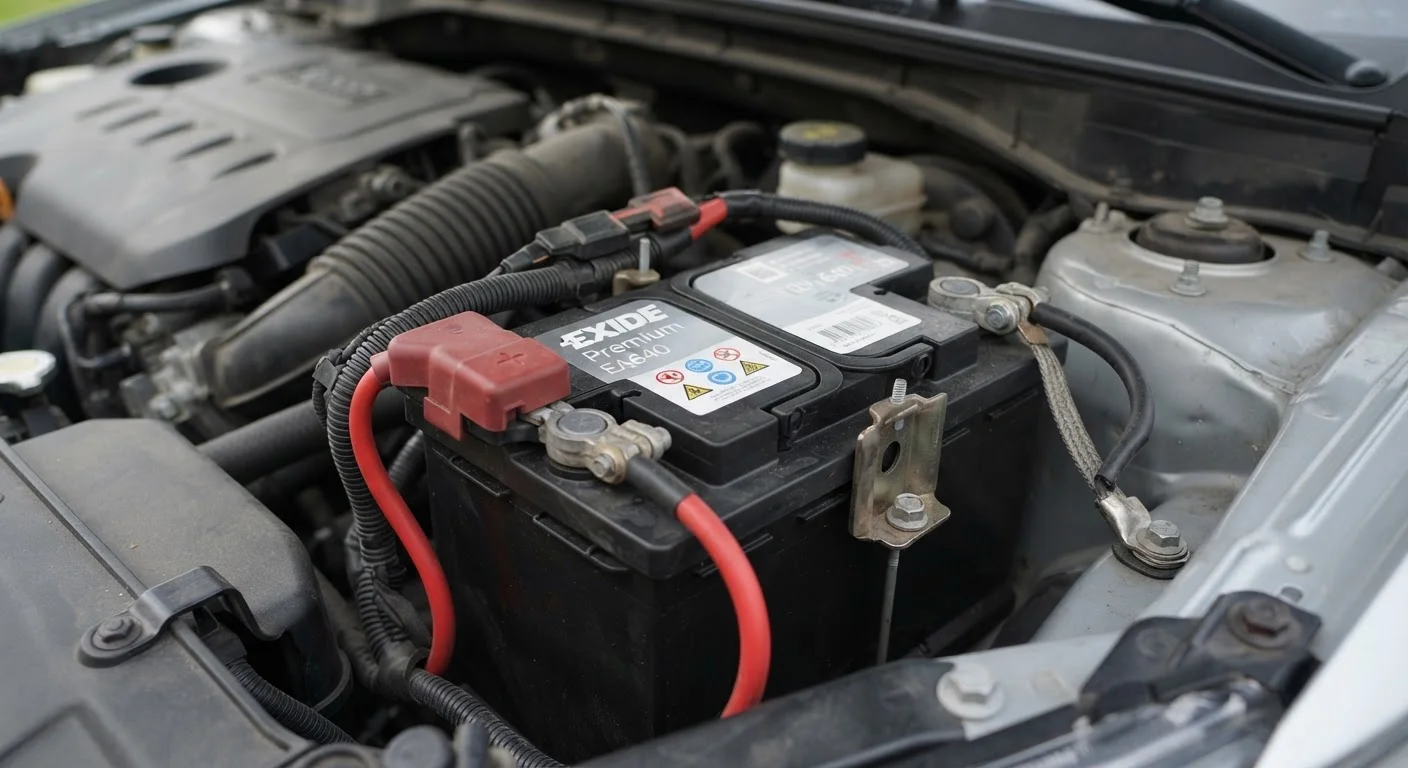
Photo credit: InfoHorizon.net | Access To Informative Content
In this article
Understand how a car battery ages, what behaviors shorten its life, and how to recognize the signs that it's starting to fail.
Key Takeaways
- Most car batteries last between three and five years under normal driving conditions.
- Extreme temperatures - both hot and cold - are among the biggest factors that shorten battery life.
- Leaving lights or accessories on while the engine is off is a leading cause of unexpected battery drain.
- Slow cranking, dimming headlights, and a swollen battery case are reliable early warning signs.
- Short, frequent trips prevent the alternator from fully recharging the battery over time.
How Long a Car Battery Actually Lasts
The standard expectation for a car battery is three to five years, but that range masks a lot of real-world variation. Climate is one of the biggest factors: heat accelerates the internal chemical breakdown of battery components, which is why drivers in southern states frequently see batteries fail before the three-year mark. Cold climates are harder on battery performance - the ability to deliver current drops sharply in freezing temperatures - while heat does more long-term damage to battery structure.
Driving patterns also matter significantly. A vehicle driven daily on highways gives the alternator consistent opportunity to recharge the battery. A car used only for short errands, or one that sits unused for weeks at a time, may experience accelerated capacity loss even if the battery is relatively new.
As part of a broader maintenance routine, it's worth having your battery tested whenever you bring the vehicle in for other work. The annual maintenance checklist is a good touchpoint for scheduling this kind of check.
3-5 years
Typical car battery lifespan
Industry guidance from automotive maintenance organizations consistently places average battery life in the three-to-five-year range under normal driving conditions.
~50%
Reduction in battery power at 0°F
According to the Battery Council International, a fully charged lead-acid battery can lose roughly half its cranking power at 0°F compared to its rating at 80°F.
~33%
Of roadside calls linked to battery issues
Battery-related failures are consistently among the top causes of roadside assistance calls, according to AAA's annual vehicle research data.
What Drains a Car Battery
Battery drain falls into two broad categories: parasitic drain and deliberate but excessive draw. Parasitic drain happens when a circuit continues pulling power after the vehicle is shut off - a faulty relay, a malfunctioning module, or an aftermarket accessory that wasn't properly wired can all be culprits. A healthy modern vehicle has a small amount of normal parasitic draw to maintain memory functions, but anything beyond a few milliamps can flatten a battery overnight or over a few days.
More commonly, drivers drain batteries through straightforward oversights: leaving interior lights, headlights, or a phone charger running with the engine off. Even accessories like heated seats or a GPS unit left plugged into a power outlet can draw enough current to cause problems if the car sits idle for an extended period.
The alternator is not a battery charger in the traditional sense - it's designed to maintain charge during normal driving, not to recover a deeply depleted battery. If your battery is regularly running low, the alternator can't fully compensate, and the battery's long-term capacity degrades with each partial charge cycle.
Use a Battery Maintainer for Stored Vehicles
If your vehicle will sit unused for two weeks or more, a battery maintainer - a low-amperage device that keeps the battery at an optimal charge level - can prevent the deep discharge that permanently reduces capacity. Unlike a standard charger, a maintainer monitors charge state and adjusts automatically, so it won't overcharge. This is particularly useful for seasonal vehicles or second cars.
Recognizing the Warning Signs
A failing battery rarely goes from fine to dead without warning. The signals are usually present for days or weeks before a complete failure. The most reliable indicator is slow or labored cranking when you turn the key or press the start button - the engine turns over more sluggishly than usual because the battery can't deliver adequate current.
Dimming headlights or interior lights, especially when the engine is idling, suggest the battery is struggling to hold a charge. A battery warning light on the dashboard - which can also indicate an alternator issue - should be taken seriously rather than monitored. The dashboard warning lights guide explains what this symbol typically signals and when immediate action is warranted.
Physical inspection can also reveal problems. A battery case that looks swollen or bloated has likely been damaged by excessive heat or overcharging. Visible corrosion - a white or bluish powder around the terminals - can interfere with electrical connections and is worth cleaning, though recurring heavy corrosion may point to a deeper issue.
Weather transitions are particularly high-risk periods. Cold snaps can push an already weakened battery past its limit. For preparation strategies before winter or summer, the seasonal car care guide covers what to check and when.
AGM Batteries Have Different Requirements
If your vehicle came equipped with an absorbed glass mat (AGM) battery - common in vehicles with start-stop technology or heavy electrical loads - it requires a charger or maintainer specifically rated for AGM chemistry. Using a standard charger can damage an AGM battery. Check your owner's manual or the battery label to confirm the type before connecting any charging equipment.
Extending Battery Life Through Driving Habits
Some battery wear is simply unavoidable - every charge and discharge cycle gradually reduces capacity. But several habits can meaningfully extend how long a battery lasts. If you primarily make short trips, consider occasionally taking a longer drive to give the alternator time to bring the battery to a full charge state.
Minimizing electrical load when the engine isn't running is equally important. Turn off lights, climate controls, and powered accessories before shutting down the vehicle. If your car will sit unused for more than two weeks, a battery maintainer (sometimes called a trickle charger) can prevent deep discharge without overcharging.
Keeping the battery terminals clean and securely connected ensures the alternator charges efficiently and reduces resistance in the circuit. For drivers building broader maintenance habits, the new driver maintenance guide provides a solid framework for keeping all vehicle systems - including the battery - in good working order.
Frequently Asked Questions

Author
Cars Editorial Team
Cars Editorial Team is the collective byline for our editorial team and contributor network. Articles published under this byline or an editorial pen name are researched, written, and reviewed according to our editorial standards for clarity, consistency, and independence before publication.
View all articles →