
City Break or Wide-Open Spaces: Matching Your Travel Style to a US Destination
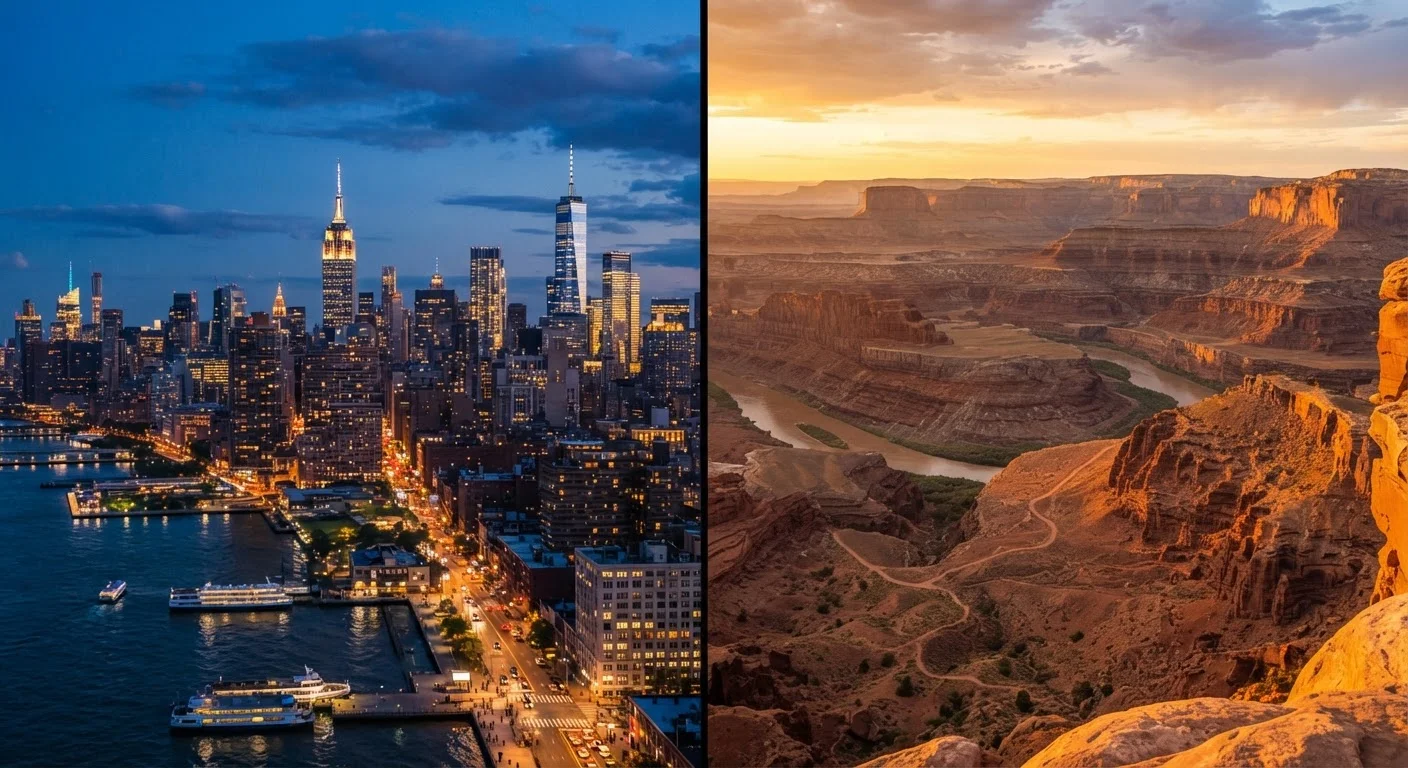
Photo credit: InfoHorizon.net | Access To Informative Content
In this article
Not sure whether a national park or a major city suits your next trip? This guide breaks down the key factors to help you decide.
Key Takeaways
- Your travel personality — not just budget or season — is the strongest predictor of destination satisfaction.
- City breaks offer density, culture, and convenience; wide-open destinations demand more planning but deliver solitude and scale.
- National parks require advance reservations, permits, and gear preparation that most first-timers underestimate.
- Many US destinations blend both worlds — coastal cities near wilderness corridors can suit mixed-style travelers.
- Off-season timing shifts the experience dramatically depending on whether you choose urban or natural settings.
The Real Question Isn't Where — It's How You Travel
Most destination debates start with the map when they should start with the mirror. Before searching flight prices or scrolling through photos, the more useful question is: what actually energizes you on a trip? Do you feel most alive navigating a new subway system, finding a side-street restaurant nobody recommended, and packing three neighborhoods into an afternoon? Or does your best travel version emerge when there's no schedule, no signal, and a trail leading somewhere that feels genuinely unknown?
This distinction — city break versus wide-open spaces — shapes nearly every logistical and experiential decision that follows. It affects how far in advance you need to plan, what you pack, what your days look like, and how you'll feel on the flight home. Getting it right isn't about trend-chasing; it's about honest self-assessment. The good news is the US offers exceptional versions of both, from dense, walkable metros to raw wilderness that dwarfs anything most visitors expect.
For a deeper look at what different natural regions actually deliver, see what each national park region offers travelers. And if you're building a more complex itinerary, the multi-stop US trip planning checklist can help you avoid overlooked logistics.
What City Breaks Actually Deliver
A well-chosen US city break is one of the most efficient travel formats available. Everything concentrates: food, art, history, nightlife, public transit, and people-watching all fold into walkable or easily navigable zones. You can arrive with a carry-on, spend three days going deep into a single neighborhood, and leave feeling genuinely changed by it.
Cities also absorb spontaneity well. A museum you hadn't planned on, a jazz set that starts as you pass a bar, a hole-in-the-wall taqueria a local points you toward — urban environments reward wandering. Accommodation options span every price point, cancellation policies are generally flexible, and rainy days don't derail the trip the way they might in a national park.
What cities don't do as well: provide quiet. If you need decompression, disconnection from screens and crowds, or physical space to process a difficult season of life, urban density can amplify rather than relieve that strain. Approaching a city as a traveler rather than a tourist makes a real difference in how much of that depth you actually access.
| City Break | Wide-Open Spaces | |
|---|---|---|
| Planning lead time | 2–4 weeks typical | 3–6+ months for permits/camping |
| Physical demands | Low to moderate (walking) | Moderate to high (hiking, altitude) |
| Weather flexibility | High — indoors always available | Low — weather dictates the trip |
| Solitude available | Rarely | Often, with right timing |
| Family-friendliness | High — diverse options | Variable — depends on ages/fitness |
| Connectivity (phone/internet) | Consistent | Often unreliable or absent |
| Gear requirements | Minimal | Substantial — layers, navigation, safety |
What Wide-Open Spaces Genuinely Require
The American wilderness — its national parks, canyon systems, desert plateaus, and coastal ranges — delivers scale that no city can match. Standing on the South Rim of the Grand Canyon or watching a Yellowstone geyser erupt for the first time is a recalibrating experience. But these destinations are unforgiving of under-preparation.
Campsite reservations at popular parks routinely sell out months in advance. Timed-entry permits exist at places like Arches and Glacier. Trails at elevation carry real altitude and weather risk. National park visits require significantly more planning than most people expect — and that's worth taking seriously before you go.
Off-season timing also changes the calculus dramatically depending on the destination type. A city in January might be quieter and cheaper; a mountain park might be fully inaccessible. Understanding what off-season actually means at your specific destination prevents unpleasant surprises.
Test Your Comfort Zone Before You Commit
If you're unsure whether wilderness travel suits you, try an entry-level national park experience before booking a remote backcountry trip. A car-accessible campsite at a well-staffed park lets you gauge your comfort with limited amenities, unpredictable weather, and disconnection — without the high stakes of a multi-day backcountry permit. You can always scale up on the next trip.
Finding the Middle Ground
For travelers who genuinely love both modes — or who are traveling with people whose styles differ — the US offers a category that's easy to overlook: destinations where urban energy and wild landscapes sit within hours of each other. Denver gives you the city grid and access to Rocky Mountain terrain. Portland, Oregon puts you between the Pacific coast and the Cascades. Asheville, North Carolina anchors a mountain town with a thriving food and arts scene nested inside a Southern region too layered to reduce to clichés.
These hybrid destinations are ideal for groups with mixed travel styles, families with children who have different attention spans, or anyone who wants the option of both a hike and a good dinner without a two-hour drive. The lesser-known US destinations that reward curious travelers often fall into exactly this hybrid category — places that haven't been flattened by mass tourism and still carry genuine local character.
If you're drawn to dramatic coastal landscapes in particular, comparing options can sharpen your thinking: mountain towns versus beach towns and Coastal New England versus the Pacific Northwest both map out meaningful trade-offs that apply to the broader city-versus-wilderness question.
325M+
Annual US national park visits
The National Park Service reports over 325 million recreational visits annually, with many signature parks seeing record-high demand for entry permits.
Top 3
Most-visited US city destinations
New York City, Las Vegas, and Los Angeles consistently rank among the most-visited American cities by domestic travelers, according to US Travel Association data.

Author
Travel Editorial Team
Travel Editorial Team is the collective byline for our editorial team and contributor network. Articles published under this byline or an editorial pen name are researched, written, and reviewed according to our editorial standards for clarity, consistency, and independence before publication.
View all articles →