
Mountain Towns vs. Beach Towns: Weighing the Trade-Offs for a US Vacation
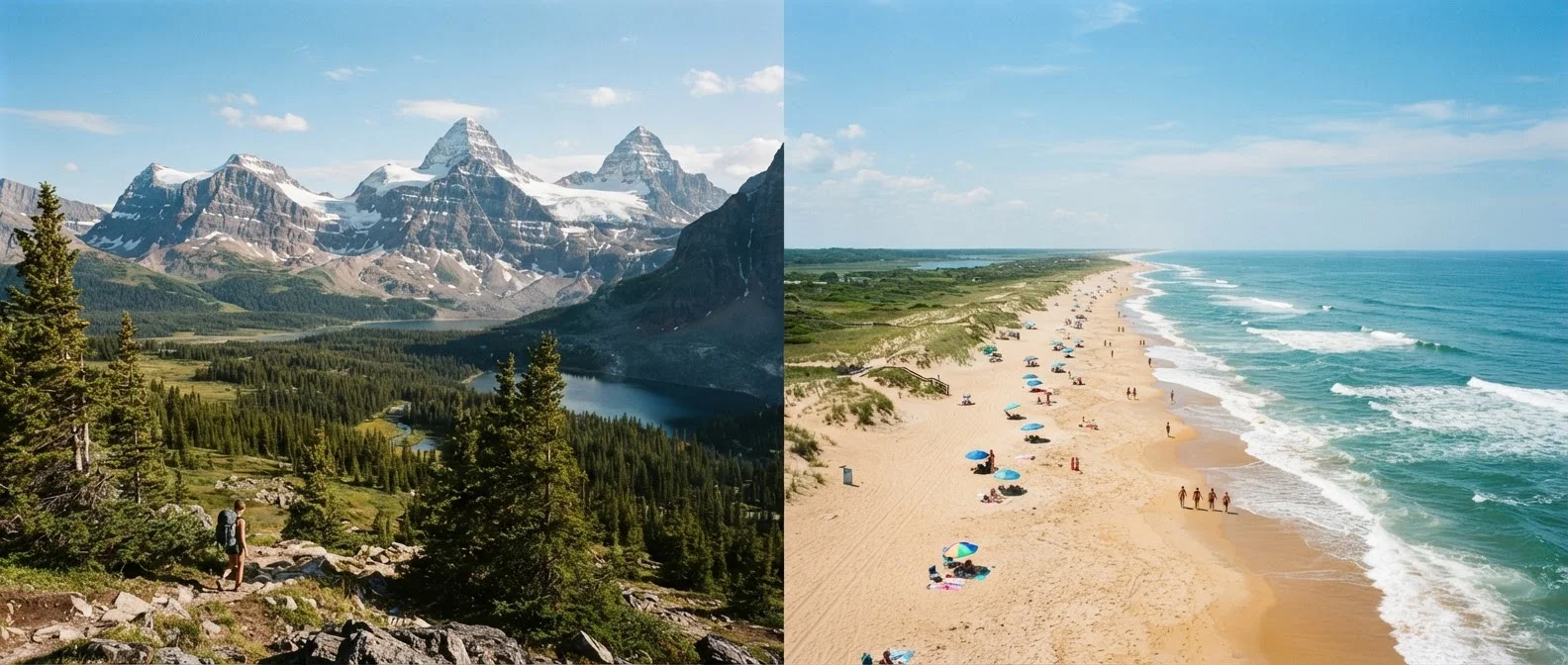
Photo credit: InfoHorizon.net | Access To Informative Content
In this article
Altitude versus ocean breezes, hiking versus surfing—here's a balanced look at what mountain and beach destinations each genuinely offer.
Key Takeaways
- Mountain towns offer cooler summers, dramatic scenery, and strong outdoor adventure options year-round.
- Beach towns provide warm-weather relaxation, water sports, and vibrant coastal culture but can get crowded in summer.
- Elevation at mountain destinations affects energy levels, sleep, and hydration — plan accordingly.
- Costs at both destination types spike sharply during peak season; timing your trip matters enormously.
- Your ideal choice depends on your activity preferences, travel party, and tolerance for heat or altitude.
Cooler summer temperatures than most US regions
High-elevation towns typically sit 10–20°F cooler than nearby lowland cities, making them a genuine escape from summer heat waves for travelers from the South and Southwest.
Rich multi-season outdoor activity options
From summer hiking and fall foliage to winter skiing and spring wildflowers, mountain towns offer compelling reasons to visit in any season, spreading demand more evenly.
Quieter, less-crowded atmosphere outside peak periods
Compared to major beach resort strips, many mountain towns retain a small-town feel even during busy stretches, offering a more relaxed pace for travelers who want to explore without fighting crowds.
Dramatic, photogenic natural scenery
Alpine meadows, granite peaks, and dense conifer forests create visually arresting backdrops that are distinct from any coastal setting — a major draw for photography enthusiasts and nature lovers.
Strong local arts and culinary scenes
Towns like Taos, NM, and Asheville, NC, have cultivated nationally recognized art communities and farm-to-table food cultures that add a rich cultural dimension to the outdoor experience.
Altitude sickness affects some visitors
Elevations above 6,000 feet can trigger headaches, nausea, and fatigue, particularly on the first day. Travelers with heart or lung conditions should consult a healthcare provider before visiting high-altitude destinations.
Limited water-based recreation
Rivers and mountain lakes can be cold and fast-moving, restricting the kind of casual swimming and snorkeling that beach trips deliver naturally. Ocean-style water fun simply isn't replicable inland.
Afternoon thunderstorms disrupt summer plans
Many Rocky Mountain destinations see near-daily afternoon lightning storms in July and August, which can cut hiking days short and require flexible itinerary planning.
Less accessible terrain for mobility-limited travelers
Uneven trails, altitude, and limited flat walking areas can make mountain towns more challenging for travelers with mobility considerations, young toddlers in strollers, or those needing accessible facilities.
Remote locations mean longer drives and fewer direct flights
Reaching many premier mountain towns requires renting a car and navigating winding mountain roads — a logistical layer that beach trips closer to major airports often avoid.
Two Very Different Kinds of Escape
Choosing between a mountain getaway and a beach vacation isn't simply a matter of scenery preference — it shapes your pace, activities, budget, and even how your body feels during the trip. Think Asheville vs. Hilton Head, Breckenridge vs. Santa Monica, or Lake Placid vs. Cape Cod. Each setting comes with its own rhythm, and understanding the real trade-offs helps you pick the one that fits your travel style instead of just following the crowd.
For a deeper look at how destination type interacts with when you travel, our guide to peak vs. off-season travel breaks down how timing shifts the entire experience. And if you're still weighing broader destination categories, matching your travel style to a US destination can help you zero in further.
The Case for Mountain Towns
Mountain destinations punch well above their weight for sheer variety. Summer brings hiking, mountain biking, white-water rafting, and wildlife watching — often at a fraction of the heat found at lower elevations. Winter adds skiing, snowshoeing, and cozy lodge culture. Towns like Telluride, Colorado, or Stowe, Vermont, draw visitors across multiple seasons precisely because the environment stays compelling year-round.
Cooler summer temperatures than most US regions
High-elevation towns typically sit 10–20°F cooler than nearby lowland cities, making them a genuine escape from summer heat waves for travelers from the South and Southwest.
Rich multi-season outdoor activity options
From summer hiking and fall foliage to winter skiing and spring wildflowers, mountain towns offer compelling reasons to visit in any season, spreading demand more evenly.
Quieter, less-crowded atmosphere outside peak periods
Compared to major beach resort strips, many mountain towns retain a small-town feel even during busy stretches, offering a more relaxed pace for travelers who want to explore without fighting crowds.
Dramatic, photogenic natural scenery
Alpine meadows, granite peaks, and dense conifer forests create visually arresting backdrops that are distinct from any coastal setting — a major draw for photography enthusiasts and nature lovers.
Strong local arts and culinary scenes
Towns like Taos, NM, and Asheville, NC, have cultivated nationally recognized art communities and farm-to-table food cultures that add a rich cultural dimension to the outdoor experience.
One factor many first-timers underestimate is elevation's physical impact. Altitudes above 6,000 feet can cause headaches, disrupted sleep, and reduced stamina for the first day or two. Staying hydrated, taking it easy on arrival, and knowing the warning signs of altitude sickness makes a real difference. Our article on how elevation changes everything about a mountain visit is worth a read before you book.
The Case for Beach Towns
There's a reason beach vacations remain the most popular domestic trip type in the US. The combination of warm air, open water, and a more permissive sense of time is genuinely hard to replicate inland. Whether you're drawn to the Gulf Coast's calm, warm waters, the Atlantic's energetic waves, or the Pacific's dramatic cliffs, coastal towns offer an almost sensory-first experience that mountain towns rarely match.
Altitude sickness affects some visitors
Elevations above 6,000 feet can trigger headaches, nausea, and fatigue, particularly on the first day. Travelers with heart or lung conditions should consult a healthcare provider before visiting high-altitude destinations.
Limited water-based recreation
Rivers and mountain lakes can be cold and fast-moving, restricting the kind of casual swimming and snorkeling that beach trips deliver naturally. Ocean-style water fun simply isn't replicable inland.
Afternoon thunderstorms disrupt summer plans
Many Rocky Mountain destinations see near-daily afternoon lightning storms in July and August, which can cut hiking days short and require flexible itinerary planning.
Less accessible terrain for mobility-limited travelers
Uneven trails, altitude, and limited flat walking areas can make mountain towns more challenging for travelers with mobility considerations, young toddlers in strollers, or those needing accessible facilities.
Remote locations mean longer drives and fewer direct flights
Reaching many premier mountain towns requires renting a car and navigating winding mountain roads — a logistical layer that beach trips closer to major airports often avoid.
Beach destinations also tend to be more family-accessible in terms of terrain — flat ground, wheelchair-friendly boardwalks, and shallow wading areas are common. That said, summer crowds at places like Myrtle Beach or Virginia Beach can be intense, and accommodation costs in coastal resort towns peak sharply from Memorial Day through Labor Day. Understanding what off-season really means at US destinations can help you find quieter, more affordable windows.
Practical Factors That Tip the Scales
~40%
Share of US adults preferring beach vacations
Multiple travel surveys consistently show beach destinations are the most-chosen vacation type among American adults, though mountains rank a strong second.
2–3x
Peak-season lodging cost multiplier at top beach resorts
Coastal resort towns like the Outer Banks and Florida Keys commonly see accommodation rates two to three times higher in summer compared to their off-season lows.
6,000 ft
Elevation at which altitude effects commonly begin
The Centers for Disease Control notes that altitudes above roughly 6,000 feet are where most healthy travelers may start noticing physical symptoms of altitude adjustment.
Beyond atmosphere, a few practical considerations often decide the question. Weather risk: afternoon thunderstorms are a daily summer reality in many Rocky Mountain towns, and hurricane season (June–November) creates genuine risk for Atlantic and Gulf Coast trips. Accessibility: mountain towns frequently involve winding roads, limited public transit, and — for those with respiratory or cardiac conditions — real health considerations at elevation. Cost: luxury resort towns at both destination types command premium rates in high season, but mid-range lodging tends to be more available in mountain towns outside of ski season.
Families with very young children often find beach towns easier to navigate logistically, while older kids and teens frequently thrive in the active outdoor environment mountain towns offer. If you're intrigued by destinations that blend coastal drama with rugged terrain, Coastal New England vs. the Pacific Northwest explores two regions that genuinely split the difference.
Health Considerations at Altitude
Travelers with cardiovascular conditions, asthma, pregnancy, or chronic lung disease should speak with a qualified healthcare provider before planning trips to high-elevation destinations. Altitude affects individuals very differently, and what feels fine for one person can be significant for another. This article provides general travel information only and is not a substitute for personalized medical advice.
For all the trip logistics — packing, timing, transportation, and itinerary building — the Trip Planning hub is a practical starting point before you commit to a destination type.

Author
Travel Editorial Team
Travel Editorial Team is the collective byline for our editorial team and contributor network. Articles published under this byline or an editorial pen name are researched, written, and reviewed according to our editorial standards for clarity, consistency, and independence before publication.
View all articles →