
Coastal New England vs. the Pacific Northwest: Two Very Different Kinds of Rugged
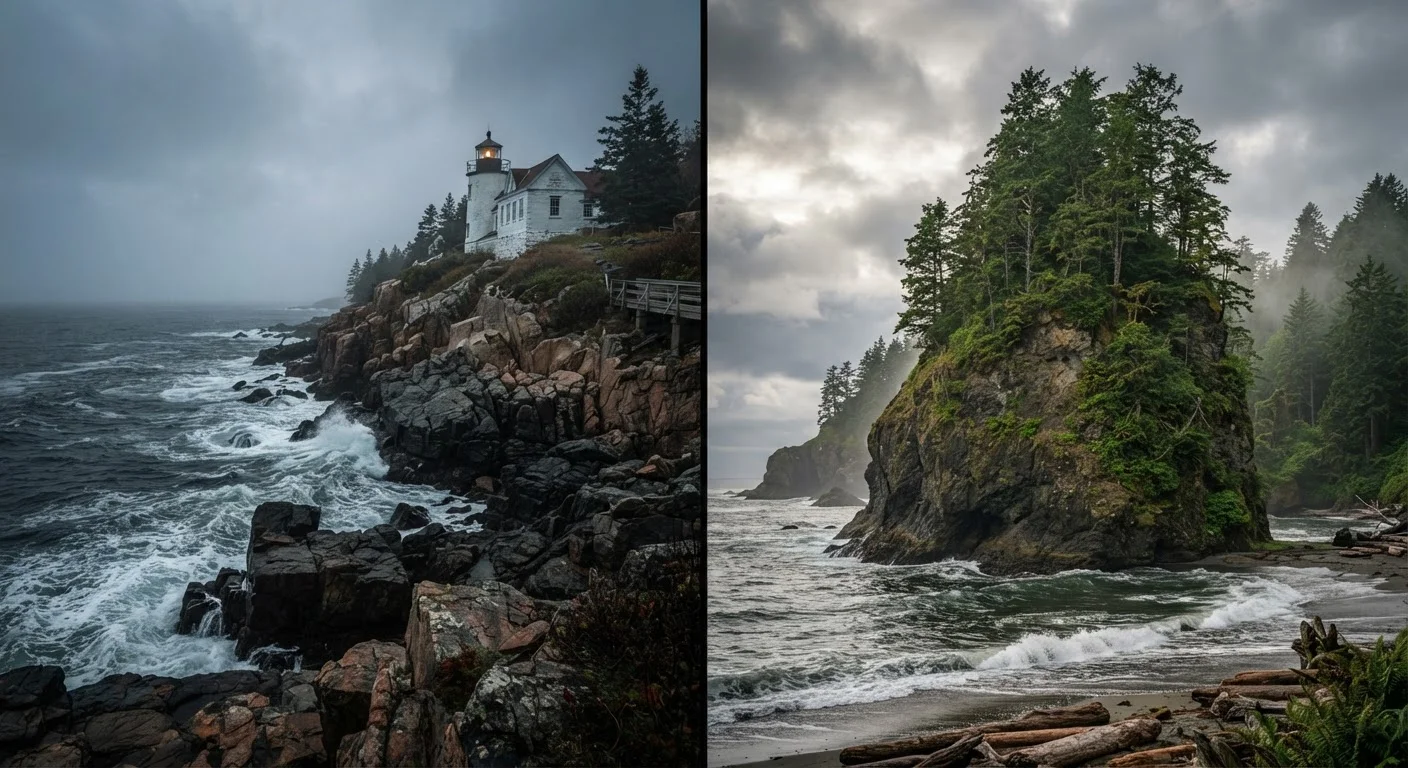
Photo credit: InfoHorizon.net | Access To Informative Content
In this article
Rocky shores, seafood, and lighthouses meet rainforests and volcanic peaks. Here's how these two iconic US coastal regions compare for travelers.
Key Takeaways
- Coastal New England offers compact, historically rich towns ideal for road trips with cultural depth.
- The Pacific Northwest coast delivers vast, wild scenery with fewer crowds and more dramatic terrain.
- Both regions are best visited in summer and early fall, but each has distinct shoulder-season appeal.
- Seafood is a highlight of both coasts — but the catch differs significantly by region.
- New England is easier to navigate; the PNW requires more planning for remote stretches.
- Your ideal choice depends heavily on whether you crave history and quaintness or raw wilderness.
The Lay of the Land: Two Very Different Coastlines
Calling both of these regions "rugged" is accurate — but the resemblance stops there. Coastal New England runs from Connecticut north through Rhode Island, Massachusetts, New Hampshire, and Maine, packing centuries of maritime history into a relatively compact stretch of the Atlantic seaboard. Think shingled cottages, lobster pound signs, granite breakwaters, and white church steeples visible from the water.
The Pacific Northwest coast is a different beast entirely. Oregon's Highway 101 winds past towering sea stacks, wind-sculpted headlands, and dune systems that dwarf anything on the East Coast. Washington's Olympic Peninsula adds temperate rainforest — one of the few in North America — where Sitka spruce and moss-draped maples crowd the shoreline just miles from the Pacific. The scale feels genuinely primordial.
If New England's coast is a curated gallery of American history, the PNW coast is an unedited nature documentary. Neither is better; they satisfy fundamentally different travel appetites. For readers still weighing coastal versus inland options, our guide to mountain towns vs. beach towns lays out the broader trade-offs worth considering.
| Criterion | Coastal New England | Pacific Northwest Coast |
|---|---|---|
| Landscape character | Rocky coves, lighthouses, historic harbors | Sea stacks, rainforests, volcanic peaks |
| Peak season | July–October (foliage season) | July–September (driest months) |
| Driving distances | Compact; Maine coast driveable in a week | Vast; Oregon alone takes 5+ days coast to coast |
| Signature seafood | Lobster, clam chowder, steamers | Dungeness crab, Chinook salmon, oysters |
| Cultural emphasis | Colonial history, maritime heritage | Indigenous culture, outdoor recreation |
| Crowd levels (peak) | High in summer resort towns | Moderate; remote stretches stay uncrowded |
| Rainfall | Moderate; occasional fog and nor'easters | Heavy in fall–spring; fog common in summer |
| Hiking access | Good; Acadia NP is world-class | Exceptional; Olympic NP borders the coast |
Weather, Seasons, and When to Go
New England's coastal weather is famously variable but follows a clear seasonal rhythm. Summer (June–August) brings warm, sunny days — perfect for sailing, beach walks, and open-air lobster rolls — though popular spots like Kennebunkport and Nantucket can feel crowded. September into October is arguably the sweet spot: foliage peaks, crowds thin, and the light turns golden and cinematic along the shore.
The PNW coast operates on a different schedule. The region's reputation for rain is well earned — coastal Oregon and Washington receive substantial precipitation, particularly November through March. But that same moisture creates the lush, green landscapes that make the region so visually arresting. Summer (July–September) is reliably drier and cooler than the rest of the country, making it prime season. Shoulder visits in May or June reward patient travelers with dramatic storm-watching and near-empty beaches.
3,500+
Miles of Oregon and Washington coastline
The combined Pacific coastlines of Oregon and Washington stretch over 3,500 miles when all tidal inlets and bays are included, according to NOAA coastal data.
~140 in.
Annual rainfall in Hoh Rain Forest, WA
The Hoh Rain Forest in Olympic National Park receives approximately 140 inches of rain per year, making it one of the wettest places in the continental US.
1604
Year European settlement began on the Maine coast
French explorer Samuel de Champlain mapped portions of the Maine coast in 1604, reflecting the deep colonial timeline embedded in New England's coastal heritage.
One practical note: fog is a constant companion on both coasts. On the PNW, it can linger through July mornings; in New England, it rolls in off the Atlantic without warning. Flexible itineraries handle both regions better than rigid day-by-day plans.
Food, Culture, and What Makes Each Coast Tick
Coastal New England is one of the most food-identifiable regions in the United States. Lobster, clam chowder, fried clams, and steamers are not tourist gimmicks here — they're the actual regional diet, eaten at roadside shacks and family restaurants alike. Beyond food, the culture is layered with colonial and nautical heritage: whaling museums in New Bedford, maritime art in Rockport, literary history in Salem, and working fishing harbors in Gloucester and Stonington.
The PNW coast brings its own distinct culinary identity: Dungeness crab, Chinook salmon, razor clams, and Willapa Bay oysters anchor the seafood scene. Portland and Seattle are within reach of the coast and add world-class restaurant culture to any itinerary. The cultural texture leans more toward outdoor recreation, Indigenous heritage (particularly along the Olympic Peninsula), and a newer creative economy rooted in craft food and art.
A Note on Travel Conditions and Verification
Coastal conditions, park access, and local services on both coasts can change seasonally or due to weather events. Before visiting remote stretches of the PNW coast or popular New England islands, check current conditions with the National Park Service, state tourism offices, and ferry operators. Entry to certain areas — particularly in Olympic National Park — may require advance reservations during peak season.
Both regions reward travelers who slow down. New England's coastal towns are often best explored on foot or by bike; Oregon's coast demands leisurely driving with frequent pull-offs. For travelers interested in exploring how other American regions layer landscape and culture, our piece on America's national parks by region offers useful context, as does our look at lesser-known US destinations for travelers ready to go beyond the obvious.

Author
Travel Editorial Team
Travel Editorial Team is the collective byline for our editorial team and contributor network. Articles published under this byline or an editorial pen name are researched, written, and reviewed according to our editorial standards for clarity, consistency, and independence before publication.
View all articles →