
Traveling the American South: A Region Too Layered to Stereotype
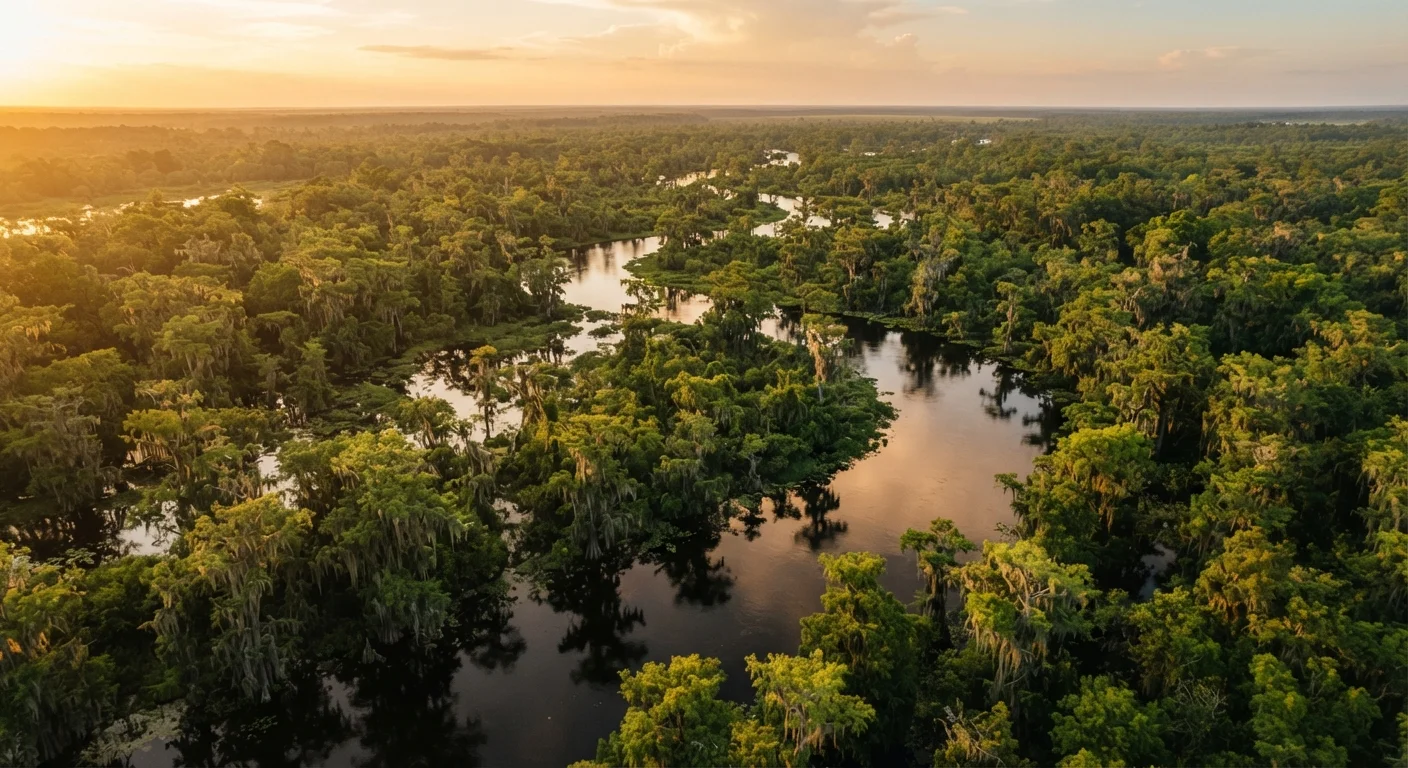
Photo credit: InfoHorizon.net | Access To Informative Content
In this article
Appalachian foothills, Gulf Coast wetlands, and vibrant cities all share a region. Here's what makes different parts of the South worth exploring.
Key Takeaways
- The American South spans dramatically different landscapes, from mountains to wetlands to Gulf beaches.
- Southern cities like Nashville, New Orleans, and Atlanta each offer distinct cultural identities.
- Fall and spring generally offer the most comfortable travel conditions across most of the region.
- Coastal and wetland areas carry hurricane season risks from June through November.
- A road trip framework helps connect multiple sub-regions in a single meaningful journey.
Why the South Resists a Single Story
Ask ten Americans to picture the South, and you'll get ten different images: front-porch bluegrass, neon-lit bourbon streets, red clay hills, barrier island beaches, bayou fishing villages. All of them are accurate. The region stretching from Virginia's Blue Ridge to Louisiana's coastal marshes encompasses as much geographic and cultural variety as many countries. Treating it as a monolith does it a disservice — and leaves travelers underprepared for what they'll actually find.
This guide breaks the South into its distinct sub-regions so you can match where you go with what genuinely interests you, whether that's outdoor adventure, culinary depth, musical heritage, or sheer scenic beauty. If you're still weighing whether an urban escape or wide-open landscape suits your style, this destination-matching guide can help you think it through.
12.5M+
Annual Great Smoky Mountains visitors
The National Park Service consistently reports the Smokies as the most-visited national park in the US system.
~90,000
Square miles of Gulf Coast wetlands
NOAA estimates the US Gulf Coast contains some of the largest contiguous wetland systems in North America.
6
Distinct culinary traditions in Louisiana alone
Food historians identify Creole, Cajun, Acadian, Indigenous, soul food, and Vietnamese as major living culinary streams in Louisiana.
The Appalachian Highlands: Mountains, Music, and Mist
The southern Appalachians — running through western Virginia, North Carolina, Tennessee, and northern Georgia — bear almost no resemblance to the flat, humid South of popular imagination. These are old, heavily forested mountains with waterfalls tucked into hollows, elk grazing in high meadows, and some of the most biologically diverse temperate forests on Earth. Great Smoky Mountains National Park alone draws more visitors annually than any other US national park, yet the surrounding region's smaller towns and trails remain genuinely uncrowded.
Towns like Asheville, NC and Johnson City, TN serve as accessible gateways with strong food and arts scenes. The musical heritage here — old-time Appalachian string band traditions, bluegrass, shape-note singing — is distinct from the country music industry further west, and living traditions are easy to find at community venues and festivals. Learn more about what the Smokies and other southern park units offer beyond the obvious trailheads.
Build buffer days into any Appalachian itinerary — mountain weather shifts fast, and the best hikes often require a flexible window rather than a locked schedule.
Afternoon thunderstorms are common in the southern Appalachians in summer and early fall, and rushing through forced itineraries on bad-weather days is one of the most common traveler regrets in this sub-region.
In coastal and wetland areas, book guided kayak or boat tours with local operators who know the tidal schedules — timing a paddle to tidal flow makes a significant difference in both safety and wildlife sightings.
Tidal windows in Low Country marshes open and close within hours; local guides can navigate these rhythms in ways that generic scheduling tools cannot replicate.
Gulf Coast and Lowcountry: Water, Wildlife, and Flavor
From South Carolina's sea islands west through Georgia's Golden Isles, Florida's Panhandle, and along Alabama, Mississippi, and Louisiana's shores, the coastal and wetland South operates on a slower, saltier clock. Ecosystems here are extraordinary: tidal marshes that serve as nurseries for the Atlantic fishery, cypress swamp networks navigable by kayak, and Gulf barrier islands with sand so white it looks painted.
The food culture in this corridor — Low Country boils, Gulf oysters, Cajun and Creole cooking in southern Louisiana — is among the most distinctive regional cuisine in the United States, rooted in Indigenous, West African, French, and Spanish culinary traditions. Lesser-visited coastal spots in this corridor often reward travelers willing to look past the obvious resort towns.
Hurricane Season Affects Coastal Planning
The Gulf and Atlantic coasts of the South fall within the Atlantic hurricane basin, with peak risk from August through October. Travel insurance that covers weather-related cancellations is worth investigating before booking coastal trips during this window. Always monitor NOAA forecasts and heed evacuation orders issued by local authorities.
The Urban South: Cities That Rewrite Expectations
Southern cities have spent decades rewriting their own narratives. Nashville has expanded far beyond country music into a thriving health-tech and arts economy without losing its honky-tonks. New Orleans remains one of the most architecturally and musically singular cities in North America. Atlanta functions as a global metropolis with a powerful civil rights history embedded in its landscape — the Martin Luther King Jr. National Historical Park sits within the city proper. Memphis anchors the Mississippi Delta blues heritage while Charleston's antebellum streetscapes open onto difficult, essential history.
Each city deserves at least two to three days to move past surface-level tourism into the neighborhoods and venues that give them texture. If you plan to connect multiple cities overland, the road trip planning framework here will help you structure pacing and overnight stops realistically.
“The South is not a place — it's an argument about what America is and was and might be. Every landscape there is also a document.”
— Edward L. Ayers, Historian and author specializing in Southern US history
Practical Planning: When to Go and What to Know
Timing matters enormously in the South. Summers are hot and humid region-wide, with heat indices regularly exceeding 100°F across lower elevations — tolerable at the coast with a sea breeze, genuinely taxing inland. The mountain sub-regions offer relief: Asheville averages highs in the mid-70s°F in July. Spring (March–May) and fall (September–November) are the sweet spots for most of the region, with mild temperatures and reduced crowds.
Hurricane season runs June through November and meaningfully affects Gulf and Atlantic coastal travel. This doesn't mean those areas are off-limits during that period, but it does mean monitoring forecasts and understanding that conditions can change quickly. For a thorough breakdown of how off-season dynamics vary by destination type, see what off-season travel actually means at different US destinations.
Entry requirements, local regulations, and conditions on the ground can shift — always verify current information with official state tourism offices, the National Park Service, and US government travel resources before finalizing plans.
Pack for Multiple Microclimates
A single Southern road trip can move from mountain temperatures in the 60s°F to coastal heat in the 90s°F within a few hours. Layering is more useful than packing for one weather type. Lightweight moisture-wicking fabrics work well across most scenarios, with a packable rain layer for mountain afternoons.
Choosing Your Southern Adventure
The South's layered geography means there's genuinely no single itinerary that covers it well. A traveler drawn to biodiversity and solitude will find their South in Congaree National Park's old-growth floodplain forest or along the Natchez Trace Parkway. Someone chasing culinary depth will find it in a different set of zip codes entirely. History seekers will encounter chapters of American history — from the Trail of Tears to the Civil Rights Movement — with unusual directness here, embedded in actual landscapes rather than museum dioramas.
The honest approach is to pick one sub-region per trip, go deeper, and return for the next. A solid trip planning foundation makes that kind of deliberate, layered exploration far more satisfying than trying to skim the whole region in a single sprint. The South will still be there, and it will still surprise you.
National Park Service — Southeast Region
The NPS Southeast region portal covers parks, trails, and historical sites from Virginia to Louisiana, with current conditions and visitor information.
NOAA Hurricane Tracker
Real-time storm tracking and seasonal forecasts from NOAA — essential for anyone planning coastal Gulf or Atlantic travel between June and November.
Southern Foodways Alliance
A documentary and research organization cataloguing the culinary traditions of the American South, with essays, oral histories, and regional food maps useful for food-focused travelers.
Natchez Trace Parkway — NPS Official Site
The official planning resource for one of the South's great scenic drives, covering the 444-mile corridor from Nashville to Natchez, MS.

Author
Travel Editorial Team
Travel Editorial Team is the collective byline for our editorial team and contributor network. Articles published under this byline or an editorial pen name are researched, written, and reviewed according to our editorial standards for clarity, consistency, and independence before publication.
View all articles →