
Lesser-Known US Destinations That Reward the Curious Traveler
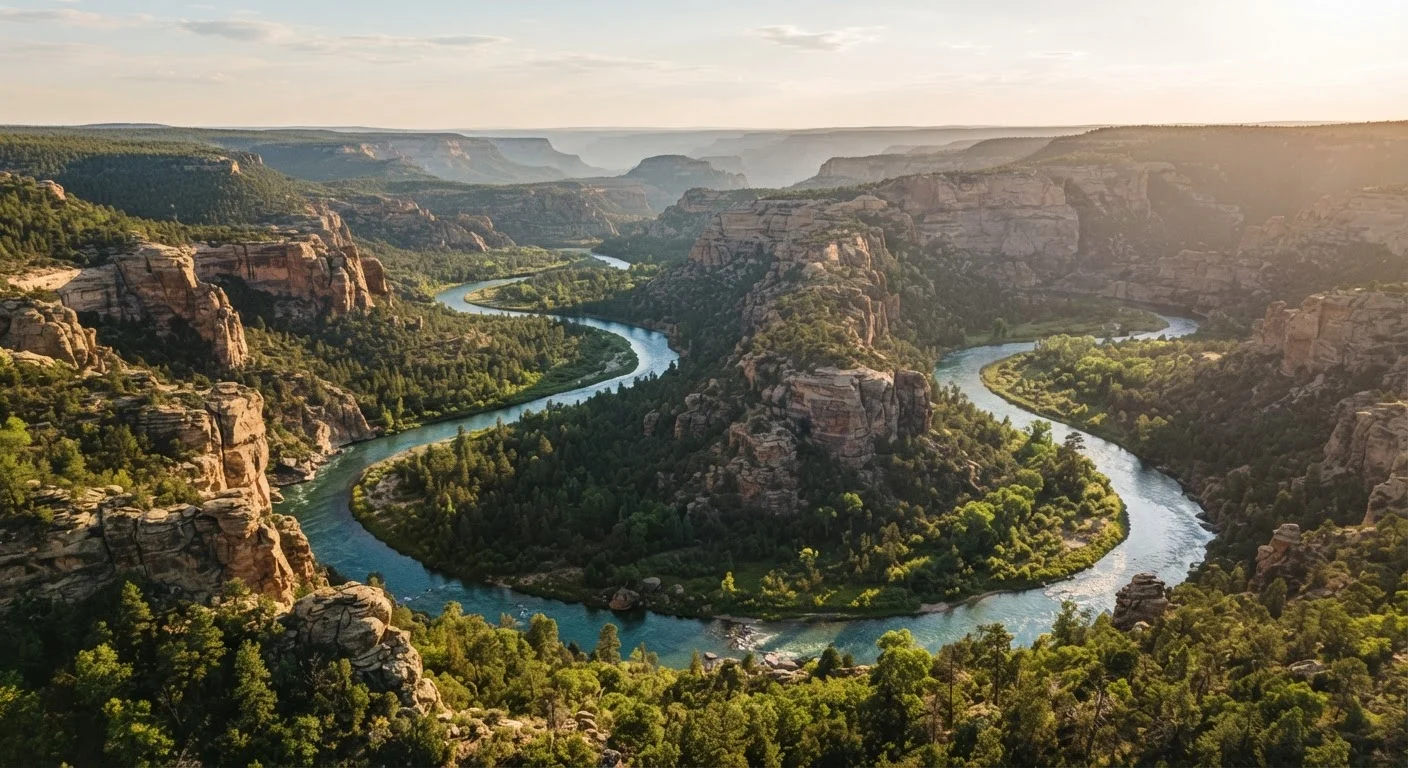
Photo credit: InfoHorizon.net | Access To Informative Content
In this article
Beyond the obvious landmarks, these undervisited American destinations offer genuine character, natural beauty, and fewer crowds.
Key Takeaways
- Undervisited US destinations often offer richer cultural and natural experiences than crowded flagship sites.
- Smaller crowds mean more authentic local interactions and more breathing room to explore.
- Many lesser-known spots are genuinely affordable, especially outside peak travel windows.
- Geographic variety is extraordinary — from volcanic landscapes to Appalachian river towns.
- Curiosity and a little research are your most valuable planning tools.
The Case for Going Off-Script
The most-visited American destinations earned their popularity for good reasons — but popularity brings tradeoffs. Crowds compress the experience, prices climb, and it becomes harder to find the unscripted moments that make travel memorable. The places listed here are genuinely worth the trip on their own terms: historically significant, naturally dramatic, culturally rich, or some combination of all three. None of them requires you to fight for a parking spot at sunrise.
Whether you're drawn to cities or wide-open landscapes, this list covers both — and a few places that are hard to categorize neatly. That ambiguity is part of the appeal. Many of the most memorable experiences at destinations like these cost little or nothing.
Think Beyond the Headliner Destination
Many of these smaller destinations sit within a few hours of a major airport hub, making them easy to combine with a larger city visit rather than requiring a dedicated trip. Checking what's within a two-to-three-hour drive of your arrival city often uncovers destinations worth a night or two that wouldn't appear on a standard itinerary.
Seven Destinations Worth Rerouting For
Marfa, Texas
Tucked into the high Chihuahuan Desert, Marfa is a tiny West Texas town that punches well above its weight. What began as a railroad water stop became an unlikely arts destination — partly due to minimalist sculptor Donald Judd, who relocated there in the 1970s and transformed old military buildings into permanent large-scale installations. Today the Chinati Foundation preserves that legacy, but Marfa is far more than one museum.
The surrounding landscape is stark, luminous, and disorienting in the best way. Clear skies make it a strong destination for stargazing. The town's independent galleries, adobe architecture, and unhurried pace create an atmosphere that's genuinely difficult to replicate. It rewards slow travel — wandering without a rigid itinerary pays dividends here.
Marfa rewards slow travelers willing to let the desert silence do some of the work.
Bisbee, Arizona
Perched in the Mule Mountains near the Mexican border, Bisbee spent its first century as a copper-mining boomtown and the last few decades quietly becoming one of Arizona's most intriguing small cities. Narrow streets climb steep hillsides, Victorian-era buildings house independent bookshops and galleries, and staircases serve as public thoroughfares between neighborhoods.
The Lavender Pit, a massive open-pit mine visible from town, is a striking reminder of the industrial past. Underground mine tours offer a tangible sense of what the town's history actually felt like. Bisbee sits close enough to Tombstone for a day trip but has a character all its own — more bohemian than historic-kitsch, and more livable than most tourist destinations manage to feel.
Bisbee's staircases, galleries, and mining history combine into something genuinely unexpected.
Natchez, Mississippi
One of the oldest continuously inhabited cities on the Mississippi River, Natchez holds a complex, layered history that the American South rewards those willing to engage with honestly. Its antebellum architecture is extraordinary in scale — more surviving pre-Civil War mansions than almost anywhere else in the country — but Natchez's story runs far deeper than the plantation-house tourism that once defined it.
The city now does more to acknowledge its full history, including the lives of enslaved people whose labor built those structures. The Forks of the Road historic site, once one of the largest slave markets in the Deep South, is part of the National Park Service network. Combined with genuine Southern food culture, the Mississippi River bluffs, and a manageable size, Natchez offers substance for travelers who want more than scenery.
Natchez engages honestly with its complex history in a way few American cities have managed.
Astoria, Oregon
Astoria sits where the Columbia River meets the Pacific Ocean — a dramatic, fog-laced setting that shaped a city with real character. As the oldest American settlement west of the Rockies, it carries genuine historical weight without the theme-park polish that can make heritage towns feel hollow. Victorian houses crowd the hillsides, a maritime museum traces the treacherous history of the Columbia River Bar, and a 125-foot column atop Coxcomb Hill gives panoramic views of both river and ocean.
It also connects well to Pacific Northwest coastal travel more broadly. The surrounding coastline is rugged and often uncrowded. Local restaurants lean into the regional seafood bounty. Astoria tends to draw visitors who've already done Cannon Beach or Seaside and want something with more depth.
Astoria trades tourist polish for genuine history, great seafood, and views most visitors never find.
Taos Pueblo and the wider Taos area, New Mexico
Most travelers who visit New Mexico head to Santa Fe, which is excellent — but Taos, about 70 miles north, offers a different and arguably more layered experience. Taos Pueblo is an actively inhabited Native American community with structures continuously occupied for over 1,000 years; it's a UNESCO World Heritage Site and one of the most significant cultural landmarks in North America. Visiting respectfully, following posted guidelines, and understanding you're entering a living community rather than a museum fundamentally changes the experience.
The surrounding Taos area also offers the Rio Grande Gorge — a sudden 800-foot chasm that appears from flat mesa with little warning — along with an arts scene, adobe architecture, and mountain access. For those interested in thoughtful trip planning, Taos rewards research into what's open and appropriate to visit before arrival.
Taos Pueblo is one of North America's most significant living cultural sites — not a relic, a community.
Marquette, Michigan
On the southern shore of Lake Superior — the largest freshwater lake on Earth by surface area — Marquette is the largest city in Michigan's Upper Peninsula, which in practice means it has around 20,000 residents and an outdoors culture that runs very deep. Iron ore mining shaped the city's bones, and the remnants of that industrial era sit alongside breweries, independent restaurants, and trailheads that lead into genuinely wild landscape.
Pictured Rocks National Lakeshore, just east of the city, features sandstone cliffs in shades of copper, pink, and white rising directly from Lake Superior. Kayaking the lakeshore is one of the more spectacular experiences available anywhere in the Midwest. Winter brings serious snow and a cross-country skiing culture that's enthusiastic rather than apologetic about cold weather. Marquette works well as a base for exploring the broader Upper Peninsula — one of the most underappreciated regions in American travel.
Marquette is the gateway to Lake Superior's shoreline — one of the Midwest's most spectacular and least-visited landscapes.
Harpers Ferry, West Virginia
Where the Shenandoah River meets the Potomac, Harpers Ferry occupies a narrow neck of land between Virginia and Maryland that Thomas Jefferson once called "one of the most stupendous scenes in nature." The town is most often associated with John Brown's 1859 raid on a federal arsenal — a pivotal moment in the lead-up to the Civil War — and the National Historical Park here does an exceptional job of presenting that history with full complexity.
But Harpers Ferry is also, practically speaking, a beautiful river town within easy reach of Washington, D.C. and Baltimore. The Appalachian Trail crosses through it. Whitewater rafting on the Shenandoah is a popular activity. Historic Lower Town is walkable, small, and genuinely evocative without being overcrowded outside summer weekends. For those planning a solo trip or a short getaway from the mid-Atlantic, it's an easy, high-reward choice.
Harpers Ferry pairs one of America's most significant historical sites with genuinely beautiful river scenery.
Verify Conditions Before You Go
Hours, access, and community guidelines at cultural and natural sites change seasonally and without much notice. For sites like Taos Pueblo, which operates on its own schedule and may close to visitors during certain ceremonies or seasons, always check directly with the site before planning your trip. National Park Service sites are similarly subject to seasonal closures and entry requirements.
Building a Trip Around Curiosity
What connects these seven places is less about geography than mindset. They reward travelers who ask questions, read the plaques, take the less-obvious trail, and approach destinations as travelers rather than tourists. That shift in orientation — treating a visit as something to engage with rather than consume — is what tends to separate a trip you tell stories about from one you scroll past later.
Timing matters too. Many of these destinations have a genuine off-season that works in a visitor's favor. Understanding what off-season actually means at a specific destination can mean lower accommodation costs, quieter streets, and a more authentic sense of daily life. That context is worth building into your planning process from the start.

Author
Travel Editorial Team
Travel Editorial Team is the collective byline for our editorial team and contributor network. Articles published under this byline or an editorial pen name are researched, written, and reviewed according to our editorial standards for clarity, consistency, and independence before publication.
View all articles →