
Mulch: Everything a Home Gardener Needs to Know
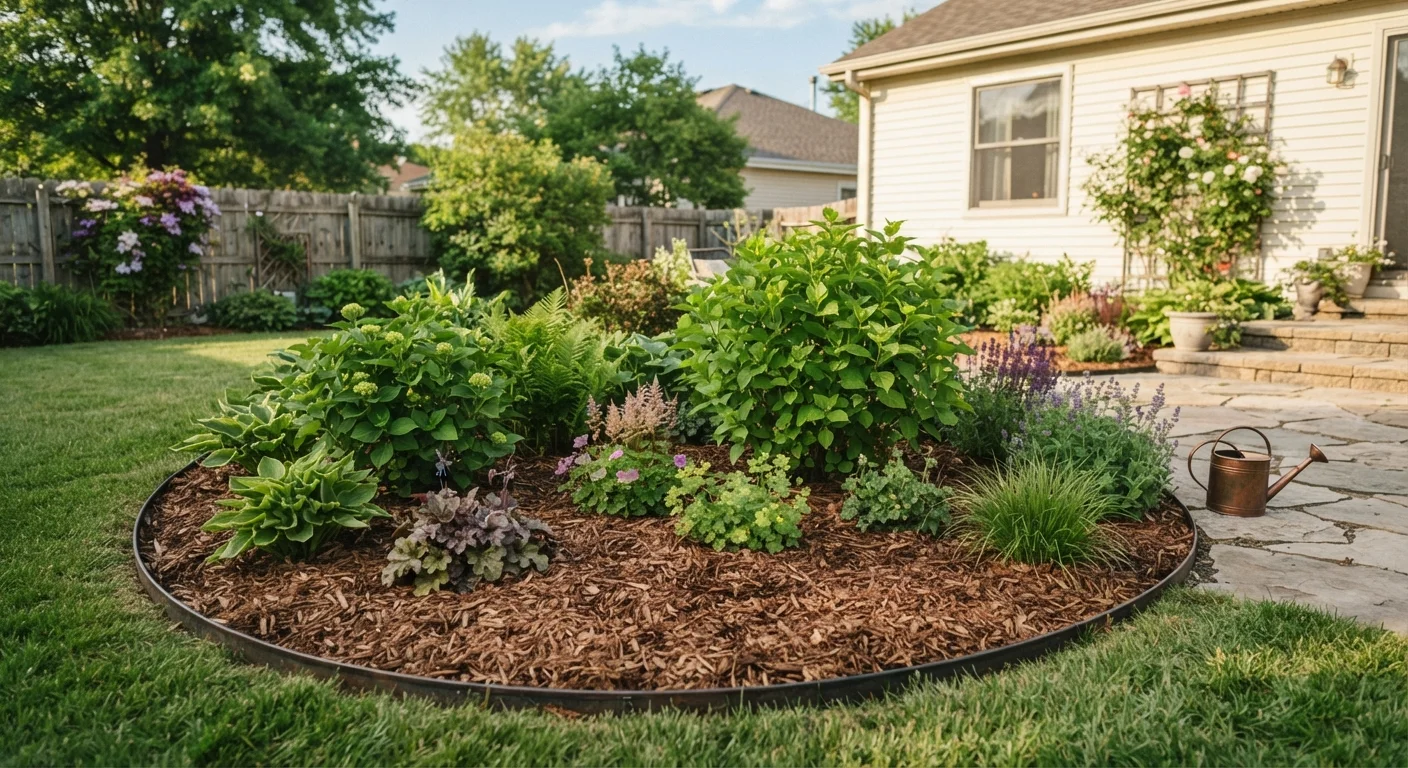
Photo credit: InfoHorizon.net | Access To Informative Content
In this article
Types, depths, timing, benefits, and common pitfalls — this end-to-end guide covers everything about using mulch effectively in your yard.
Key Takeaways
- Mulch conserves soil moisture, moderates temperature, and suppresses weeds all at once.
- Organic mulches break down over time and improve soil structure; inorganic mulches do not.
- Apply 2–3 inches of mulch for most beds; never pile it against plant stems or tree trunks.
- Spring and fall are the two best times to mulch, each for different protective reasons.
- Volcano mulching — piling mulch high around a tree base — causes serious long-term damage.
What Mulch Actually Does for Your Garden
Mulch is any material laid on top of the soil surface around plants. It sounds simple, and the application is, but its effects run surprisingly deep. A proper layer of mulch performs several jobs simultaneously: it slows water evaporation from the soil, keeps root zones cooler in summer and warmer in winter, reduces soil compaction from rain, and creates a physical barrier that makes it harder for weed seeds to germinate.
Organic mulches — wood chips, shredded leaves, straw, pine needles — add a bonus benefit: as they decompose, they feed soil microbes and gradually improve soil structure. This matters especially if your yard has clay-heavy or sandy soil that struggles to retain nutrients. For gardeners growing hardy perennials, a consistent mulch layer can be the difference between plants that merely survive winter and ones that come back strong every spring.
25–50%
Soil moisture loss reduced by mulch
Research from university cooperative extension programs consistently shows mulched soil loses significantly less moisture to evaporation than bare soil.
2–3 inches
Recommended mulch depth for most beds
This depth range is the widely accepted standard among horticulture educators for balancing moisture retention with adequate soil aeration.
10°F
Soil temperature buffer mulch provides
A proper mulch layer can moderate root-zone soil temperature swings by roughly 10 degrees Fahrenheit across both summer heat and winter cold.
Organic vs. Inorganic Mulch: Which Should You Use?
The right mulch depends on where you're using it and what you need it to do.
Organic Mulches
- Wood chips and shredded bark: Durable, widely available, and excellent for shrub borders and tree rings. They break down slowly and feed soil biology over time.
- Straw: A favorite in vegetable gardens. It's lightweight, easy to move, and breaks down within a single season — which is actually a plus when you're turning over beds.
- Shredded leaves: Free if you have trees. Run them through a mower first so they don't mat together and block water. A great complement to a home composting routine.
- Pine needles (pine straw): Ideal around acid-loving plants like blueberries and azaleas. They interlock slightly, making them resist washing away on slopes.
Inorganic Mulches
- Gravel and river rock: Permanent, low-maintenance, and useful in xeriscaped or drought-prone areas. They don't add nutrients and can raise soil temperature significantly in hot climates.
- Landscape fabric: Often paired with gravel. It suppresses weeds initially but can degrade, shift, and trap debris over time — requiring eventual removal.
Before choosing a mulch, ask yourself whether you want it to feed your soil over time or simply stay put permanently. That single question will steer you toward organic or inorganic mulch faster than any other factor.
Many gardeners pick mulch based on appearance alone and then replace it repeatedly because it doesn't meet their underlying need — either soil improvement or low-maintenance permanence.
When using wood chip mulch, request aged chips from a local tree service rather than fresh-cut material. Aged chips have already begun decomposing and are far less likely to temporarily pull nitrogen from your soil.
Fresh wood chip decomposition is driven by nitrogen-hungry microbes, which can briefly reduce the nitrogen available to nearby plant roots — a particular concern in nutrient-sensitive beds.
How Much Mulch to Apply — and Where
Depth matters. Too little mulch and you lose the moisture-retention and weed-suppression benefits. Too much and you risk suffocating roots and inviting fungal problems.
- General garden beds: 2–3 inches is the standard recommendation for most ornamental and vegetable beds.
- Around trees: 3–4 inches extending out to the drip line (the edge of the tree's canopy), but kept at least 3–4 inches away from the trunk itself.
- Vegetable gardens: 2 inches of straw or shredded leaves keeps the soil workable and moisture consistent without interfering with planting.
When calculating volume, a simple rule of thumb: one cubic yard of mulch covers approximately 100 square feet at a 3-inch depth. Many home improvement retailers sell mulch by the bag (typically 2 cubic feet) or by the bulk yard — buying in bulk is more economical for larger areas.
Quick Volume Calculator for Mulch
Multiply your bed's length (feet) × width (feet) × desired depth (in feet — so 3 inches = 0.25 ft), then divide by 27 to get cubic yards. This saves you from over-ordering or making multiple trips. For example, a 10 × 20 ft bed at 3 inches deep needs about 2.2 cubic yards.
When to Mulch: Timing by Season
Mulch is a year-round tool, but the timing of application shifts its purpose.
Spring
Apply after the soil has warmed but before summer heat arrives. Early spring mulching locks in soil moisture during the critical establishment period for new plantings. Wait until the ground has thawed and dried slightly — mulching frozen or waterlogged soil traps problems rather than preventing them.
Fall
Fall mulching protects plant roots from freeze-thaw cycles that heave them out of the ground. Apply after the first hard frost has knocked back annual growth but before the ground freezes solid. This is an important step in any fall yard preparation routine.
Summer Top-Ups
Organic mulch naturally compresses and breaks down. Check depth in midsummer and add a thin layer if coverage has dropped below 2 inches — especially around water-sensitive plants if you're relying on mulch to reduce irrigation frequency. See how mulching interacts with irrigation system choices for a full picture of garden water management.
Common Mulching Mistakes to Avoid
A few well-meaning habits can actually harm your plants.
Never Mulch Against Plant Stems or Tree Trunks
Direct contact between mulch and plant stems or bark holds moisture against the tissue and invites fungal disease, rot, and pest activity. This single mistake is responsible for more mulch-related plant damage than any other. Keep a clear gap of at least 3–4 inches around every trunk and stem — no exceptions.
Other Frequent Errors
- Using uncomposted wood chips near vegetables: Fresh wood chips can temporarily tie up soil nitrogen as they decompose. Use aged or composted wood chips in vegetable beds, or stick to straw.
- Ignoring weed prep: Mulch suppresses weed germination but won't kill established weeds. Clear existing weeds before applying. Pairing mulch with broader natural weed control strategies gives you the best long-term results.
- Applying over dry soil: Mulch slows moisture movement in both directions. If soil is dry when you mulch, water first — otherwise the mulch layer can actually make it harder for rain to penetrate.
- Using dyed or treated wood products in edible gardens: Reserve colored or chemically treated wood mulches for purely ornamental areas.
Mulch and Weed Control: Setting Realistic Expectations
Mulch is one of the most effective non-chemical weed management tools available, but it isn't foolproof. A 2–3 inch layer blocks light from reaching weed seeds in the soil, preventing most from germinating. However, weed seeds deposited on top of the mulch by wind, birds, or foot traffic can still sprout in the mulch layer itself — which is why periodic hand-weeding remains part of the equation even with good mulch coverage.
For gardeners dealing with persistent perennial weeds, a layer of cardboard or several sheets of newspaper laid directly on the soil before mulching can significantly strengthen suppression. This method (sometimes called sheet mulching) is particularly useful when converting a lawn area into a new planting bed — it smothers grass and breaks down fully within one growing season.
Understanding your soil type and garden conditions also helps you choose the right mulch and anticipate how quickly it will break down, which directly affects how often you'll need to replenish it. With consistent application each spring and fall, most gardeners find their weed pressure decreases meaningfully over two to three seasons as the seed bank in the soil is slowly exhausted.
Mulch Breaks Down — That's a Feature
Organic mulch disappearing over time is not a failure; it means the material is feeding your soil. Plan to top up beds every spring and fall. Over several years, you'll notice improved soil texture and drainage as a direct result of this natural process.

Author
Home & Garden Editorial Team
Home & Garden Editorial Team is the collective byline for our editorial team and contributor network. Articles published under this byline or an editorial pen name are researched, written, and reviewed according to our editorial standards for clarity, consistency, and independence before publication.
View all articles →