
Drip Irrigation vs. Sprinkler Systems for Home Gardens
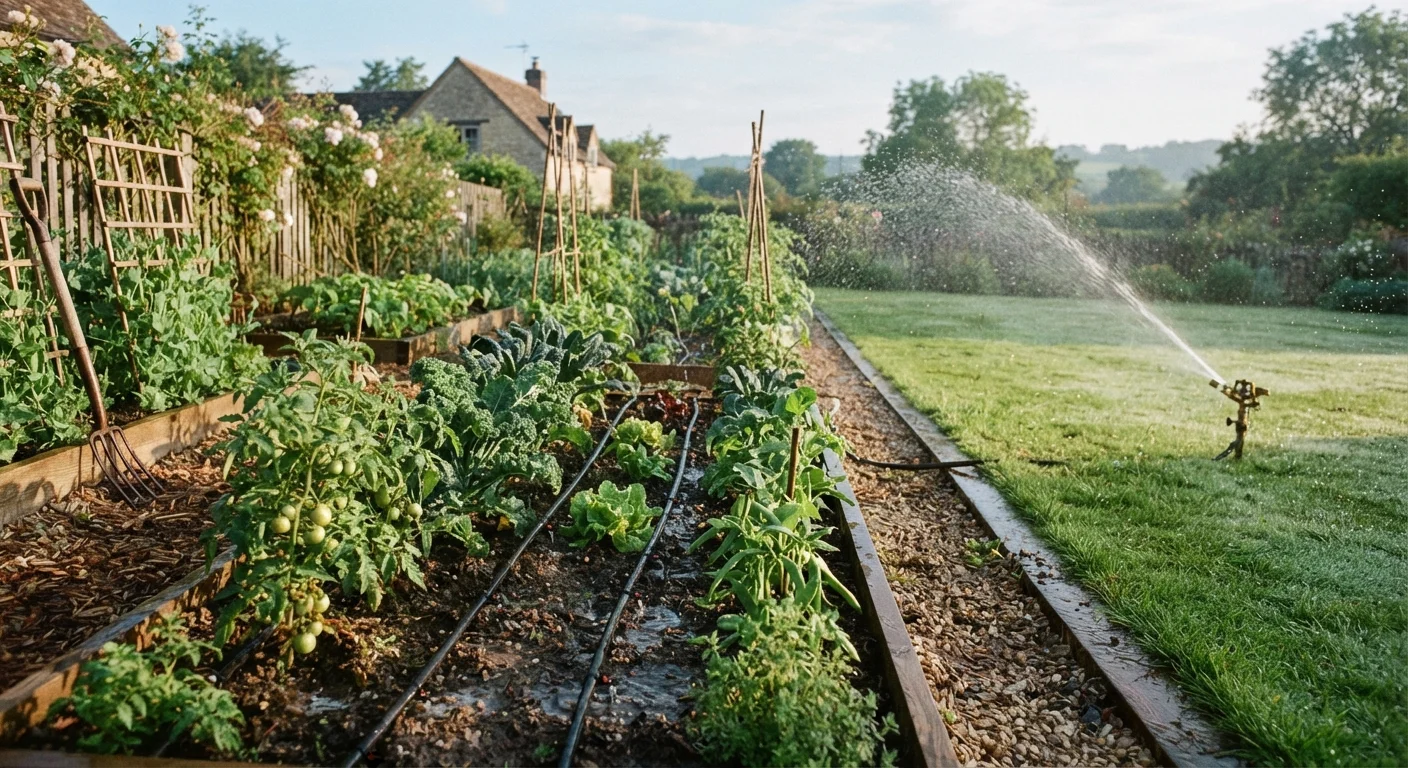
Photo credit: InfoHorizon.net | Access To Informative Content
In this article
Drip and sprinkler irrigation serve different needs. See how they compare on water efficiency, installation effort, and plant compatibility.
Key Takeaways
- Drip irrigation delivers water directly to plant roots, reducing waste and limiting weed growth.
- Sprinkler systems cover large areas quickly but lose more water to evaporation and wind drift.
- Drip setups typically cost less upfront for small garden beds but require more hands-on planning.
- Sprinklers are easier to install across a full lawn and suit grass far better than drip lines.
- Both systems work best when paired with a timer and adjusted seasonally for local rainfall patterns.
- Your garden's size, plant types, and water bill goals should drive the decision.
How Each System Works
Understanding the mechanics of each method helps you match the technology to what your garden actually needs.
Drip irrigation uses a network of flexible tubing and small emitters — sometimes called drippers or soaker lines — placed at or just below the soil surface. Water seeps out slowly and directly around each plant's root zone, keeping the surrounding soil and plant leaves dry. This targeted delivery is one reason drip systems pair so well with vegetable and raised beds. See our guide to starting a vegetable garden in a small backyard for practical layout ideas.
Sprinkler systems distribute water overhead in a broad arc or rotating pattern, much like rainfall. Water lands across the entire surface of a lawn or planting area. In-ground systems use buried supply lines connected to pop-up heads that rise when water pressure activates the zone. Above-ground hose-end sprinklers work on the same principle but without permanent installation.
| Criterion | Drip Irrigation | Sprinkler Systems |
|---|---|---|
| Best plant types | Vegetables, shrubs, trees, raised beds | Lawns, ground covers, large open areas |
| Water efficiency | High — targets root zone directly | Moderate — losses to evaporation and wind |
| Foliage exposure | Leaves stay dry | Overhead wetting of leaves |
| Installation difficulty | Low to moderate for small beds | Moderate to high for in-ground systems |
| Upfront cost (basic setup) | Low for small garden beds | Higher, especially for in-ground systems |
| Coverage area | Targeted; not suited for lawns | Wide; excellent for large open spaces |
| Maintenance needs | Check emitters and tubing seasonally | Check heads and pressure seasonally |
| Automation ease | Simple timer connection at faucet | Multi-zone controllers available |
Water Efficiency and Plant Health
Water efficiency is where drip irrigation earns its strongest reputation. Because water goes directly to the root zone with minimal surface exposure, less is lost to evaporation — particularly important during hot, dry summers. Overhead sprinklers can lose a noticeable share of applied water to evaporation and wind drift before it ever reaches the soil.
30–50%
Potential water savings with drip vs. sprinklers
The U.S. Environmental Protection Agency notes that drip irrigation can be significantly more efficient than overhead watering in typical garden bed applications.
50%
Outdoor water use goes to landscaping
The EPA estimates that roughly half of residential water use in the U.S. goes toward outdoor irrigation, much of it applied inefficiently.
1–2 GPH
Typical drip emitter flow rate
Standard drip emitters deliver one to two gallons per hour, allowing slow saturation that minimizes runoff compared to overhead sprinklers.
Drip irrigation also keeps foliage dry, which meaningfully reduces the risk of fungal diseases such as powdery mildew. If you've ever struggled with overwatering and its damaging effects on plants, drip's slow, controlled output is a natural safeguard — it's harder to flood a root zone when water trickles in at a measured pace.
Sprinklers, on the other hand, are ideal for grass because turf needs moisture delivered across its entire surface area. Drip lines laid in a lawn would never cover enough ground to keep grass consistently healthy.
Pairing either system with a layer of mulch over your beds dramatically improves water retention and reduces how often you need to run either system.
Installation, Cost, and Maintenance
Neither system requires professional expertise for a basic setup, but complexity scales with your garden's size. For small beds and container gardens, a drip kit can be assembled in an afternoon with no special tools. The tubing is cut to length, emitters are inserted, and the whole line connects to an outdoor faucet — ideally through a timer and a backflow preventer (a small device that stops irrigation water from flowing backward into your household supply).
In-ground sprinkler systems involve trenching, pipe fitting, and tying into your home's water supply — work that often benefits from professional installation, especially when connecting to main supply lines. If you're evaluating which tasks to handle yourself versus hire out, the general principles in this guide to DIY vs. professional service apply broadly to home systems as well.
Check Local Codes Before Installing
Some municipalities require a backflow preventer on any irrigation line connected to a household water supply — and a few require permits for in-ground sprinkler systems. Before you start trenching or tapping into supply lines, check with your local water utility or building department. Requirements vary widely by city and state.
Drip systems require periodic inspection for clogged emitters and rodent damage to tubing — both common issues. Sprinkler heads can sink, shift, or clog with debris and should be checked each season for coverage gaps. Both systems benefit from winterization in freezing climates: drain lines or use a compressor to blow out residual water before the first hard frost.
Which Is Right for Your Garden?
There's no single winner — the right system depends on what you're growing, how your yard is laid out, and how much hands-on management you want to do. Many homeowners ultimately use both: sprinklers for lawn zones and drip lines for dedicated garden beds, each on its own timer zone.
If your priority is a productive food garden or ornamental bed with diverse plant types, drip irrigation rewards the upfront planning with long-term water savings and healthier plants. If your priority is a lush, even lawn with minimal maintenance, a well-designed sprinkler system is hard to beat. For those exploring how garden structure interacts with irrigation choices, raised beds vs. in-ground gardens is worth reading before you commit to a layout.
Whatever you choose, pairing your system with a programmable timer and adjusting run times seasonally — watering less in cool, rainy periods and more during heat waves — is the single biggest factor in both plant health and water conservation.

Author
Home & Garden Editorial Team
Home & Garden Editorial Team is the collective byline for our editorial team and contributor network. Articles published under this byline or an editorial pen name are researched, written, and reviewed according to our editorial standards for clarity, consistency, and independence before publication.
View all articles →