
DIY vs. Professional Service: Knowing Which Jobs to Tackle Yourself
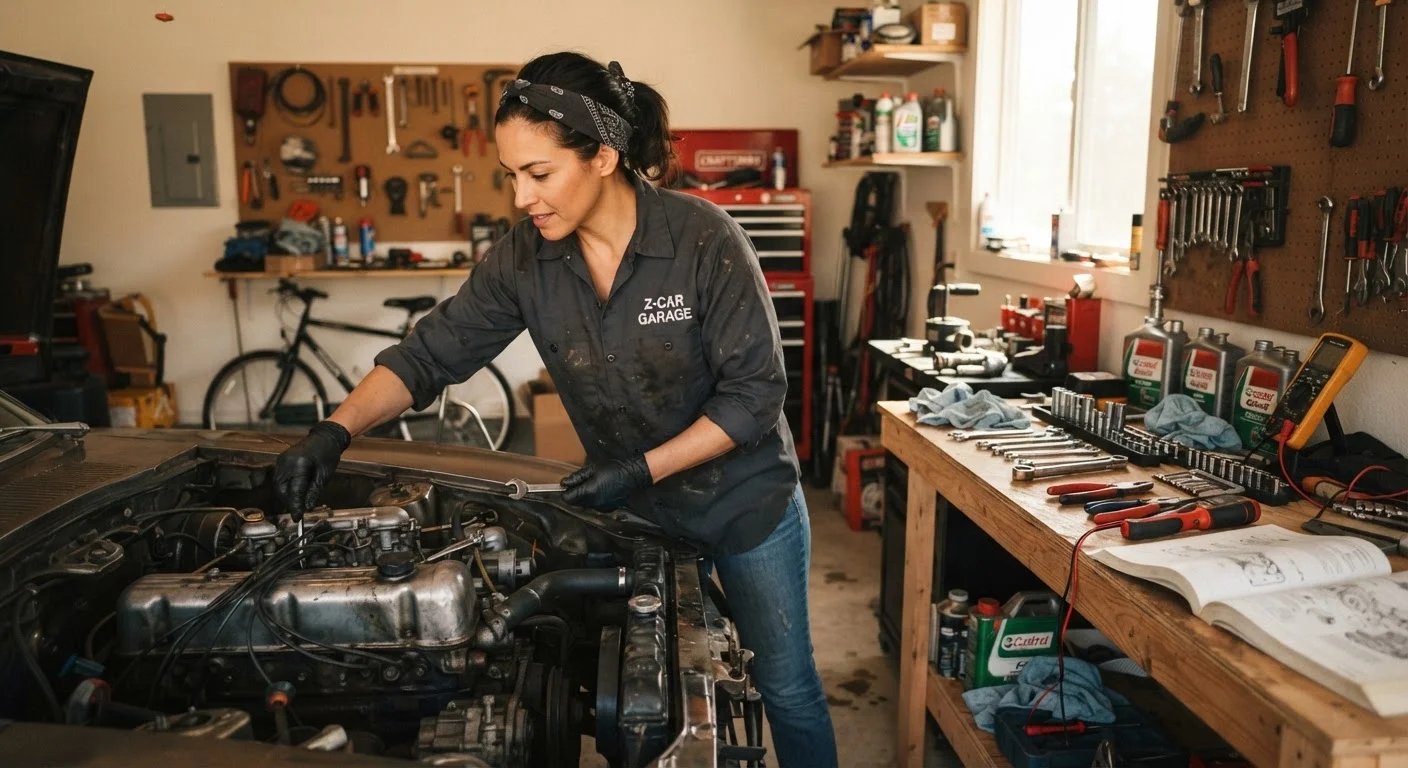
Photo credit: InfoHorizon.net | Access To Informative Content
In this article
Some maintenance tasks are safe and straightforward for home mechanics. Others carry real risk. Here's how to tell the difference.
Key Takeaways
- Routine tasks like oil changes and air filter swaps are well within reach for most home mechanics.
- Brake system, suspension, and airbag work carry serious safety risks and typically warrant professional attention.
- The right call depends on your tools, skill level, and the consequences of getting it wrong.
- Misdiagnosing a problem can make DIY more expensive than professional service in the long run.
- When in doubt, a diagnostic appointment is a low-cost way to clarify what a job actually involves.
Reduces routine maintenance costs significantly
Labor charges account for a substantial portion of most service bills. Handling straightforward tasks yourself eliminates that cost entirely for qualifying jobs.
Builds genuine mechanical familiarity with your vehicle
Regular hands-on contact with your car helps you detect changes in condition - unusual sounds, leaks, or wear patterns - earlier than a driver who never opens the hood.
Many routine tasks are genuinely low-risk
Air filters, wiper blades, cabin filters, and fluid top-offs involve no safety-critical systems and can be completed with basic tools in under an hour.
Gives you more control over parts quality
When sourcing your own parts, you can verify specifications and choose components that meet your vehicle manufacturer's standards rather than relying on shop inventory.
Safety-critical errors can be invisible until failure
A brake or steering mistake may not be apparent during a driveway test but can manifest dangerously at speed. The risk profile is asymmetric - minor errors in critical systems can have major consequences.
Incorrect diagnosis makes DIY more expensive
Replacing the wrong part based on guesswork wastes money and leaves the root problem unresolved, sometimes compounding damage in the process.
Specialty tools add upfront costs
Jobs beyond basic maintenance often require tools - torque wrenches, OBD-II scanners, spring compressors - that represent a real investment for infrequent use.
Some work voids warranty coverage
On newer vehicles, certain repairs performed outside an authorized facility may affect warranty terms, particularly for powertrain or emissions-related components.
Access to reliable vehicle-specific guidance is not guaranteed
Generic tutorials may omit model-specific steps or torque specifications that are critical to doing a job correctly and safely.
The Case for Doing It Yourself
Handling your own car maintenance can deliver real benefits - lower out-of-pocket costs, a stronger understanding of how your vehicle works, and the satisfaction of keeping a machine running on your own terms. For many routine tasks, the barrier to entry is lower than most drivers assume.
Reduces routine maintenance costs significantly
Labor charges account for a substantial portion of most service bills. Handling straightforward tasks yourself eliminates that cost entirely for qualifying jobs.
Builds genuine mechanical familiarity with your vehicle
Regular hands-on contact with your car helps you detect changes in condition - unusual sounds, leaks, or wear patterns - earlier than a driver who never opens the hood.
Many routine tasks are genuinely low-risk
Air filters, wiper blades, cabin filters, and fluid top-offs involve no safety-critical systems and can be completed with basic tools in under an hour.
Gives you more control over parts quality
When sourcing your own parts, you can verify specifications and choose components that meet your vehicle manufacturer's standards rather than relying on shop inventory.
Tasks like engine air filter replacements, cabin filter swaps, wiper blade changes, and basic fluid top-offs generally require minimal tools and carry little consequence if something goes slightly wrong. An oil change - often cited as the gateway DIY job - is manageable with a few hand tools, a drain pan, and an afternoon. Over time, performing these jobs yourself also builds familiarity with your specific vehicle, making it easier to notice when something sounds or feels off before it becomes a bigger problem. See what delayed maintenance can cost to understand why staying on top of these basics matters.
Where DIY Carries Real Risk
Not every job belongs in a home garage. Some automotive tasks involve safety-critical systems where an error doesn't just mean a return trip - it can mean a dangerous vehicle on the road.
Safety-critical errors can be invisible until failure
A brake or steering mistake may not be apparent during a driveway test but can manifest dangerously at speed. The risk profile is asymmetric - minor errors in critical systems can have major consequences.
Incorrect diagnosis makes DIY more expensive
Replacing the wrong part based on guesswork wastes money and leaves the root problem unresolved, sometimes compounding damage in the process.
Specialty tools add upfront costs
Jobs beyond basic maintenance often require tools - torque wrenches, OBD-II scanners, spring compressors - that represent a real investment for infrequent use.
Some work voids warranty coverage
On newer vehicles, certain repairs performed outside an authorized facility may affect warranty terms, particularly for powertrain or emissions-related components.
Access to reliable vehicle-specific guidance is not guaranteed
Generic tutorials may omit model-specific steps or torque specifications that are critical to doing a job correctly and safely.
Brake system work is the most commonly mishandled DIY territory. Improperly installed brake pads, a compromised brake line, or an incorrectly bled system can reduce stopping power in ways that aren't always immediately apparent. Suspension and steering components are similarly unforgiving - small errors in torque or alignment can cause unpredictable handling. Airbag systems (Supplemental Restraint Systems, or SRS) should never be approached without professional training; accidental deployment during service can cause serious injury.
When a Diagnostic Appointment Makes Sense
If you're unsure what a job actually involves, paying for a professional diagnostic inspection is often the most cost-effective first step. A qualified technician can confirm the root cause, outline the scope of work, and let you decide whether to proceed with DIY or professional service. This is especially valuable for check-engine lights, unusual noises, or any symptom you can't clearly identify. Going in informed also makes it easier to ask the right questions - see what to ask before any service appointment.
Transmission service, timing belt or chain replacement, and any work requiring specialized factory tooling are also areas where the cost of a professional doing it right the first time is typically lower than diagnosing and repairing a DIY error.
A Practical Framework for Deciding
Before committing to a repair, run through a straightforward set of questions:
- Do I have the correct tools? Many jobs require more than a basic socket set - torque wrenches, specialty pullers, or scan tools may be necessary.
- Can I find reliable, vehicle-specific instructions? A general YouTube video is not a substitute for your vehicle's service manual.
- What's the consequence of getting it wrong? A misaligned wiper blade is inconvenient; a misaligned brake caliper is dangerous.
- Am I diagnosing correctly? Replacing parts based on a guess is often more expensive than a professional diagnostic. A check-engine light, for instance, requires a scan tool to read fault codes accurately.
~35%
Typical labor share of a service bill
Industry estimates suggest labor commonly represents roughly a third or more of total repair costs, making it the primary driver of savings for successful DIY jobs.
Top 3
Most common DIY-gone-wrong categories
According to automotive technician surveys, brake jobs, suspension work, and electrical system repairs are the repairs most frequently completed incorrectly by non-professionals.
If you're uncertain about the diagnosis itself, knowing what to ask a mechanic before you go in can help you get clear answers without unnecessary upsells.
Building Skill Gradually and Safely
The most capable home mechanics didn't start with a timing belt replacement. They built competence through low-stakes tasks, accumulated the right tools over time, and learned to recognize when a job had moved beyond their current skill level.
Starting with exterior maintenance - washing, detailing, inspecting tire pressure and tread depth - costs nothing and builds attentiveness. Moving to fluids and filters adds mechanical familiarity. Brakes, if pursued, are best learned with hands-on guidance rather than video alone. Many community colleges and automotive programs offer weekend courses specifically for non-professionals.
Knowing when to stop is a skill in itself. If a job reveals unexpected complexity - stripped bolts, corrosion, an unfamiliar component - pausing and consulting a professional is the competent choice, not a defeat. The goal isn't to do everything yourself; it's to make informed, confident decisions about what belongs on your to-do list and what doesn't.

Author
Cars Editorial Team
Cars Editorial Team is the collective byline for our editorial team and contributor network. Articles published under this byline or an editorial pen name are researched, written, and reviewed according to our editorial standards for clarity, consistency, and independence before publication.
View all articles →