
Overwatering: The Most Common Way Gardeners Kill Healthy Plants
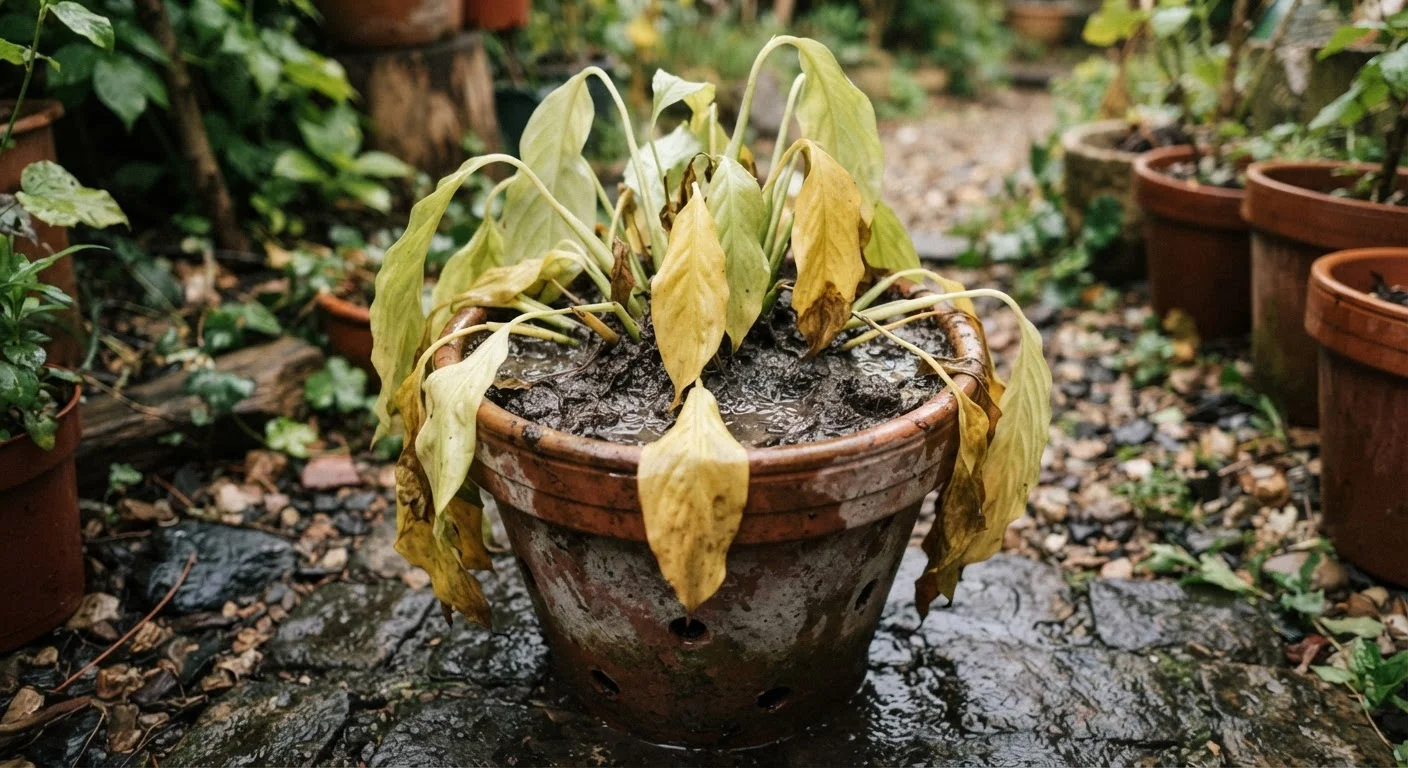
Photo credit: InfoHorizon.net | Access To Informative Content
In this article
Overwatering is harder to recognize than drought stress. Learn the warning signs, the root causes, and how to recalibrate your watering habits.
Key Takeaways
- Overwatered plants often look wilted, just like underwatered ones — the soil tells the real story.
- Root rot sets in quickly in saturated soil and can kill a plant before visible symptoms appear.
- Watering on a fixed schedule ignores weather, season, and plant needs — check soil moisture instead.
- Poor drainage is often the true culprit; even moderate watering causes damage in compacted or clay-heavy soil.
- Mulching correctly helps soil retain moisture without becoming waterlogged between watering sessions.
Why Overwatering Is So Easy to Miss
Most gardeners think of overwatering as a rookie mistake — something easily spotted and quickly fixed. In reality, it's the leading cause of plant death in home gardens, precisely because the symptoms mimic the problems we're trying to prevent. A wilting plant looks thirsty. Yellow leaves suggest neglect. So we water more, and the plant declines faster.
The core issue is that roots need both water and oxygen to function. When soil stays saturated, air pockets disappear and roots suffocate. Fungi that cause root rot thrive in these anaerobic (oxygen-deprived) conditions, breaking down root tissue faster than most gardeners expect. By the time the plant signals distress above ground, significant damage has often already occurred below it.
Understanding this dynamic shifts how you approach plant care — from a watering mindset to a soil health mindset.
~90%
Of houseplant deaths linked to overwatering
Horticultural educators commonly cite overwatering as the number one preventable cause of houseplant and container plant failure in the United States.
48 hrs
Time for root rot to begin in saturated soil
Root rot fungi such as Phytophthora can begin colonizing root tissue within 24–48 hours of sustained waterlogging, particularly in warm conditions.
The Mistakes That Lead to Overwatering
Overwatering rarely comes from a single bad decision. It usually results from a cluster of well-intentioned habits that compound over time. The mistakes below cover the most common patterns — and more importantly, how to break them.
Watering on a fixed daily or weekly schedule regardless of conditions.
Why it happens: Routines feel safe and easy to maintain. Many gardeners assume consistency equals care, not realizing that plant water needs shift dramatically with temperature, rainfall, and season.
Confusing overwatering symptoms with drought stress and adding more water.
Why it happens: Both overwatering and underwatering can cause wilting, yellowing, and leaf drop, so the visual signs look nearly identical. Gardeners often respond to any drooping plant by reaching for the hose.
Planting in containers or beds with inadequate drainage.
Why it happens: Gardeners often choose pots for aesthetics or fill raised beds without considering soil composition, leading to water pooling at the root zone even with moderate watering habits.
Applying the same watering amount to all plants regardless of species or size.
Why it happens: It feels efficient to water everything at once on the same cycle. Gardeners may not realize that succulents, herbs, and vegetable starts have vastly different moisture requirements.
Over-relying on automated irrigation systems without adjustment.
Why it happens: Irrigation timers are set once and often forgotten. A schedule calibrated for a dry August will continue running through a wet September, saturating soil that's already receiving enough rainfall.
One often-overlooked ally in moisture management is mulch. A 2–3 inch layer of organic mulch slows evaporation, moderating how quickly soil dries — which means you naturally water less without stressing your plants. See our complete guide to using mulch for depth recommendations and material choices by plant type.
Don't Ignore Drainage Problems
If your garden beds drain poorly after rain, no adjustment to your watering schedule will fully solve the problem. Standing water or persistently soggy soil signals a structural issue — compacted subsoil, heavy clay content, or poor bed design. Addressing drainage at the source, through soil amendment or bed reconfiguration, is the only lasting fix. Continuing to plant in waterlogged conditions puts every new plant at risk regardless of how carefully you water.
Rebuilding a Smarter Watering Routine
The goal isn't to water less — it's to water right. That means letting the plant and soil guide the schedule rather than the clock. Here's a simple framework to recalibrate:
- Check before you water. Use the two-inch finger test or a basic moisture meter (available at most garden centers) to confirm the soil has dried to an appropriate depth for the plant type.
- Water deeply and infrequently. Shallow, frequent watering keeps the top layer moist but encourages shallow roots. Deep watering — soaking the root zone thoroughly, then allowing it to partially dry — builds stronger, more drought-resilient root systems.
- Observe after rain. Track rainfall amounts and skip irrigation when nature provides. A simple rain gauge costs very little and removes the guesswork.
- Revisit drainage. If your soil compacts easily or puddles form after rain, address the underlying drainage problem rather than adjusting your watering frequency alone.
Healthy watering habits are less about effort and more about paying attention. Once you learn to read your soil and plants accurately, overwatering becomes far easier to prevent — and your garden will show the difference.

Author
Home & Garden Editorial Team
Home & Garden Editorial Team is the collective byline for our editorial team and contributor network. Articles published under this byline or an editorial pen name are researched, written, and reviewed according to our editorial standards for clarity, consistency, and independence before publication.
View all articles →