
The World of Fermented Drinks Beyond Beer and Wine
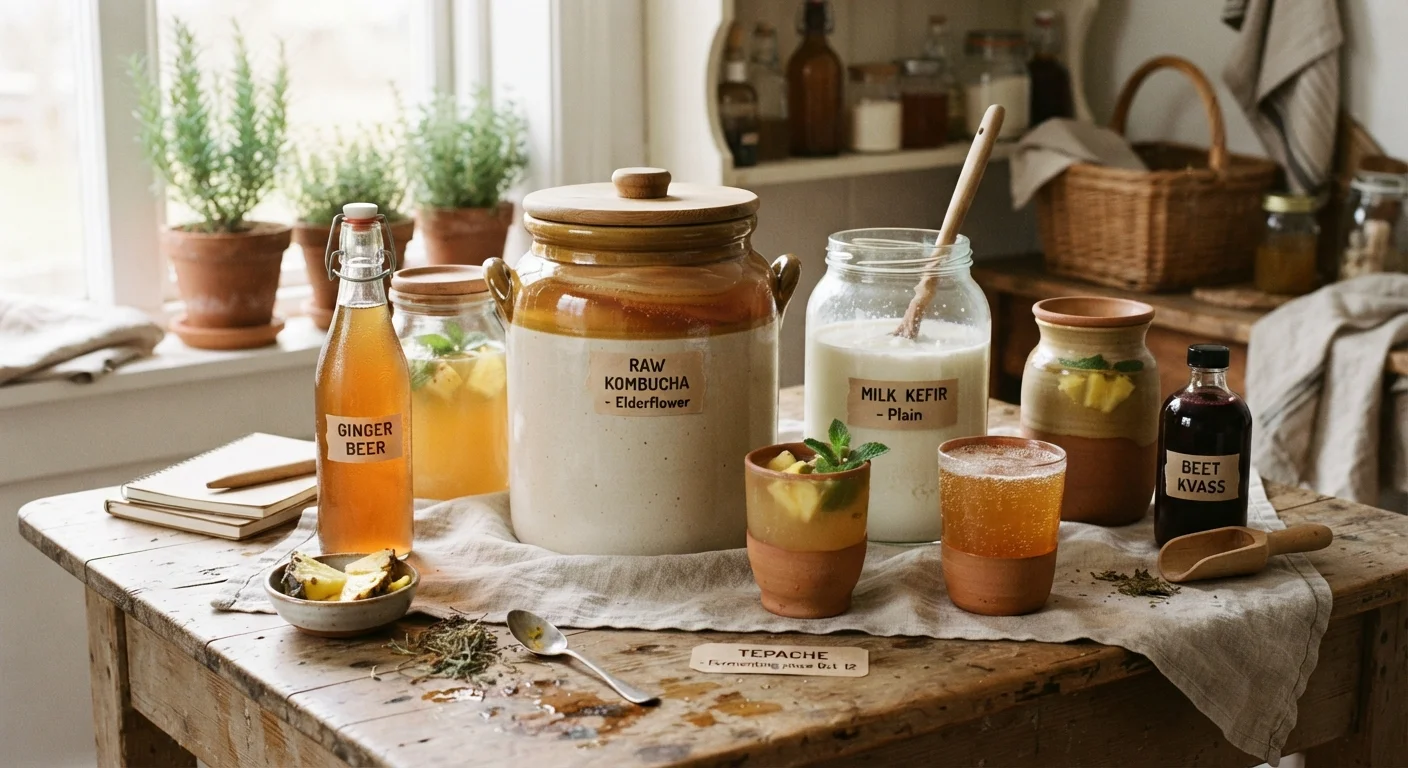
Photo credit: InfoHorizon.net | Access To Informative Content
In this article
- What Fermentation Actually Does to a Drink
- Kombucha and Water Kefir: The American Pantry Staples
- Dairy-Based Fermented Drinks: Kefir, Lassi, and Ayran
- Grain-Based Ferments: Kvass, Amazake, and Chicha
- Fruit and Vegetable Ferments: Tepache, Beet Kvass, and Jun
- Alcohol Content: What You Should Know
- Getting Started at Home
Kefir, kombucha, tepache, kvass, and more — fermented beverages span every culture. A guided tour of the broader world of fermentation.
Key Takeaways
- Fermentation is a microbial process that transforms sugars into acids, gases, or small amounts of alcohol.
- Dozens of fermented beverages exist worldwide — many require no special equipment to make at home.
- Alcohol content varies widely; some fermented drinks are nearly alcohol-free while others rival wine.
- Fermented beverages contain live cultures, organic acids, and other compounds that affect flavor and nutrition.
- Starting with kombucha, water kefir, or tepache is beginner-friendly and low-risk.
What Fermentation Actually Does to a Drink
Fermentation is the process by which microorganisms — primarily bacteria, yeasts, or both — consume sugars and produce byproducts. Depending on what's doing the work and what's being fed, you get different results: carbon dioxide makes drinks fizzy, lactic acid creates tartness, and ethanol produces alcohol. Most fermented beverages involve combinations of these outcomes.
Beer and wine get most of the cultural spotlight, but they represent only one corner of fermentation — the predominantly yeast-driven, higher-alcohol corner. The broader world includes drinks fermented primarily by bacteria, or by communities of microorganisms called SCOBYs (Symbiotic Culture of Bacteria and Yeast) and kefir grains. These produce tart, lightly effervescent, or creamy drinks with minimal alcohol. Understanding this distinction helps you navigate what you're actually drinking when you pick up a bottle of kombucha versus a glass of cider.
0.5% ABV
Max alcohol in US commercial kombucha
The U.S. TTB requires kombucha with more than 0.5% ABV to be regulated as an alcoholic beverage.
~5,000 years
Estimated age of fermented drink traditions
Archaeological evidence points to fermented grain and fruit beverages being produced in multiple civilizations by at least 3000 BCE.
Under 1%
Typical ABV of traditional bread kvass
Short fermentation time (1–3 days) keeps kvass well below legal alcohol thresholds in most countries.
Kombucha and Water Kefir: The American Pantry Staples
Kombucha is brewed tea fermented with a SCOBY. The culture eats the sugar added to sweetened tea and produces acetic and lactic acids, B vitamins, and a small amount of alcohol — typically under 0.5% ABV in commercial versions, though home brews can run higher. The result is a tangy, slightly sweet, effervescent drink. Flavor varies enormously depending on the tea used and any secondary fermentation with fruit or juice.
Water kefir uses kefir grains (a different culture from dairy kefir) to ferment sugar water or fruit juice. It's lighter and less acidic than kombucha, making it a popular introduction to fermented drinks for people sensitive to strong flavors. Both are well-suited to home production — see our home fermentation guide for a full breakdown of equipment and safety.
Store-bought vs. home-brewed kombucha
Commercial kombucha is carefully controlled to stay under the 0.5% ABV federal threshold. Home-brewed kombucha can exceed this, especially with a second fermentation in sealed bottles. If alcohol content matters for your situation, commercial versions offer more predictability.
Dairy-Based Fermented Drinks: Kefir, Lassi, and Ayran
Dairy kefir is milk fermented with kefir grains — a complex community of bacteria and yeasts. The result is a drinkable, tangy cultured milk thicker than regular milk but thinner than yogurt. It has deep roots in the Caucasus region and Central Asia, where it has been made for centuries.
Lassi comes from the Indian subcontinent and is traditionally made by blending yogurt with water, then seasoning it savory (with cumin and salt) or sweet (with fruit and sugar). It's not fermented in the home kitchen the way kefir is — it relies on the fermentation already done in the yogurt — but it belongs squarely in the fermented drink family.
Ayran, popular across Turkey, Central Asia, and the Middle East, is a similar idea: yogurt, water, and salt whisked together into a refreshing, slightly sour drink served cold. Each of these beverages demonstrates how a single fermentation principle — culturing milk — produces distinctly different traditions. Just as tea diverged across cultures from a single leaf, fermented milk became something different in nearly every region that practiced it.
When making dairy kefir at home, temperature is your biggest variable — grains ferment fastest around 68–78°F. If your kitchen runs cold, expect a longer, milder ferment; warmer rooms produce sharper, more sour results.
Controlling fermentation temperature is the single most reliable lever home fermenters have over final flavor, and it's easy to overlook.
For tepache, don't discard the pineapple core — it contains high concentrations of wild yeast and speeds fermentation noticeably.
Wild yeasts on fruit skins and cores are what drive fermentation in non-cultured drinks; using the whole fruit maximizes microbial activity.
Grain-Based Ferments: Kvass, Amazake, and Chicha
Kvass is a traditional Eastern European drink made by fermenting stale rye bread in water. The fermentation is brief — usually one to three days — which keeps alcohol levels very low (typically under 1% ABV). The flavor is malty, slightly sour, and faintly yeasty. It's been a daily beverage in Russia and Ukraine for centuries, serving both as refreshment and a mild source of B vitamins.
Amazake is a Japanese fermented rice drink made using koji (Aspergillus oryzae mold), which breaks the rice starches into sugars. Depending on preparation, it can be nearly alcohol-free or mildly alcoholic. Traditionally served warm in winter, it has a thick, porridge-like consistency and a naturally sweet flavor — no added sugar needed.
Chicha has many regional variations across Latin America. In its traditional Andean form, it is made from maize (corn) that is chewed or sprouted to activate amylase enzymes, then fermented. Modern versions often use germinated corn instead. Alcohol content varies widely by region and preparation.
Traditional chicha preparation varies widely
Chicha made with the traditional chewing method carries different microbial risks than commercially prepared versions. If you're exploring home production, research the specific preparation method carefully and consider starting with germinated-corn versions, which are more controllable. Alcohol content can also reach levels comparable to beer.
Fruit and Vegetable Ferments: Tepache, Beet Kvass, and Jun
Tepache is a lightly fermented Mexican drink made from pineapple rinds, piloncillo (unrefined cane sugar), and spices like cinnamon and clove. The wild yeasts on the pineapple skin drive fermentation, which takes roughly two to three days at room temperature. The result is sweet, tangy, and lightly fizzy — and very easy to make at home since no starter culture is required. It pairs naturally with seasonal drinking traditions, especially in summer.
Beet kvass is made by lacto-fermenting raw beets in brine. Unlike bread kvass, this fermentation is bacterial rather than yeast-driven, producing lactic acid. The flavor is earthy, salty, and slightly sour. It's common in Eastern Europe and has gained attention in natural-food communities.
Jun is similar to kombucha but uses green tea and honey instead of black tea and sugar. It has a lighter, more floral flavor profile and requires a specific Jun culture (though some makers adapt a kombucha SCOBY). For readers interested in how fermented drinks compare to their non-alcoholic counterparts, our look at non-alcoholic spirits offers a useful parallel.
Alcohol Content: What You Should Know
A common misconception is that all fermented drinks are essentially non-alcoholic. Alcohol content spans a wide range depending on sugar concentration, fermentation time, and culture type. Commercial kombucha is regulated to stay below 0.5% ABV in the United States; home-brewed versions can climb to 2–3% or higher. Tepache typically lands under 2% ABV, water kefir is usually under 1%, and dairy kefir is trace-level. Traditional grain chicha can reach 5% ABV or more, depending on preparation.
Alcohol Content Is Not Always Labeled
Many fermented beverages — particularly home-brewed or traditionally made versions — do not carry alcohol content labels. Tepache, jun, and home kombucha can contain more alcohol than expected depending on fermentation time and conditions. People who avoid alcohol for medical, religious, or personal reasons should be aware that 'fermented' does not automatically mean 'alcohol-free.'
If you're monitoring alcohol intake for any reason — health, medication interaction, pregnancy, or personal choice — it's worth researching the specific drink rather than assuming all fermented beverages are alcohol-free. See our article on common alcohol myths for additional context on how alcohol affects the body.
Getting Started at Home
Most fruit-based ferments like tepache require nothing more than kitchen staples and a clean jar. Grain-based drinks like bread kvass are similarly low-barrier. Kombucha and water kefir require a starter culture (SCOBY or grains), which can be sourced from brewing communities or online. Dairy kefir requires live kefir grains.
A few principles apply universally: use clean equipment, maintain appropriate temperatures for your culture, and taste as you go — fermentation is a living process and timing varies with temperature and culture health. For a step-by-step introduction to home fermentation safety and technique, our fermentation at home guide is the best place to begin.
Fermented drinks and gut health claims
Many fermented drinks are marketed with health benefit claims related to gut microbiome support. While fermented foods and beverages contain live cultures and organic acids, the science on specific health outcomes from drinking them is still developing. This article is for general informational purposes and is not medical or nutritional advice. If you have digestive health concerns, consult a qualified healthcare professional.
The breadth of fermented beverages reflects something fundamental: nearly every culture with access to sugars, grains, or dairy developed some form of fermented drink. Exploring them is not just an exercise in novel flavors — it's one of the most direct ways to understand how food and culture co-evolved around the world.

Author
Food Editorial Team
Food Editorial Team is the collective byline for our editorial team and contributor network. Articles published under this byline or an editorial pen name are researched, written, and reviewed according to our editorial standards for clarity, consistency, and independence before publication.
View all articles →