
Alcohol Myths That Persist at Every Party
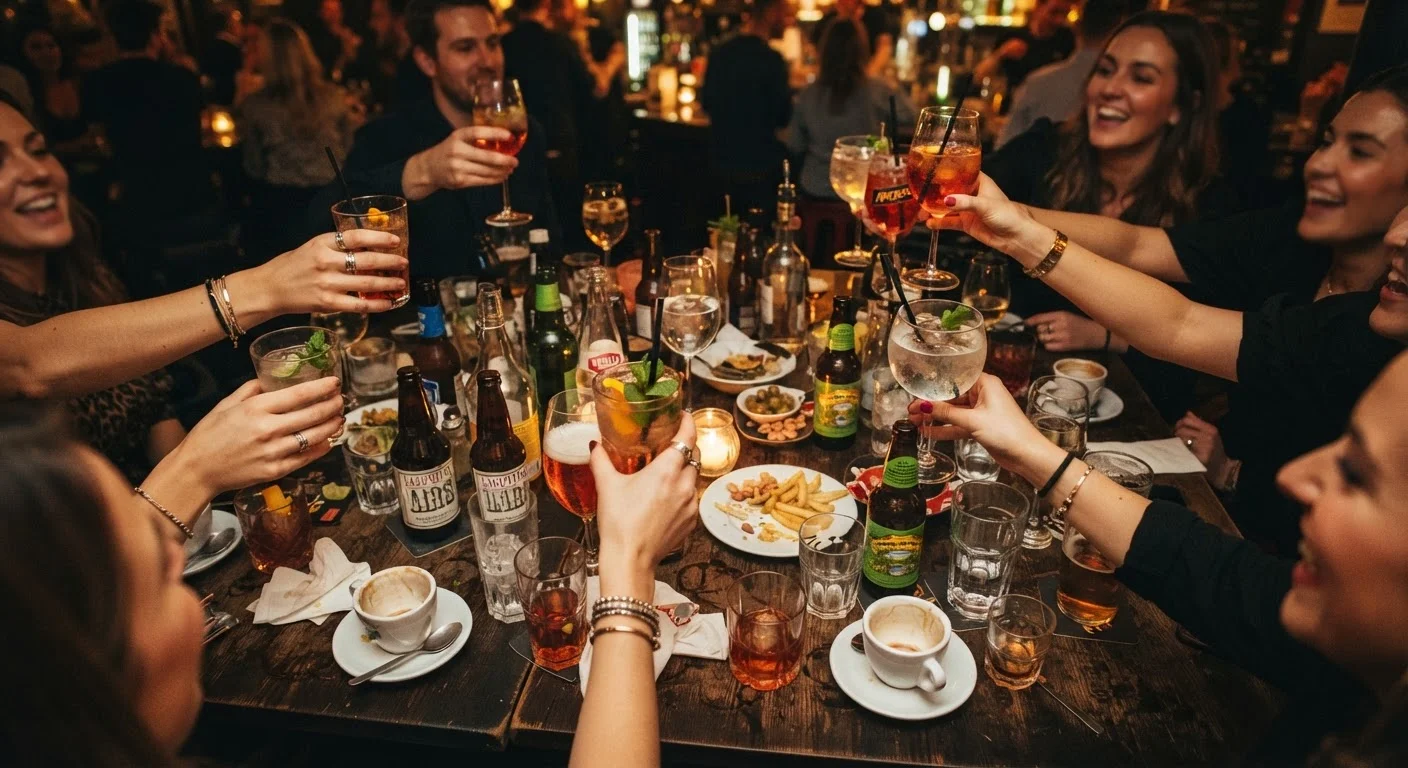
Photo credit: InfoHorizon.net | Access To Informative Content
Does beer before liquor really make you sicker? Does coffee sober you up? Separating widely repeated alcohol myths from the facts.
Key Takeaways
- The order you drink alcohol in does not determine how sick you get — total consumption does.
- Coffee and cold showers do not sober you up; only time allows your liver to process alcohol.
- Eating before drinking slows alcohol absorption but does not prevent intoxication.
- Darker liquors contain more congeners, which may worsen hangover symptoms.
- There is no proven hangover cure — prevention through moderation remains the most effective strategy.
Why Alcohol Myths Are So Sticky
Alcohol has been part of social culture for thousands of years, so it's no surprise that a thick layer of folklore has built up around it. These myths feel credible because they're passed down at parties, reinforced by friends who swear by them, and occasionally contain a grain of truth that gets stretched far beyond what the evidence supports.
Understanding what's actually happening in your body when you drink isn't just satisfying trivia — it helps you make safer, more informed decisions. The myths below are among the most widely repeated. Here's what the science actually says.
Myth
Beer before liquor, never been sicker — liquor before beer, you're in the clear.
Fact
The order you consume different types of alcohol has no effect on how ill you get. Total alcohol intake is what matters.
This rhyme is memorized at colleges across the country, but it has no physiological basis. Your body processes ethanol — alcohol — the same way regardless of whether it came from a beer or a shot. What actually makes you feel sick is how much alcohol you consumed overall, how fast you consumed it, and how your body metabolizes it. People who start with beer and switch to spirits often end up drinking more total alcohol because the evening has gone on longer, which is likely where the myth gets its false confirmation.
Myth
Coffee sobers you up after a night of drinking.
Fact
Caffeine makes you feel more alert, but it does not lower your blood alcohol concentration or speed up how your liver processes alcohol.
Your liver metabolizes alcohol at a fairly fixed rate — roughly one standard drink per hour for most adults, though this varies by individual. Caffeine is a stimulant that counters the sedative effects of alcohol, so you may feel less drowsy. But that feeling of alertness is misleading: your reaction time, judgment, and coordination remain impaired at the same BAC as before the coffee. This combination — feeling awake but still impaired — can actually increase the risk of dangerous decisions, like getting behind the wheel.
Myth
Eating a big meal after you've been drinking will sober you up.
Fact
Food slows alcohol absorption most effectively when eaten before or during drinking. Eating after the fact does very little to reduce existing intoxication.
Food in your stomach — particularly protein and fat — slows the rate at which alcohol passes from the stomach into the small intestine, which is where most absorption happens. This means eating before or while drinking genuinely moderates how quickly your BAC rises. But once alcohol is already in your bloodstream, digestion can't pull it back. Your liver still has to do that work, and it does so at the same steady pace regardless of what you eat afterward.
Myth
Switching between types of alcohol is what causes hangovers.
Fact
Hangovers are caused primarily by dehydration, acetaldehyde buildup, and inflammation — not by mixing drink types per se.
Hangovers result from several overlapping processes: alcohol is a diuretic that promotes fluid and electrolyte loss; the body metabolizes alcohol into acetaldehyde, a toxic compound, before breaking it down further; and alcohol triggers an inflammatory response. Darker spirits like bourbon, brandy, and dark rum contain higher levels of congeners — byproducts of fermentation and aging — which research suggests can worsen hangover symptoms compared to cleaner spirits like vodka. So while mixing a dark rum with a pale lager isn't a chemical disaster, drinking large amounts of high-congener drinks likely does contribute to a rougher morning.
Myth
A cold shower or fresh air will speed up sobering up.
Fact
Cold showers and outdoor air may temporarily increase alertness, but neither speeds alcohol metabolism.
Like caffeine, a cold shower stimulates your nervous system and can make you feel more awake. The underlying BAC doesn't change. Time — and only time — allows your liver to convert alcohol into water and carbon dioxide and clear it from your body. There is currently no proven substance or activity that meaningfully accelerates this process. Drinking water and rest support recovery from hangover symptoms, but they don't fast-track sobriety.
Myth
Beer and wine are safer to drink than spirits because they have less alcohol.
Fact
A standard drink — one 12 oz beer, one 5 oz glass of wine, or one 1.5 oz shot of spirits — all contain approximately the same amount of alcohol.
A standard drink in the U.S. is defined as containing about 14 grams of pure alcohol. Because beer and wine are lower in alcohol by volume (ABV), the serving sizes are larger, which keeps the dose equivalent. Where people run into trouble is by drinking beer in larger-than-standard pours or by consuming craft beers with much higher ABV. The type of container doesn't determine safety — the total amount of alcohol consumed does. For a broader look at how fermentation shapes different beverages, see the world of fermented drinks.
What Actually Determines How You Feel
Almost every myth on this list shares a common thread: people confuse correlation with causation. You feel worse after mixing drinks not because of the order, but because you drank more total alcohol. You feel alert after coffee not because you're sober, but because caffeine masks fatigue.
~1 hr
Time to metabolize one standard drink
The liver processes alcohol at a rate of roughly one standard drink per hour in most adults, though individual metabolism varies.
14g
Alcohol in one U.S. standard drink
The U.S. Dietary Guidelines define a standard drink as containing approximately 14 grams of pure alcohol, equivalent across beer, wine, and spirits.
The single most reliable variable in how alcohol affects you is blood alcohol concentration (BAC) — the percentage of alcohol in your bloodstream at any given moment. BAC is shaped by how much you drank, how quickly, your body weight, whether you've eaten, and your individual metabolism. No folk remedy bypasses this math.
If you're planning a gathering where drinks are involved, practical preparation matters more than myth management. See our guide to hosting a cocktail party for a sensible checklist that includes food, pacing, and non-alcoholic options for guests.
Impairment and Driving Don't Mix
No home remedy — coffee, water, food, cold air — reliably reduces impairment to a safe level for driving. Blood alcohol concentration is the only valid measure of sobriety, and it drops only with time. If you've been drinking, arrange a sober ride. This applies even when you feel 'mostly fine.'
And if you're curious about building a home bar without the mythology, our piece on what you actually need to get started keeps things grounded in reality.
This article is for general informational purposes only and is not medical advice. If you have concerns about alcohol use or its effects on your health, please consult a qualified healthcare professional.

Author
Food Editorial Team
Food Editorial Team is the collective byline for our editorial team and contributor network. Articles published under this byline or an editorial pen name are researched, written, and reviewed according to our editorial standards for clarity, consistency, and independence before publication.
View all articles →