
Non-Alcoholic Spirits: How They're Made and Where They Fall Short
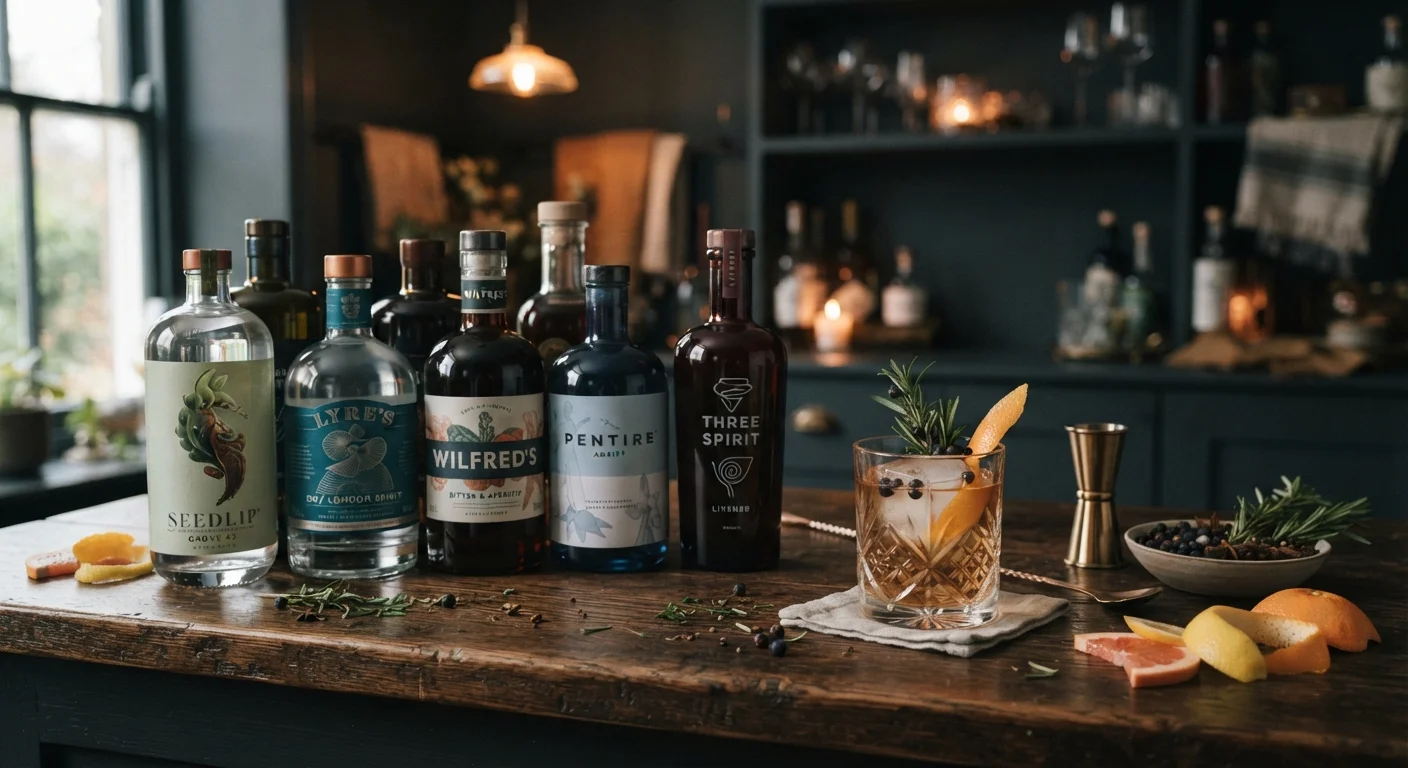
Photo credit: InfoHorizon.net | Access To Informative Content
In this article
Non-alcoholic spirits have improved dramatically, but they're not identical to their alcoholic counterparts. Here's an honest look at both sides.
Key Takeaways
- Non-alcoholic spirits use techniques like distillation, cold-pressing, and botanical infusion to mimic flavor complexity.
- They contain little to no alcohol, making them accessible to pregnant individuals, designated drivers, and sober-curious drinkers.
- Texture, burn, and finish are the hardest qualities for non-alcoholic spirits to replicate convincingly.
- Price per bottle is often comparable to mid-shelf liquor, which surprises many shoppers.
- They work best in spirit-forward cocktails when paired with quality mixers and fresh garnishes.
Genuine botanical complexity, not just sweetness
Quality non-alcoholic spirits use real botanicals and extraction techniques that produce layered flavor — juniper, cardamom, smoke, citrus — well beyond what a standard mocktail delivers.
Inclusive for non-drinkers at social events
They give abstaining guests a drink that feels intentional and craft-made rather than an afterthought, improving the social experience without requiring a separate drink menu.
No alcohol-related impairment or hangover
With under 0.5% ABV, there's no meaningful intoxicating effect, making them appropriate for designated drivers, pregnant individuals (who should always consult their healthcare provider first), and anyone managing alcohol intake.
Lower calorie content than most full-strength spirits
Because ethanol itself contributes roughly 7 calories per gram, removing alcohol substantially reduces caloric load — though added sugars in some products can offset this.
Compatible with spirit-forward cocktail recipes
Unlike juice-based substitutes, non-alcoholic spirits hold up in stirred drinks like negronis or old fashioneds where the spirit is the dominant component, not just a background note.
Mouthfeel lacks ethanol's viscosity and warmth
Alcohol creates a distinct warming sensation and body in a drink. Non-alcoholic spirits, regardless of production quality, don't replicate this — the finish is notably different, often thinner or sharper.
Price point rivals mid-shelf liquor
Many non-alcoholic spirits retail between $25 and $45 per 700ml bottle — comparable to a decent gin or whiskey — which surprises consumers who expect them to be cheaper without the alcohol.
Shelf stability after opening is shorter
Alcohol acts as a preservative. Without it, opened non-alcoholic spirits often need refrigeration and may degrade in flavor within four to eight weeks, unlike alcoholic bottles that last months or years.
Category-to-category mimicry varies widely
Gin alternatives tend to perform best because juniper and botanicals translate well without alcohol. Whiskey and rum alternatives are harder to nail — the oak, smoke, and caramel notes that define those spirits rely heavily on ethanol's interaction with barrel compounds.
Some products rely heavily on added sugar
To compensate for missing alcohol's body and flavor-carrying role, some brands add significant sweeteners, which throws off balance in cocktails and may not suit everyone's dietary preferences.
What Non-Alcoholic Spirits Actually Are
Non-alcoholic spirits are beverages engineered to mimic the flavor profile of distilled liquors — gin, whiskey, rum, tequila — without the ethanol content. Most contain less than 0.5% ABV (alcohol by volume), the threshold that legally qualifies a product as non-alcoholic in the United States.
They're not mocktail mixers or flavored syrups, even though those serve a similar purpose. Non-alcoholic spirits are made through processes specifically designed to build complexity and layered flavor, placing them closer to their alcoholic counterparts than anything in the juice aisle. If you're building out a home bar with options for all your guests, see our guide to what you actually need to get started for a practical starting point.
How They're Produced
The production methods vary by product and category, but several core techniques appear across the industry:
- Vacuum distillation: Botanicals are distilled at low temperatures — typically under 85°F — to preserve delicate aromatic compounds that would burn off under standard distillation heat. This is one of the most common methods for non-alcoholic gin alternatives.
- Steam distillation and cold-pressing: Ingredients like citrus peel, juniper, and herbs are processed to extract essential oils and aromatic compounds without alcohol as a carrier solvent.
- Dealcoholization: Some products start as fully alcoholic spirits and then have ethanol removed through methods like reverse osmosis or spinning cone columns. The challenge is that alcohol carries flavor, so removal affects the taste profile.
- Botanical blending: Many producers blend concentrated extracts — including adaptogens, bitters, and functional botanicals like ashwagandha or lion's mane — to create depth and a slight functional effect in the absence of alcohol.
The result is a product that can genuinely deliver herbal, spiced, or citrus-forward complexity. Pairing these spirits with well-made mixers helps considerably — our guide to making cocktail syrups at home shows how house-made syrups can elevate any drink, alcoholic or not.
0.5% ABV
Legal non-alcoholic threshold in the U.S.
U.S. federal regulations define beverages at or below 0.5% ABV as non-alcoholic, a standard also used by most major producing countries.
~7 cal/g
Calories per gram of ethanol
Ethanol is calorie-dense; removing it from spirits meaningfully reduces caloric content, though added sugars in some non-alcoholic products can partially offset this difference.
The Real Advantages
Genuine botanical complexity, not just sweetness
Quality non-alcoholic spirits use real botanicals and extraction techniques that produce layered flavor — juniper, cardamom, smoke, citrus — well beyond what a standard mocktail delivers.
Inclusive for non-drinkers at social events
They give abstaining guests a drink that feels intentional and craft-made rather than an afterthought, improving the social experience without requiring a separate drink menu.
No alcohol-related impairment or hangover
With under 0.5% ABV, there's no meaningful intoxicating effect, making them appropriate for designated drivers, pregnant individuals (who should always consult their healthcare provider first), and anyone managing alcohol intake.
Lower calorie content than most full-strength spirits
Because ethanol itself contributes roughly 7 calories per gram, removing alcohol substantially reduces caloric load — though added sugars in some products can offset this.
Compatible with spirit-forward cocktail recipes
Unlike juice-based substitutes, non-alcoholic spirits hold up in stirred drinks like negronis or old fashioneds where the spirit is the dominant component, not just a background note.
Beyond the obvious health and lifestyle angle, non-alcoholic spirits solve a genuine hospitality problem: they give non-drinking guests something interesting in a proper glass. When hosting a cocktail gathering, offering a non-alcoholic spirit-based drink is a meaningful upgrade over pointing someone toward a can of soda.
Where They Fall Short
Mouthfeel lacks ethanol's viscosity and warmth
Alcohol creates a distinct warming sensation and body in a drink. Non-alcoholic spirits, regardless of production quality, don't replicate this — the finish is notably different, often thinner or sharper.
Price point rivals mid-shelf liquor
Many non-alcoholic spirits retail between $25 and $45 per 700ml bottle — comparable to a decent gin or whiskey — which surprises consumers who expect them to be cheaper without the alcohol.
Shelf stability after opening is shorter
Alcohol acts as a preservative. Without it, opened non-alcoholic spirits often need refrigeration and may degrade in flavor within four to eight weeks, unlike alcoholic bottles that last months or years.
Category-to-category mimicry varies widely
Gin alternatives tend to perform best because juniper and botanicals translate well without alcohol. Whiskey and rum alternatives are harder to nail — the oak, smoke, and caramel notes that define those spirits rely heavily on ethanol's interaction with barrel compounds.
Some products rely heavily on added sugar
To compensate for missing alcohol's body and flavor-carrying role, some brands add significant sweeteners, which throws off balance in cocktails and may not suit everyone's dietary preferences.
None of these shortcomings are deal-breakers for someone genuinely looking to reduce or eliminate alcohol. But going in with calibrated expectations matters — if you're expecting a glass of bourbon, you'll be disappointed. If you're expecting a complex, satisfying drink that holds its own, you're much more likely to enjoy it.
A Note on "Alcohol-Free" Labeling
"Non-alcoholic" and "alcohol-free" are sometimes used interchangeably on packaging, but they can mean different things. In the U.S., non-alcoholic allows up to 0.5% ABV, while truly alcohol-free products contain 0.0% ABV. For individuals in recovery or those with specific medical or religious reasons to avoid all alcohol, checking the exact ABV on the label — rather than relying on front-of-pack marketing — is the more reliable approach. When in doubt, consult the product's technical data sheet or contact the manufacturer directly.
Getting the Most From Non-Alcoholic Spirits
Technique matters just as much here as in standard cocktail-making. Non-alcoholic spirits are sensitive to dilution because they lack alcohol's ability to bind and carry flavor through ice melt. Dilution in cocktails isn't just about water content — it affects perceived strength and balance, which matters even more in an alcohol-free drink.
A few practical tips:
- Use large ice to slow dilution in stirred drinks.
- Add a few drops of aromatic bitters (note: most bitters contain trace alcohol — check labels if avoiding entirely).
- Lean into the right sparkling water — tonic, club soda, and sparkling mineral water behave differently in a glass and affect mouthfeel.
- Fresh citrus and quality garnishes do significant work in bridging flavor gaps.
Non-alcoholic spirits exist on a spectrum that also includes fermented functional drinks — if you're curious about the broader landscape, the world of fermented drinks beyond beer and wine covers other directions worth exploring.

Author
Food Editorial Team
Food Editorial Team is the collective byline for our editorial team and contributor network. Articles published under this byline or an editorial pen name are researched, written, and reviewed according to our editorial standards for clarity, consistency, and independence before publication.
View all articles →