
Your First Home Bar: What You Actually Need to Get Started
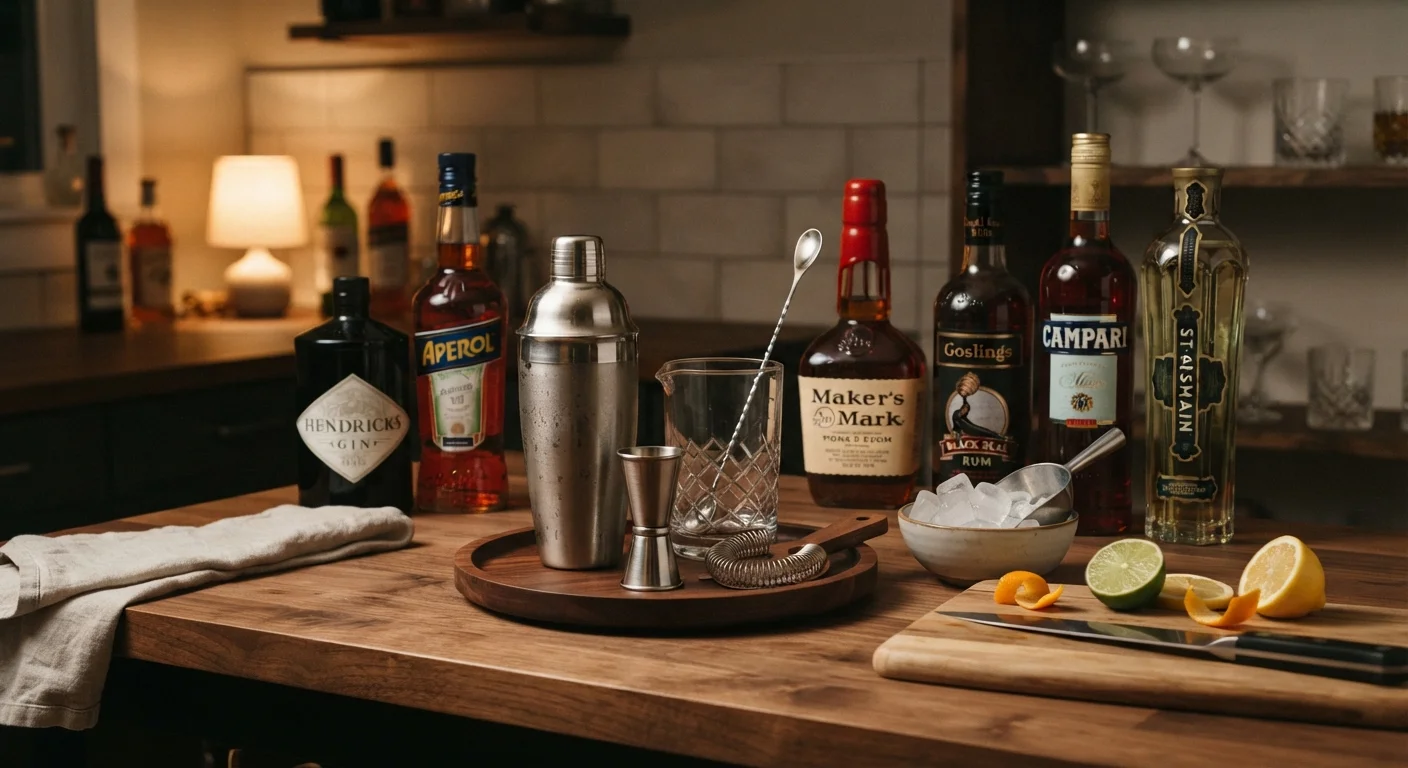
Photo credit: InfoHorizon.net | Access To Informative Content
In this article
A practical introduction to stocking a home bar — the tools, base spirits, and mixers that cover the widest range of classic cocktails.
Key Takeaways
- Five base spirits cover the vast majority of classic cocktail recipes.
- A handful of inexpensive tools — shaker, jigger, strainer — are all you truly need to start.
- Quality mixers and fresh citrus matter as much as the spirits themselves.
- Building gradually prevents waste and helps you learn what you actually enjoy making.
- Homemade syrups dramatically expand your range without adding more bottles to your shelf.
Why Start Simple
The most common home bar mistake is buying too much at once. A dozen bottles that rarely get opened is far less useful than five spirits you actually understand and use. The goal of a starter bar isn't to replicate a restaurant back bar — it's to cover a solid range of classic drinks with ingredients that play well together.
Think of it as a platform you'll grow into deliberately. Each bottle you add should earn its place by unlocking new recipes, not just filling shelf space.
Base spirit
The primary alcohol in a cocktail — gin, rum, whiskey, tequila, or vodka — that gives the drink its core flavor and most of its alcohol content.
Jigger
A small measuring tool with two sides, typically 1 oz and 1.5 oz, used to measure spirits and other liquids accurately when making cocktails.
Simple syrup
A liquid sweetener made by dissolving equal parts sugar and water together. It mixes into cold drinks more easily than granulated sugar.
Vermouth
A fortified wine flavored with herbs and botanicals. Dry vermouth is used in Martinis; sweet vermouth is used in Manhattans and Negronis.
Bitters
Highly concentrated flavoring made from botanicals, used a few drops at a time to add depth and complexity to cocktails.
Highball
A simple cocktail made by combining a spirit with a larger volume of a non-alcoholic mixer (like club soda or tonic water) over ice in a tall glass.
The Core Spirits Worth Buying First
Five spirits give you the widest coverage for classic cocktails:
- Gin: The backbone of the Martini, Gin & Tonic, Negroni, and Tom Collins. Look for a London Dry style as a versatile starting point.
- White rum: Essential for Daiquiris, Mojitos, and the Cuba Libre. Light and clean, it mixes easily.
- Bourbon or rye whiskey: Covers the Old Fashioned, Whiskey Sour, and Manhattan. Bourbon is sweeter and more approachable; rye is spicier and drier.
- Tequila (blanco): Margaritas, Palomas, and tequila-based sours all start here. Blanco (unaged) is the most flexible.
- Vodka: Neutral and versatile, vodka works in highballs and spirit-forward drinks where you want the mixer to lead.
With these five, you can make dozens of recognizable cocktails. Vermouth — both dry and sweet — isn't technically a spirit (it's a fortified wine), but it's an essential supporting player for Martinis and Manhattans, and it belongs on your list.
Mid-Range Spirits Mix Better Than You'd Expect
For cocktails, spending more on a premium bottle rarely improves the final drink as much as using fresh juice and good technique. A $25–$35 mid-range spirit in a well-balanced Daiquiri will taste better than a $60 bottle shaken with bottled lime juice. Save the high-end bottles for sipping neat.
Essential Tools You'll Actually Use
Equipment doesn't need to be expensive or extensive. The tools below handle nearly every technique you'll encounter as a beginner:
- Cocktail shaker: A cobbler shaker (three pieces: tin, strainer lid, cap) is the most beginner-friendly. A Boston shaker (two tins) is used by professionals but requires a separate strainer.
- Jigger: Accurate measuring is the single biggest factor in a well-balanced cocktail. A double-sided jigger typically measures 1 oz and 1.5 oz.
- Bar spoon: The long-handled spoon used for stirring. Its length lets you stir gently without disturbing the ice too much.
- Strainer: A Hawthorne strainer fits over a shaker tin; a fine-mesh strainer catches small ice chips for a cleaner pour.
- Citrus juicer: Fresh-squeezed juice is non-negotiable. A handheld juicer handles lemons and limes perfectly.
- Peeler or channel knife: For citrus twists, which add aroma and a professional finish to many drinks.
Glass Type Matters More Than You Think
You don't need a full glassware collection to start, but two types cover most drinks: a rocks glass (short, wide) for spirit-forward cocktails served over ice, and a highball glass (tall, narrow) for mixed drinks. Coupe glasses are elegant for shaken cocktails served up, but a wine glass is a perfectly acceptable substitute when you're starting out.
Mixers, Garnishes, and Extras
Your mixer selection matters as much as your spirits. Stock these staples:
- Tonic water and club soda: The two most common highball bases.
- Ginger beer: For Moscow Mules and Dark & Stormies. (Ginger beer has more bite than ginger ale; they're not interchangeable.)
- Simple syrup: Equal parts sugar and warm water, stirred until dissolved. It's the sweetener in Daiquiris, Whiskey Sours, and countless other recipes. Making it at home takes five minutes — see our guide to homemade cocktail syrups for easy variations including herb and spice infusions.
- Fresh citrus: Lemons and limes. Buy them fresh; bottled juice is noticeably inferior in most cocktails.
- Angostura bitters: A small bottle used a few dashes at a time. It's the defining ingredient in an Old Fashioned and adds depth to many drinks.
For garnishes, keep cocktail olives, maraschino cherries, and fresh mint on hand. Salt for Margarita rims rounds out the basics.
If you're curious about serving guests who don't drink, non-alcoholic spirits have become a viable option, though they work differently than their alcoholic counterparts.
Building From Here
Once you're comfortable with the fundamentals, you'll naturally notice gaps — maybe you want to explore tropical drinks and reach for aged rum, or you discover that Aperol Spritzes are your go-to and add Prosecco and Aperol. That's the right way to grow a home bar: driven by what you're actually making.
A few directions worth exploring as your confidence builds:
- Liqueurs: Triple sec (orange), coffee liqueur, and elderflower liqueur each unlock a new category of drinks without demanding much shelf space.
- Amaro: Italian bitter liqueurs like Campari or Aperol bring complexity and work in both aperitif and digestif roles.
- Aged spirits: Aged rum, añejo tequila, and Scotch whisky all reward sipping neat or with minimal mixing once you've worked through the basics.
When you're ready to put your bar to work for guests, planning a cocktail gathering involves a few additional considerations around glassware, ice, and batch recipes that make the experience much smoother.
The best home bar is one you actually use. Start focused, build deliberately, and you'll end up with a setup that genuinely reflects how you drink.
Frequently Asked Questions

Author
Food Editorial Team
Food Editorial Team is the collective byline for our editorial team and contributor network. Articles published under this byline or an editorial pen name are researched, written, and reviewed according to our editorial standards for clarity, consistency, and independence before publication.
View all articles →