
Making Cocktail Syrups at Home
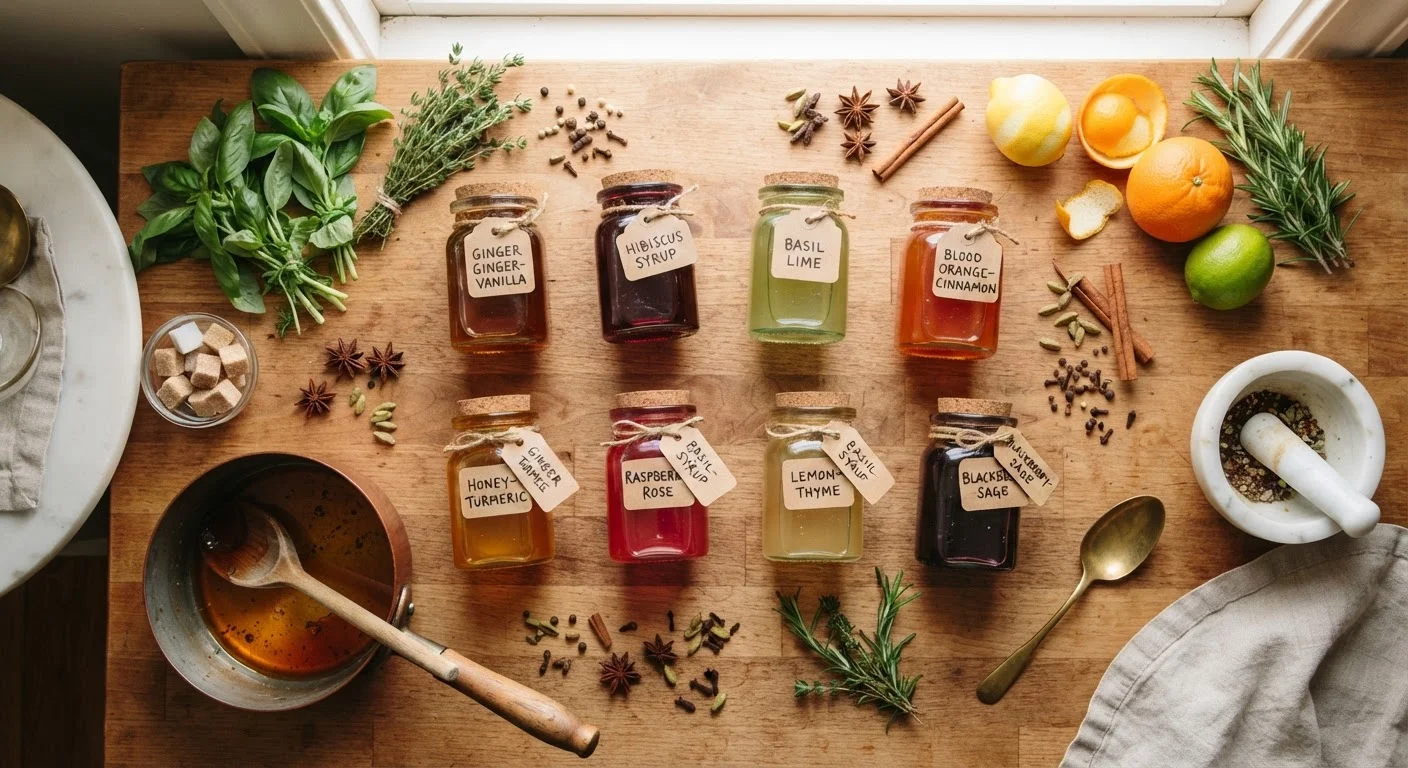
Photo credit: InfoHorizon.net | Access To Informative Content
In this article
Simple syrups, herb infusions, and spiced syrups are easy to make and dramatically expand your cocktail range. Here's how to do it.
Key Takeaways
- Simple syrup is a 1:1 ratio of sugar to water — the foundation every other syrup builds on.
- Herb and spice syrups require only a short steeping time; longer isn't always better.
- Homemade syrups typically keep two to four weeks refrigerated in a clean, sealed jar.
- Rich syrup (2:1 sugar to water) adds sweetness with less volume, preserving a cocktail's balance.
- Syrups work equally well in non-alcoholic drinks, expanding mocktail options with the same techniques.
Why Make Your Own Syrups?
Store-bought cocktail syrups exist, but homemade versions offer something they can't: full control over flavor intensity, sweetness level, and ingredients. A rosemary syrup you made this week smells like the herb at its peak. A store version may contain artificial flavoring, preservatives, or a sweetness level calibrated for a different palate than yours.
Beyond quality, making syrups is genuinely fast. Most are done in under 20 minutes, and a single batch — roughly one cup — is enough to flavor a dozen or more drinks. If you're building out your home bar setup (see our guide to stocking a first home bar for a full rundown of essentials), syrups are one of the highest-return investments of your time.
They're also versatile across seasons. A cinnamon-clove syrup fits naturally in autumn drinks, while a cucumber-mint version belongs in summer. Our piece on drinking seasonally explores this further if you want to build a rotating syrup calendar around what's fresh.
What you will need
Tools and What You'll Need
The equipment list is short. You likely already own everything required.
Small saucepan (1–2 quart)
Used to dissolve sugar into water over gentle heat.
Kitchen scale or measuring cups
Ensures accurate sugar-to-water ratios for consistent results.
Fine-mesh strainer or cheesecloth
Removes herb leaves, spice pieces, and citrus pulp before bottling.
Glass jar or bottle with lid
Stores the finished syrup safely in the refrigerator.
Funnel
Makes pouring hot syrup into narrow-necked bottles cleaner and safer.
How to Make the Three Core Syrup Styles
The three recipes below — simple, herb-infused, and spiced — cover the vast majority of cocktail applications. Master these and you can improvise endlessly.
Make the base: simple syrup (1:1)
Combine one cup of granulated sugar and one cup of water in a small saucepan over medium heat. Stir gently until the sugar is fully dissolved — this takes about three to five minutes. Do not boil aggressively; a gentle simmer is all you need. Once the liquid is clear and the sugar is dissolved, remove from heat and allow to cool before bottling.
For a rich syrup (2:1 ratio), use two cups of sugar to one cup of water. The process is identical but requires slightly more stirring time. Rich syrup is sweeter per teaspoon, so use about half the volume called for in most recipes.
Make an herb-infused syrup
Start with a completed 1:1 simple syrup (see Step 1), still warm but off the heat. Add a generous handful of fresh herbs — rosemary, mint, basil, or thyme all work well — directly to the warm liquid. Stir gently to submerge the herbs, then let them steep for 10 to 20 minutes. Taste the syrup every few minutes after the ten-minute mark; once the flavor is where you want it, strain out the herbs immediately through a fine-mesh strainer. Leaving herbs too long can introduce bitterness.
Common pairings: rosemary with gin or bourbon; mint with rum or vodka; thyme with Scotch or mezcal.
Make a spiced syrup
Add whole spices to cold water and sugar together before heating. This allows the spices to release their compounds gradually as the mixture warms. Good starting combinations include: cinnamon stick + whole cloves; black peppercorns + cardamom pods; or star anise + dried orange peel.
Bring the mixture to a gentle simmer, stir until the sugar dissolves, then keep at a low simmer for 8 to 10 minutes. Remove from heat and steep an additional 10 to 15 minutes off the burner. Strain through a fine-mesh strainer or cheesecloth, pressing lightly on the solids to extract flavor. Cool completely before sealing and refrigerating.
Syrups work in more than cocktails
These same syrups shine in non-alcoholic drinks: rosemary syrup in sparkling water with lemon, spiced syrup stirred into hot tea, or mint syrup drizzled over fresh fruit. They're also excellent in coffee drinks. Making a batch serves your whole table, regardless of who's drinking what.
Storage, Shelf Life, and Troubleshooting
Pour your finished syrup into a clean glass jar or bottle with a tight-fitting lid while it's still slightly warm, then seal and refrigerate. A 1:1 simple syrup keeps for about two weeks; one made with a 2:1 ratio (called a rich syrup) keeps three to four weeks because the higher sugar concentration inhibits microbial growth. Herb and spice syrups sit closer to the two-week end due to the added organic matter.
Don't skip the refrigerator
Homemade syrups contain no commercial preservatives. Leaving them at room temperature even for a few days creates conditions for mold and fermentation. Always store in the refrigerator in a clean, sealed container and label with the date made so you know when to discard.
If you notice cloudiness, an off smell, or any surface mold, discard the batch. A small addition of high-proof neutral spirit (roughly one tablespoon per cup of syrup) extends shelf life by a week or so — a common professional bar technique. Homemade syrups pair beautifully with non-alcoholic spirits too, so they're worth making even for alcohol-free gatherings. If you're planning to serve them at a party, our cocktail hosting checklist has timing and batch-size guidance that pairs well with homemade syrups.

Author
Food Editorial Team
Food Editorial Team is the collective byline for our editorial team and contributor network. Articles published under this byline or an editorial pen name are researched, written, and reviewed according to our editorial standards for clarity, consistency, and independence before publication.
View all articles →