
Why Tailgating Is More Dangerous Than Most Drivers Realize
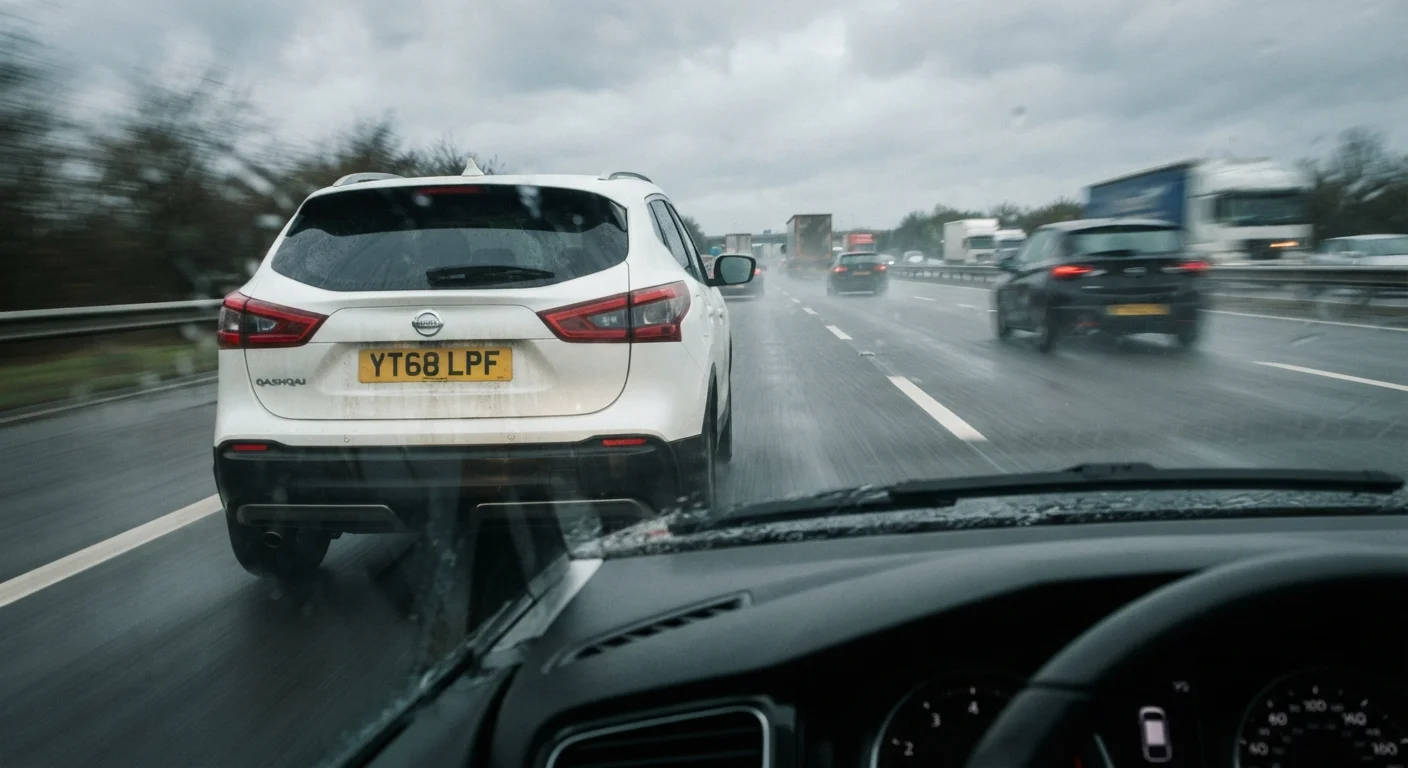
Photo credit: InfoHorizon.net | Access To Informative Content
In this article
Following too closely is one of the leading causes of rear-end collisions. Explore what a safe following distance really looks like in practice.
Key Takeaways
- The three-second rule is the minimum safe following distance under ideal conditions.
- Rear-end collisions are among the most common and preventable crash types on American roads.
- Tailgating is a leading trigger of road rage and aggressive driving escalation.
- Wet, icy, or low-visibility conditions require doubling or tripling the standard following gap.
- Modern braking systems reduce stopping distance but cannot eliminate the human reaction time gap.
The Real Risk Hidden in Your Rearview Mirror
Tailgating — following another vehicle more closely than conditions safely allow — is one of the most normalized dangerous behaviors on American roads. Drivers who do it often don't think of themselves as reckless. They're simply impatient, running late, or responding to frustration without recognizing the physics at work.
The numbers are sobering. Rear-end collisions account for roughly 29 percent of all traffic crashes in the United States, according to the National Highway Traffic Safety Administration (NHTSA), and inadequate following distance is a primary contributing factor. What makes tailgating especially hazardous is the compounding nature of the problem: less distance means less time, and less time eliminates the margin for any misjudgment.
Understanding defensive driving principles is the essential starting point — and maintaining a safe following distance is one of their most fundamental applications.
~29%
Share of U.S. crashes that are rear-end collisions
According to NHTSA data, rear-end crashes consistently represent the largest single category of traffic collisions in the United States.
1.5 sec
Typical driver perception-reaction time
Transportation safety research identifies an average reaction time of approximately 1.5 seconds before braking begins — a gap that translates to significant distance at highway speeds.
3 sec
Minimum recommended following gap under ideal conditions
Traffic safety agencies including NHTSA and state DMVs consistently recommend the three-second rule as the baseline safe following distance.
Mistakes Drivers Make With Following Distance
Most tailgating isn't intentional aggression — it's a collection of habits, misconceptions, and situational errors that build up over time. Recognizing these patterns is the first step toward correcting them.
Using the car ahead as a pace reference instead of maintaining an independent gap.
Why it happens: Drivers naturally anchor to the vehicle in front and unconsciously mirror its speed without calculating whether the current distance is safe.
Assuming modern brakes eliminate the need for a long following distance.
Why it happens: Anti-lock braking systems and electronic stability control are genuine safety advances, so drivers may overestimate how much they compress stopping distance.
Maintaining highway following distances on surface streets without adjusting for stop-and-go conditions.
Why it happens: Drivers carry over their highway habits into urban and suburban driving, where traffic density and pedestrian activity create far more unpredictable stop events.
Not increasing following distance in adverse weather or low-light conditions.
Why it happens: Drivers often adjust their speed for rain or fog but forget that both reaction time and braking distance increase on slick or dark roads.
Closing the following gap as a social signal to pressure a slower driver to move over.
Why it happens: Impatience and a perceived sense of entitlement lead drivers to use tailgating as a form of communication — signaling they want the driver ahead to speed up or change lanes.
Tailgating also intersects with other risk factors. Driver distraction compounds the danger: a driver who is already following too closely and momentarily loses focus has almost no recovery window. Similarly, as covered in our guide to safe speeds versus posted limits, road conditions often demand more caution than any single rule captures.
Wet and Icy Roads Demand More Space
Stopping distances on wet pavement can be two to three times longer than on dry roads, and on ice they can extend dramatically further. A three-second gap that feels comfortable in dry conditions provides almost no margin when traction is reduced. Adjust your following distance before conditions deteriorate, not after.
How to Build and Keep a Safe Following Gap
The widely taught three-second rule provides a practical baseline. Pick a fixed point — a sign, overpass, or road marking — and count the seconds between when the vehicle ahead passes it and when your vehicle does. If you reach the marker in under three seconds, you're following too closely.
Three seconds is a minimum under ideal conditions: dry pavement, good visibility, and a fully alert driver. In rain, extend to at least five or six seconds. On ice or snow, double that again. If you're towing a trailer, driving a large vehicle, or operating with worn tires, add additional buffer beyond the standard baseline. Construction zones present a particularly high-risk context where abrupt stops are common and reduced gaps are especially dangerous.
When another vehicle cuts into your following gap, resist the urge to immediately close back in on the car ahead. Simply ease back to re-establish your cushion without aggressive braking or acceleration. This calm response also reduces the chance of provoking a road rage incident from the driver who merged in front of you.
Tailgating Is a Traffic Violation in Every U.S. State
Every state prohibits following too closely, and enforcement can result in fines, points on your license, and increased insurance costs. More significantly, if a rear-end collision occurs, the following driver is almost always found at fault. The legal and financial consequences compound the physical risk that tailgating already creates.
If your vehicle experiences a sudden mechanical failure, the time a proper following distance buys you can be the difference between a near-miss and a serious crash. Review what to do in those moments with our guide to handling tire blowouts, brake failures, and skids.

Author
Cars Editorial Team
Cars Editorial Team is the collective byline for our editorial team and contributor network. Articles published under this byline or an editorial pen name are researched, written, and reviewed according to our editorial standards for clarity, consistency, and independence before publication.
View all articles →