
Speed Limits vs. Safe Speeds: They're Not Always the Same Number
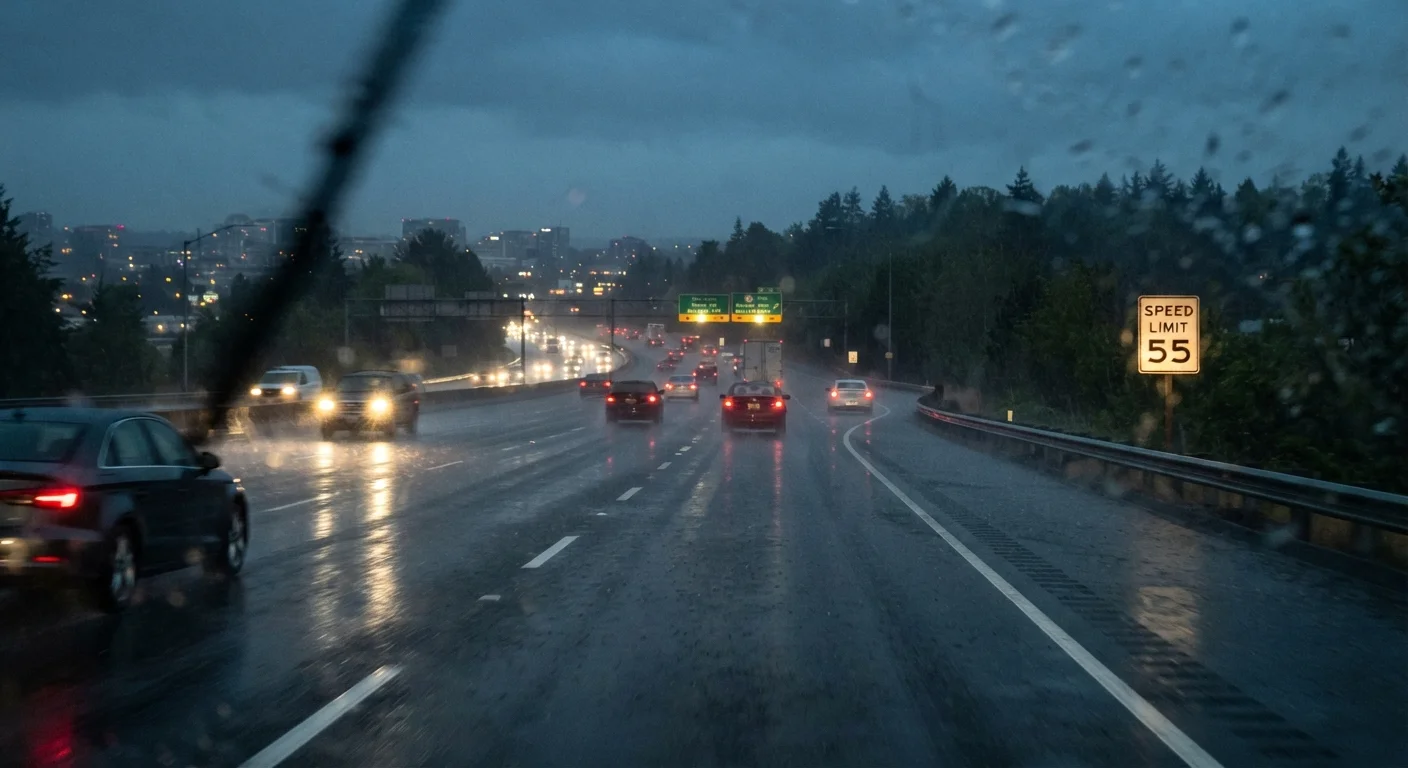
Photo credit: InfoHorizon.net | Access To Informative Content
In this article
Posted speed limits reflect ideal conditions. Discover when driving below the limit is the genuinely safer choice and why the gap matters.
Key Takeaways
- Speed limits reflect maximum allowable speeds under ideal conditions, not a safety guarantee.
- Weather, visibility, traffic density, and road geometry all require speed adjustments below the posted limit.
- The basic speed law in most states means you can be cited for unsafe speed even if you're under the limit.
- Stopping distance grows exponentially with speed, making even small speed reductions meaningful in emergencies.
- Situational awareness - not just reading signs - is the foundation of genuinely safe driving.
What Speed Limits Actually Represent
Speed limit signs communicate a legal ceiling, not a recommended target. Traffic engineers typically set posted limits using what is called the 85th-percentile method - the speed at or below which 85 percent of vehicles travel under free-flow, dry-pavement, daylight conditions. That baseline assumes a specific set of circumstances that may not exist when you are behind the wheel.
When a highway posts 65 mph, it is saying: on a dry, clear day with good visibility and normal traffic, this is the upper legal boundary. It says nothing about what is appropriate when it is raining, when there is fog reducing your sight distance to 200 feet, or when construction has narrowed lanes to eight feet wide.
Understanding this distinction is the first step toward genuinely safer driving. The posted number is a starting point for judgment, not a substitute for it.
Conditions That Demand Speeds Below the Limit
Several common scenarios require drivers to slow down well below what the sign permits:
- Wet or icy pavement: Traction drops dramatically on wet roads and plummets further on ice. Your vehicle's ability to steer and stop is directly tied to grip. Stopping distance increases sharply as speed rises, and wet pavement adds even more distance to an already dangerous equation.
- Reduced visibility: Fog, heavy rain, glare, and nighttime driving all shrink the distance over which you can detect and react to hazards. If you cannot see far enough to stop safely, your speed is too high - regardless of what the sign says.
- Heavy traffic: Following distance collapses as traffic density increases. Safe following distance requires more space than most drivers maintain, and bumper-to-bumper conditions at highway speeds dramatically reduce your reaction window.
- Curves, hills, and intersections: Roads that limit sight lines - tight curves, crests of hills, complex intersections - require lower entry speeds because hazards may appear with little warning.
- Pedestrians and cyclists: Urban and suburban environments with active foot traffic require speeds that allow you to stop within the distance you can see, which is often far less than the posted 30 or 35 mph allows in practice.
Use a Simple Mental Check
Before maintaining your current speed, ask yourself: if something unexpected appeared right now at the edge of my visibility, could I stop in time? If the honest answer is no, ease off the accelerator. This single question, applied consistently, captures the core logic of speed-to-conditions driving.
The Legal Dimension: Basic Speed Law
Most drivers are aware they can be cited for exceeding the speed limit. Fewer realize that in most U.S. states, they can also receive a citation for driving at an unsafe speed - even if that speed is technically at or below the posted limit. This principle, known as the basic speed law, places responsibility on the driver to assess conditions independently.
In practical terms, a driver doing 55 mph on a 55 mph highway during a whiteout snowstorm could be cited for driving too fast for conditions. The sign on the side of the road does not provide legal cover if your speed was clearly inappropriate for what the road presented.
This legal framework reinforces what good driving judgment already demands: conditions, not signs, should govern your speed at any given moment. Urban and highway environments present very different hazard profiles, and the mental model required to drive safely shifts accordingly.
29%
Of traffic fatalities involving speeding
According to the National Highway Traffic Safety Administration (NHTSA), speeding - including driving too fast for conditions - is a factor in roughly 29% of all U.S. traffic fatalities annually.
40%+
Increase in wet-road stopping distance
Road safety research consistently shows that wet pavement can increase stopping distances by 40 percent or more compared to dry conditions at the same speed.
Developing Speed Judgment as a Core Driving Skill
Calibrating speed to conditions rather than defaulting to the posted limit is a skill that distinguishes experienced, safety-conscious drivers. A few habits support this:
- Scan ahead continuously. Extend your gaze well down the road. The farther you see, the more time you have to react - and the more you can modulate speed proactively rather than reactively.
- Ask: can I stop in the distance I can see? This is the practical test. If the answer is no, reduce speed until it is yes.
- Treat the limit as a ceiling, not a floor. In neighborhoods, near schools, and anywhere pedestrian activity is likely, treat the limit as the absolute maximum and drive below it when conditions warrant.
- Re-evaluate continuously. Conditions change mile by mile. Weather rolls in, traffic thickens, and road geometry shifts. Speed judgment is not a one-time decision at the start of a trip.
Building this habit takes deliberate practice, but it fundamentally changes how drivers interact with risk on every road they travel.
Speeding Laws Vary by State
Speed limit enforcement rules, minimum speed laws, and the specific language of basic speed law statutes differ across U.S. states. Construction zone and school zone rules also vary. Always familiarize yourself with the traffic laws of the state you are driving in, particularly when traveling across state lines.
Frequently Asked Questions

Author
Cars Editorial Team
Cars Editorial Team is the collective byline for our editorial team and contributor network. Articles published under this byline or an editorial pen name are researched, written, and reviewed according to our editorial standards for clarity, consistency, and independence before publication.
View all articles →