
Vertical Storage vs. Drawer Organizers: Choosing the Right System for Small Spaces
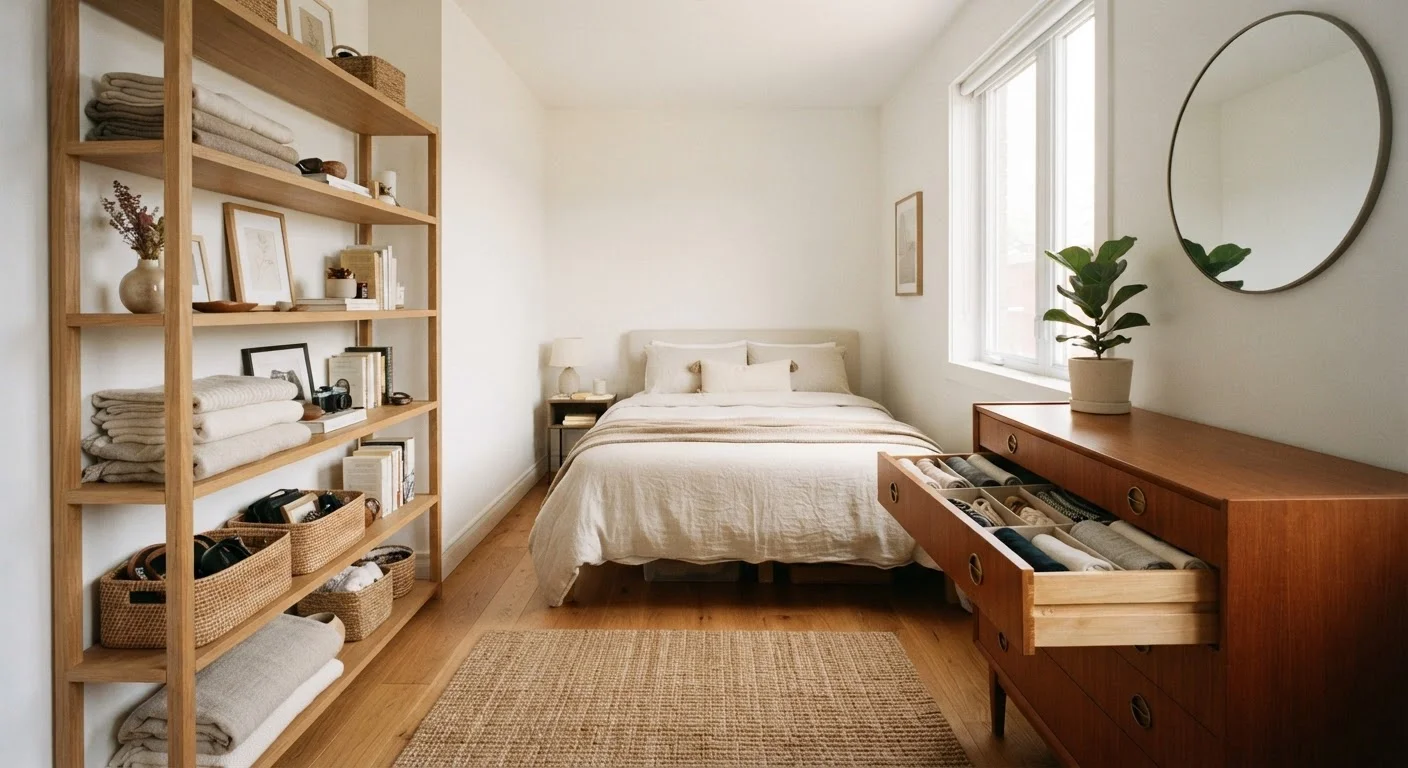
Photo credit: InfoHorizon.net | Access To Informative Content
In this article
Vertical shelving and drawer systems each solve different space problems. Learn which approach suits your rooms, habits, and storage goals.
Key Takeaways
- Vertical storage reclaims wall height rather than floor space, making it ideal for small rooms.
- Drawer organizers hide clutter and work best for sorting small items like utensils, accessories, or office supplies.
- Your daily habits — how often you retrieve items and whether you prefer open or concealed storage — matter as much as room size.
- Many small spaces benefit from using both systems in different zones rather than choosing just one.
- Visible storage requires consistent tidying; concealed storage requires consistent labeling to stay functional.
Understanding What Each System Actually Does
Before choosing between vertical storage and drawer organizers, it helps to understand the core problem each one solves.
Vertical storage works by redirecting clutter upward. Instead of spreading items across a countertop or floor, you stack them on open shelves, wall-mounted units, pegboards, or tall bookcases. The defining feature is visibility — everything is on display, which makes retrieval fast but also means the space reads as tidy only when items are consistently returned to their spots.
Drawer organizers work by compartmentalizing hidden space. Inserts, dividers, and trays subdivide the interior of a drawer into dedicated zones for specific item categories. The contents stay out of sight, which lends rooms a cleaner look, but the system depends on labeling and habit to keep categories from blending together over time.
Neither approach is inherently superior — each performs differently depending on room type, item category, and the habits of the people using the space. For a broader room-by-room audit, see our Room-by-Room Home Organization Checklist to identify where each system might fit in your home.
| Criterion | Vertical Storage | Drawer Organizers |
|---|---|---|
| Space used | Wall height and vertical footprint | Existing drawer or cabinet depth |
| Visibility | Open — items always visible | Concealed — contents hidden |
| Best item types | Bulky, frequently used, stackable | Small, varied, mixed-category |
| Retrieval speed | Fast — no opening required | Moderate — requires opening drawer |
| Visual tidiness effort | High — clutter is always visible | Low — mess stays out of sight |
| Maintenance requirement | Consistent return-to-place habit | Consistent labeling and sorting |
| Ideal rooms | Living room, garage, kitchen, office | Bedroom, bathroom, kitchen, office |
| Cost to implement | Varies — shelving units or wall mounts | Generally low — inserts and dividers |
When Vertical Storage Has the Advantage
Vertical storage earns its place in rooms where floor square footage is scarce but ceiling height is underused. In a small bedroom, for example, a floor-to-ceiling shelving unit uses roughly the same footprint as a nightstand while holding many times more. In a garage or utility room, tall metal shelving can keep seasonal gear, cleaning supplies, and tools organized without encroaching on workspace.
Open vertical systems also suit frequently used items. If you reach for the same five things every morning, having them visible on a shelf is faster and more intuitive than rummaging through a drawer. Kitchens often benefit from this logic: a wall-mounted spice rack or open shelf for daily cookware keeps high-traffic items immediately accessible. Our guide to organizing a small kitchen without sacrificing counter space explores this in more depth.
The main caveat: open shelving shows everything. Dust accumulates on displayed items, and one busy week can leave a shelf looking chaotic. Vertical storage rewards people who naturally return items to the same spot and don't mind a slightly curated, always-visible aesthetic.
68%
Americans report feeling stressed by home clutter
According to a survey by the American Cleaning Institute, clutter and disorganization are among the top sources of household stress reported by U.S. adults.
30%
Average unused vertical space in typical rooms
Home organization professionals commonly note that the space between the top of furniture and the ceiling is among the most consistently overlooked storage zones in American homes.
When Drawer Organizers Do the Work Better
Drawer organizers shine when you're managing many small, varied items that would look messy on a shelf — think charging cables, makeup, craft supplies, office tools, or cutlery. The containment of a drawer prevents these categories from visually overwhelming a space, and dividers keep each category from drifting into the next.
Concealed storage is also the better choice in shared living situations. When multiple people use the same space with different tidiness standards, a designated drawer with clear zones provides structure that's easier to maintain than an open shelf everyone sees differently. Our article on organizing a home with multiple people covers strategies for building systems that hold up under shared use.
Drawer organizers do require one discipline: labeling. Without labels, divided drawers gradually revert to catch-all chaos as items get swapped between compartments. A label maker or even adhesive tape with a marker is enough to set expectations and make the system self-correcting.
A Note on Drawer Depth and Item Fit
Not all drawers are deep enough for every type of organizer insert. Before purchasing dividers or trays, measure your drawer's interior width, depth, and height. Many inserts are designed for standard kitchen or office drawer depths, but bathroom and dresser drawers often have shallower profiles. A small measuring tape and a quick note of dimensions before shopping will save a frustrating return trip.
Before investing in new organizer inserts, it's also worth checking whether your home already has underused drawer or cabinet space. Our guide to hidden storage opportunities most homes already have can help you spot overlooked options first.
Combining Both Systems for Maximum Effect
In most small homes, the strongest organizational setup uses vertical storage and drawer organizers in different zones rather than committing entirely to one approach. A home office might use wall-mounted open shelves for reference books and binders while keeping pens, paper clips, and sticky notes sorted in a desk drawer with dividers. A bedroom closet might reserve the upper shelf for rarely needed items while a drawer unit below organizes folded clothes and accessories by category.
Think of it as matching the method to the item's frequency and form. Items you reach for daily and can easily stack or hang belong in visible vertical storage. Small, mixed-category items or anything you'd rather keep out of sight belong in organized drawers.
For utility and garage areas specifically, vertical shelving almost always wins — the scale and variety of items stored there suit open, adjustable units. Our guide to garage organization walks through how to layer vertical shelving with other strategies for larger storage zones.
Start by listing the items causing the most friction in each room, then ask two questions: Do I want to see these items or hide them? Do I access them daily or occasionally? The answers will almost always point you to the right system — or a clear split between both.

Author
Home & Garden Editorial Team
Home & Garden Editorial Team is the collective byline for our editorial team and contributor network. Articles published under this byline or an editorial pen name are researched, written, and reviewed according to our editorial standards for clarity, consistency, and independence before publication.
View all articles →