
Shared Spaces, Different Standards: Organizing a Home With Multiple People
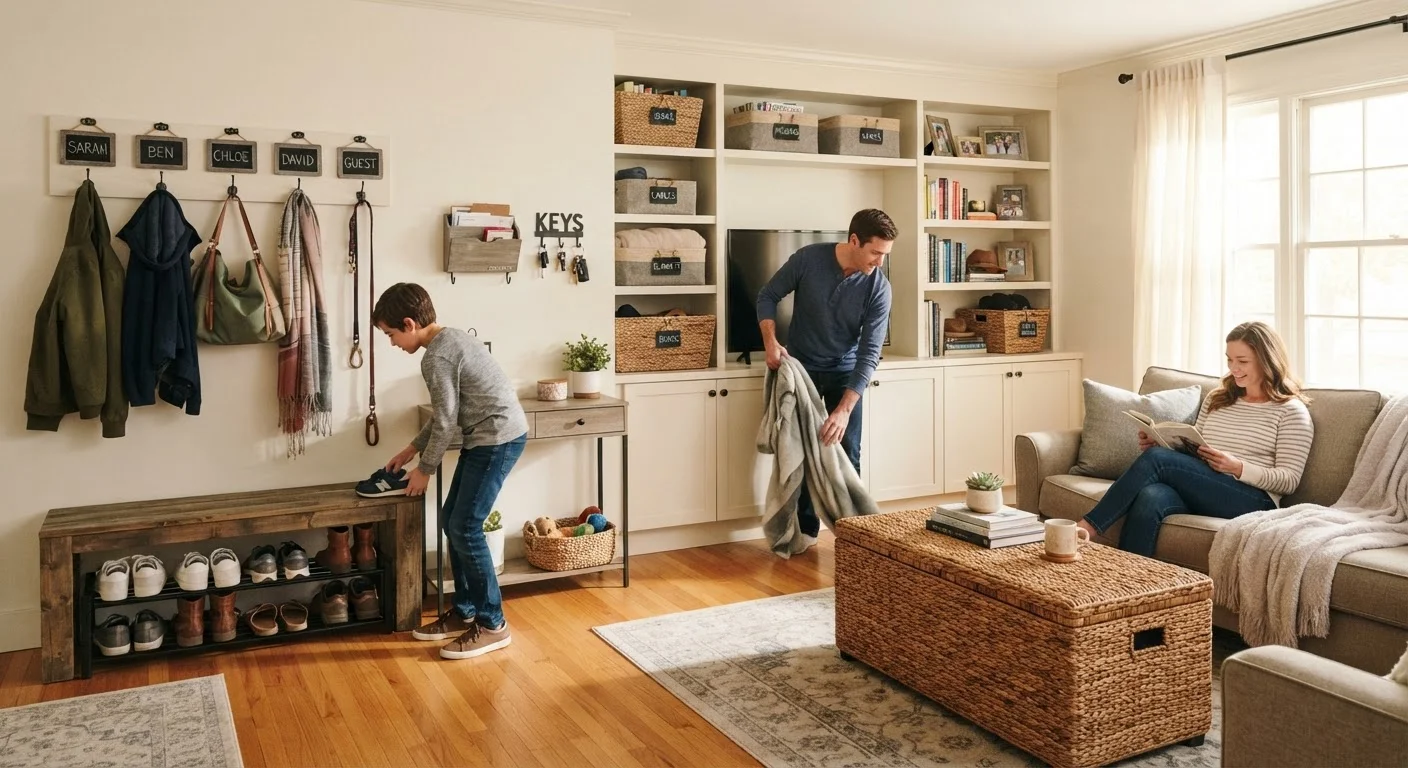
Photo credit: InfoHorizon.net | Access To Informative Content
In this article
When family members or roommates have different tidiness thresholds, organization systems can quietly collapse. Here's how to build ones that hold.
Key Takeaways
- Shared organization systems fail when they demand identical tidiness standards from everyone.
- Designing for the least tidy person — not the most — makes systems more durable.
- Containment zones let individuals manage their own clutter without disrupting shared areas.
- Regular, low-stakes check-ins prevent resentment from building over household organization.
- Clear ownership of spaces and tasks reduces the ambiguity that leads to nothing getting done.
Why Shared-Home Systems Break Down
Most organization advice is written for one person acting alone. Apply it to a household of two, four, or six people with different schedules, habits, and tolerance for clutter — and even the most thoughtfully designed system can quietly unravel within weeks.
The culprit usually isn't laziness. It's mismatched standards. One person's 'clean enough' is another's 'completely undone.' When those standards collide in a shared kitchen, bathroom, or living room, the result is often tension, passive-aggressive tidying, or a slow surrender to disorder.
The good news: you don't need everyone to care equally about organization. You need systems that function across different levels of care. That shift in thinking — from aligning habits to designing around them — is where durable shared-home organization actually begins.
One System Does Not Fit All
Organization frameworks designed for solo households often assume a single set of habits and priorities. In shared homes, what feels 'obvious' to one person — putting scissors back in the drawer, sorting mail immediately — may not register as important to another. Neither person is wrong; they're simply operating from different mental models. Building systems that account for this variation is more effective than trying to align everyone's instincts.
For a broader look at assumptions that quietly undermine household order, see our piece on organization myths that keep homes messier.
Best Practices for Organizing Shared Spaces
The following practices are grounded in what actually holds up in households where people have different standards, schedules, and approaches to tidiness. None require everyone to become more organized — they require the system to do more of the work.
Design systems around the least tidy household member, not the most organized one.
A system only works if everyone can realistically maintain it. When the tidiest person sets the standard, others consistently fall short, which breeds frustration on both sides and causes the system to erode quickly.
Create clearly bounded personal zones within shared rooms.
Ambiguity about who is responsible for which space leads to either standoffs or resentment. When each person has a defined area — a shelf, a drawer, a basket — their clutter stays contained without polluting the shared environment.
Use visual cues and labels instead of relying on memory or unspoken rules.
Asking people to 'just remember' where things go is the fastest way to watch a system collapse. Labels, color-coding, and consistent placement eliminate the mental overhead that makes tidying feel like work.
Hold brief, recurring household check-ins to address friction before it builds.
Organization disagreements that go unaddressed harden into resentment. A short monthly conversation — five to ten minutes — gives everyone a low-stakes opportunity to flag what's not working before frustration sets in.
Assign clear ownership of shared maintenance tasks rather than assuming they'll be shared naturally.
When everyone is responsible for a task, effectively no one is. Explicit ownership — even on a rotation — removes the ambiguity that causes chores to pile up and blame to follow.
Separate personal storage from communal storage with deliberate physical boundaries.
When personal and shared items intermingle, tidying becomes everyone's problem simultaneously. Distinct physical separation means one person's reorganization doesn't disrupt another's belongings.
If your shared spaces include a garage or utility area that's become a household catch-all, the same principles apply there. Our garage organization guide walks through how to reclaim those harder-to-tame spaces.
Quick Wins You Can Implement Today
You don't need a full weekend or a household-wide agreement to start improving shared spaces. These immediate actions create visible, tangible change that can shift the momentum of how everyone interacts with your home.
For a room-by-room audit of what's working and what isn't, our room-by-room home organization checklist gives you a structured framework to work through at your own pace. And if counter space in a shared kitchen is a recurring flashpoint, organizing a small kitchen without sacrificing counter space offers targeted strategies worth reviewing together.
Making Peace With Different Standards
The most functional shared homes aren't necessarily the tidiest — they're the ones where expectations are clear, spaces have defined purposes, and friction has somewhere constructive to go.
“Organization is not about perfection; it's about efficiency, reducing stress and clutter, saving time and money, and improving your overall quality of life.”
— Christina Scalise, Professional organizer and author of 'Organize Your Life and More'
That means accepting that some household members will always maintain lower baseline tidiness, and designing for that reality rather than fighting it. Containment beats conversion: a well-placed basket holds clutter without requiring a change in habit. A labeled shelf eliminates the argument about where something belongs.
It also means protecting individual autonomy. Giving each person designated personal storage — whether that's a shelf, a drawer, or a corner of a room — acknowledges that not all spaces need to be shared equally. Our guide on hidden storage opportunities most homes already have can help you find underused space to assign as personal zones without a renovation.
Shared living works best when the system asks less of people's motivation and more of the physical environment itself. Build in that intelligence up front, and the home maintains itself more than anyone has to maintain it.

Author
Home & Garden Editorial Team
Home & Garden Editorial Team is the collective byline for our editorial team and contributor network. Articles published under this byline or an editorial pen name are researched, written, and reviewed according to our editorial standards for clarity, consistency, and independence before publication.
View all articles →