
Whole Foods vs. Processed Foods: What the Difference Really Means for Your Diet
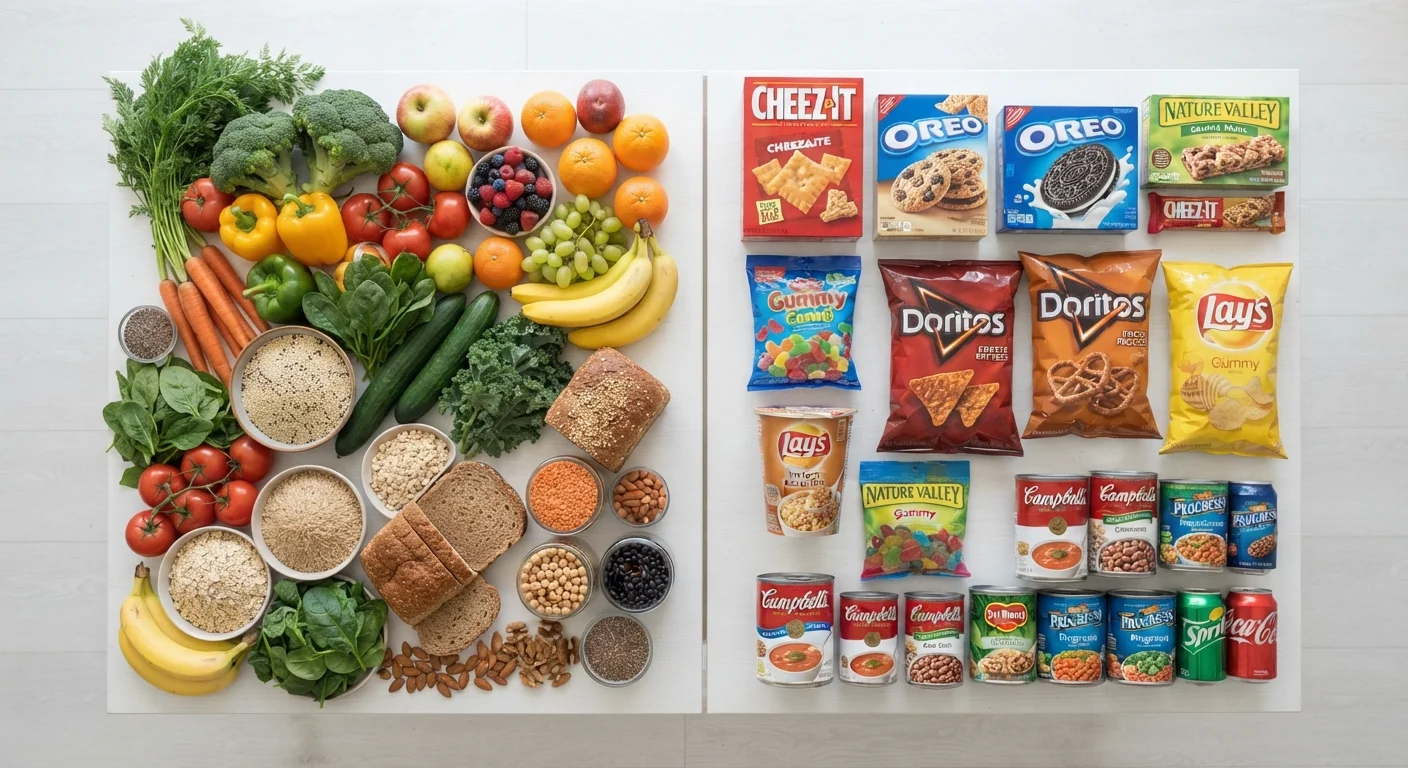
Photo credit: InfoHorizon.net | Access To Informative Content
In this article
Explore how whole and processed foods differ nutritionally and what that means for everyday eating decisions.
Key Takeaways
- Processing exists on a spectrum — not every processed food is nutritionally poor.
- Whole foods generally deliver more fiber, vitamins, and minerals with fewer additives.
- Ultra-processed foods are linked to higher intake of sodium, added sugar, and unhealthy fats.
- Reading nutrition labels helps you evaluate processed foods on their individual merits.
- A practical, balanced diet can include some processed foods without sacrificing overall health.
Defining the Terms: What Makes a Food 'Whole' or 'Processed'?
A whole food is one that has been minimally or not at all altered from its original state. Think of an apple, a dry lentil, or a raw walnut. What you see is essentially what came from nature, with no added ingredients and no industrial transformation.
Processed foods, by contrast, have been changed in some way before reaching your plate — through cooking, canning, freezing, fermenting, milling, or the addition of ingredients like salt, oil, sugar, or preservatives. The critical insight here is that processing is a spectrum, not a binary. Researchers and public health bodies often use a classification system called NOVA, which categorizes foods into four groups: unprocessed or minimally processed foods, processed culinary ingredients (like olive oil or flour), processed foods (such as canned vegetables or cheese), and ultra-processed foods — industrially manufactured products with many additives and little resemblance to whole ingredients.
Ultra-processed products — think packaged snack cakes, flavored chips, and certain breakfast cereals — occupy only one end of the processed-food spectrum. Lumping frozen peas in with fast-food nuggets misrepresents the genuine nutritional diversity within processed foods. Understanding where a food falls on this spectrum is the starting point for smarter dietary choices. For a deeper look at how to evaluate individual products, see our guide to decoding nutrition labels.
Nutritional Differences: Where the Gap Becomes Significant
Whole foods tend to be nutritionally dense by default. An unprocessed food like brown rice, spinach, or a chicken breast arrives with its full complement of fiber, micronutrients, and naturally occurring compounds intact. Processing, depending on its intensity, can remove or degrade these components.
Milling wheat into white flour strips away the bran and germ — along with fiber, B vitamins, and minerals. Manufacturers often attempt to compensate through enrichment or fortification, but the resulting product rarely mirrors the original nutritional profile. Similarly, ultra-processed snacks frequently provide high caloric density alongside low amounts of fiber, protein, and micronutrients — a combination that research associates with overconsumption and poorer satiety.
| Criterion | Whole Foods | Processed Foods |
|---|---|---|
| Fiber content | Naturally high in most forms | Often reduced; varies widely by product |
| Added sugar | None added | Common in ultra-processed products |
| Sodium levels | Naturally low | Often elevated for preservation or flavor |
| Micronutrient retention | Intact and naturally occurring | Can be reduced; sometimes fortified back in |
| Shelf life | Shorter; requires refrigeration or prompt use | Extended through preservatives or packaging |
| Convenience | Requires more preparation time | Ready-to-eat or quick to prepare |
| Additive content | None | Ranges from minimal to extensive |
That said, certain processing methods preserve or even enhance nutrition. Canning tomatoes concentrates lycopene, an antioxidant. Freezing vegetables shortly after harvest can lock in nutrients that degrade in fresh produce sitting in transit. Fermentation produces beneficial compounds in foods like yogurt and kimchi. The form of processing matters as much as the fact of processing.
57%
Share of calories from ultra-processed foods in average U.S. diet
Research published in BMJ Open estimated that ultra-processed foods account for more than half of daily caloric intake for many American adults.
2,300 mg
Daily sodium limit recommended by U.S. dietary guidelines
The Dietary Guidelines for Americans advise limiting sodium to 2,300 mg per day; ultra-processed foods are the primary source of excess sodium in the American diet.
4x
Higher fiber intake in whole-food diets vs. ultra-processed diets
Population studies consistently show that diets anchored in whole foods deliver substantially more dietary fiber, which supports digestive and cardiovascular health.
Sodium and added sugar are two nutrients where ultra-processed foods consistently differ from whole foods. Because these are independently linked to elevated blood pressure and metabolic health concerns, their presence in quantity — across multiple daily meals — is worth tracking. Our article on reading a nutrition label without getting lost explains exactly how to spot these on packaging.
Building a Practical Approach to Everyday Eating
The goal of understanding whole versus processed foods is not to adopt a rigid ruleset but to make more intentional choices. Most Americans eat a mix of both categories daily, and a realistic healthy diet doesn't require the elimination of all processed foods.
A useful framework: prioritize whole or minimally processed foods as the foundation of your meals — vegetables, fruits, legumes, whole grains, eggs, plain dairy, and unprocessed proteins. Then evaluate processed additions individually based on their ingredient lists and nutrient profiles rather than treating all packaged foods as equivalent.
Some practical pointers worth keeping in mind:
- Frozen vegetables and fruits count as minimally processed and are nutritionally comparable to fresh.
- Canned beans and lentils are convenient, fiber-rich whole-food staples — rinse them to reduce sodium.
- Plain yogurt and oats are processed but retain strong nutritional value.
- Ingredient lists are often more revealing than front-of-package claims. A shorter list of recognizable ingredients generally signals less processing.
If you're also thinking about broader dietary patterns — such as how plant-based eating fits into this framework — the plant-based eating primer covers practical starting points. And for a side-by-side look at how eating patterns affect nutritional outcomes, the plant-based vs. omnivorous diet comparison offers useful context.
Processing Isn't Always the Enemy
Some of the most nutritious foods in your grocery store have been processed in some way. Pasteurized milk, canned salmon, and fortified breakfast cereals can all contribute meaningfully to a healthy diet. The key distinction is between light processing that preserves or adds nutritional value and heavy industrial processing that introduces large amounts of sodium, sugar, or artificial additives while stripping away fiber and micronutrients. Evaluate foods individually rather than by category alone.
This article is for general informational and educational purposes only and is not a substitute for professional medical or dietary advice. Consult a registered dietitian or qualified healthcare provider for guidance specific to your health needs.

Author
Health Editorial Team
Health Editorial Team is the collective byline for our editorial team and contributor network. Articles published under this byline or an editorial pen name are researched, written, and reviewed according to our editorial standards for clarity, consistency, and independence before publication.
View all articles →