
What a Nutrition Label Is Actually Telling You
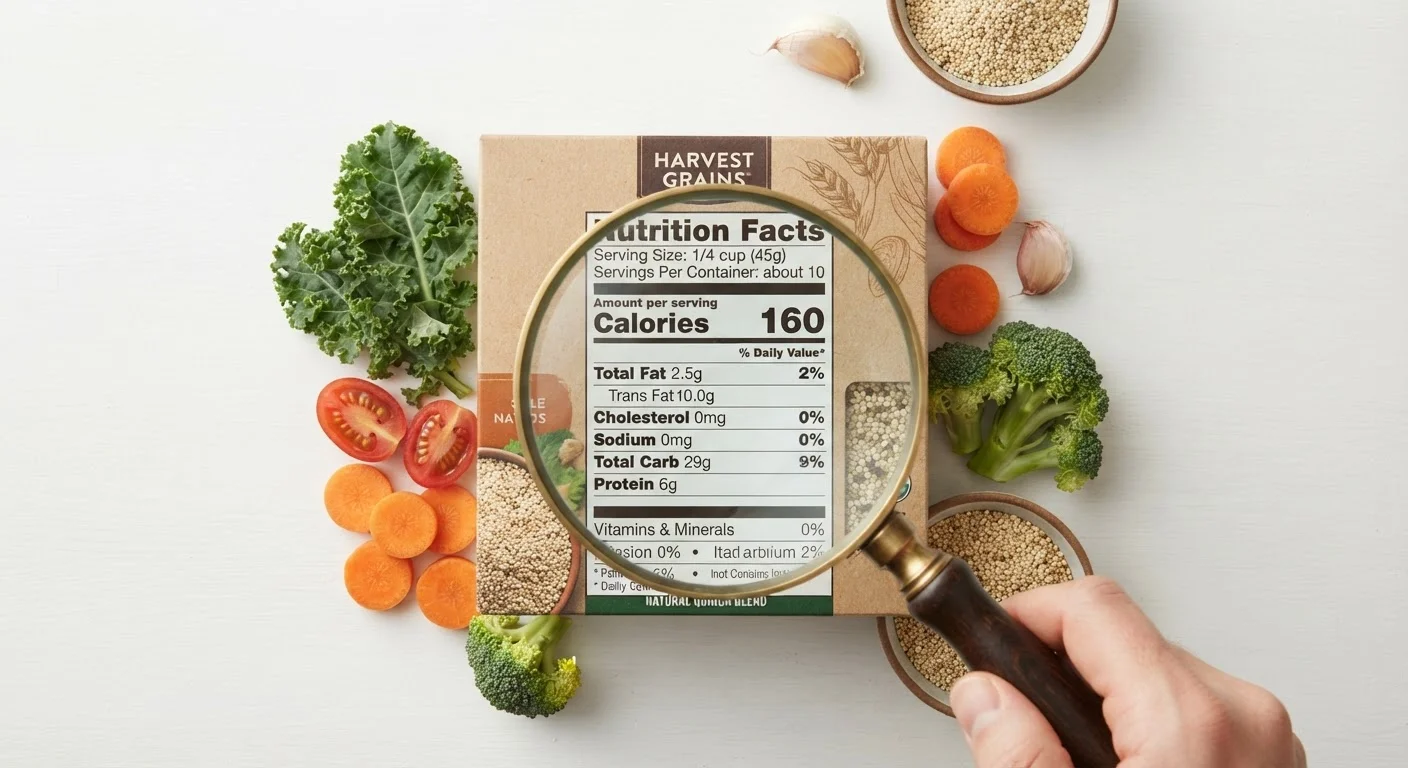
Photo credit: InfoHorizon.net | Access To Informative Content
In this article
Decode the numbers and percentages on food packaging so you can make more informed choices at the grocery store.
Key Takeaways
- Serving size is the foundation of every number on the label — always check it first.
- Percent Daily Value (%DV) is based on a 2,000-calorie reference diet and helps you gauge nutrient amounts quickly.
- 5% DV or less is generally considered low for a nutrient; 20% DV or more is considered high.
- Added Sugars and sodium are two nutrients most Americans consume in excess — pay close attention to those lines.
- The label reflects one serving, not necessarily the whole package, which can significantly change the numbers.
Start Here: Serving Size and Calories
Before reading any other number on a Nutrition Facts panel, find the serving size. Every single figure that follows — calories, fat, sodium, vitamins — applies to that amount and only that amount. If a bag of chips lists a serving size as 1 ounce (about 28 grams) but you eat two ounces, you've consumed double the calories and nutrients listed.
Serving sizes are standardized by the FDA to reflect typical consumption amounts, so they're grounded in how people actually eat — but they aren't prescriptions for how much you should eat. Pay attention to the number of servings per container too. A bottle that looks like a single serving might contain 2.5 servings.
Calories sit just below the serving size and represent the total energy you'd get from one serving. For context, the average adult reference diet used on labels is 2,000 calories per day — though individual needs vary based on age, sex, activity level, and health status. If you want a deeper look at decoding every section of the panel, that resource walks through each line in sequence.
70%
Of U.S. adults exceed daily sodium recommendations
According to the CDC, most Americans consume well above the 2,300 mg daily limit, largely through packaged and restaurant foods.
17 tsp
Average daily added sugar intake per American
The CDC estimates the average U.S. adult consumes about 17 teaspoons of added sugar daily, compared to the American Heart Association's recommendation of 6–9 teaspoons.
95%
Of Americans fall short of recommended fiber intake
Research published in the American Journal of Lifestyle Medicine identified dietary fiber as a 'nutrient of public health concern' due to widespread insufficient intake.
Nutrients to Limit — and Why the Label Flags Them
The label highlights certain nutrients because research consistently links excessive intake to health risks. Saturated fat, sodium, and added sugars are the three most important to watch for most people.
- Saturated fat is listed separately from total fat. Most dietary guidelines recommend keeping saturated fat to less than 10% of total daily calories, as high intake is associated with cardiovascular risk.
- Sodium is measured in milligrams (mg). Many packaged foods contain a surprisingly high percentage of the daily recommended limit in a single serving. The %DV for sodium is based on 2,300 mg per day.
- Added sugars were added to the label update specifically because naturally occurring sugars (in fruit, dairy) behave differently in the body than sugars added during manufacturing. For more on where those added sugars hide, see where added sugar hides in everyday foods.
A Quick Sodium Reality Check
When evaluating sodium, compare the milligrams per serving to the %DV rather than just the raw number. A food with 400 mg sounds specific, but seeing it labeled as 17% DV immediately tells you it's a notable portion of your daily allotment. This same approach works for any nutrient you're monitoring.
Trans fat also appears on labels. While partially hydrogenated oils (the main source of artificial trans fats) have been largely phased out of the U.S. food supply, small amounts can still appear — and any amount is worth minimizing.
Nutrients to Get Enough Of
The lower section of the label shifts focus to nutrients many Americans don't consume in sufficient quantities: dietary fiber, vitamin D, calcium, iron, and potassium. These are listed because deficiency in these nutrients is a documented public health concern.
Dietary fiber supports digestive health and helps you feel full. Most adults need around 25–38 grams per day, but average intake falls well short of that. A food with 5 grams of fiber per serving is a meaningful contribution. Vitamins and minerals are shown as %DV, making it easy to see whether a food is a useful source.
One common misconception is that a food needs to be "healthy" across every nutrient to be worth eating. In reality, foods fit into the broader pattern of your diet. A single label tells you about one food, not your whole day. For a broader perspective on how food choices add up, understanding whole versus processed foods is a useful companion read.
Using % Daily Value as a Quick Gauge
The %DV column is the label's most practical shortcut. It answers: "Is this a lot or a little of this nutrient?" The FDA's general rule of thumb is simple — 5% DV or less is low, 20% DV or more is high. Everything in between is moderate.
Use %DV to quickly compare two similar products. If you're choosing between two pasta sauces and one has 15% DV of sodium while the other has 28%, that's a meaningful difference even if the milligram numbers don't mean much to you intuitively.
Keep in mind that %DV is calculated for a 2,000-calorie diet. If you consistently eat significantly more or less than that, the percentages will over- or underestimate how much a nutrient contributes to your actual intake. The label is a useful tool, not a perfectly precise one. For common misunderstandings about how these numbers get interpreted, nutrition myths worth reconsidering covers several relevant ones.
Labels Reflect Averages, Not Your Needs
The Daily Values used on Nutrition Facts labels are reference points established for a generalized adult population eating 2,000 calories per day. Individual needs vary based on age, sex, activity, health status, and other factors. Use the label as a comparative tool and a general guide — not as a personalized prescription. Consult a registered dietitian for guidance tailored to your specific situation.
Frequently Asked Questions

Author
Food Editorial Team
Food Editorial Team is the collective byline for our editorial team and contributor network. Articles published under this byline or an editorial pen name are researched, written, and reviewed according to our editorial standards for clarity, consistency, and independence before publication.
View all articles →