
Reading a Nutrition Label Without Getting Lost
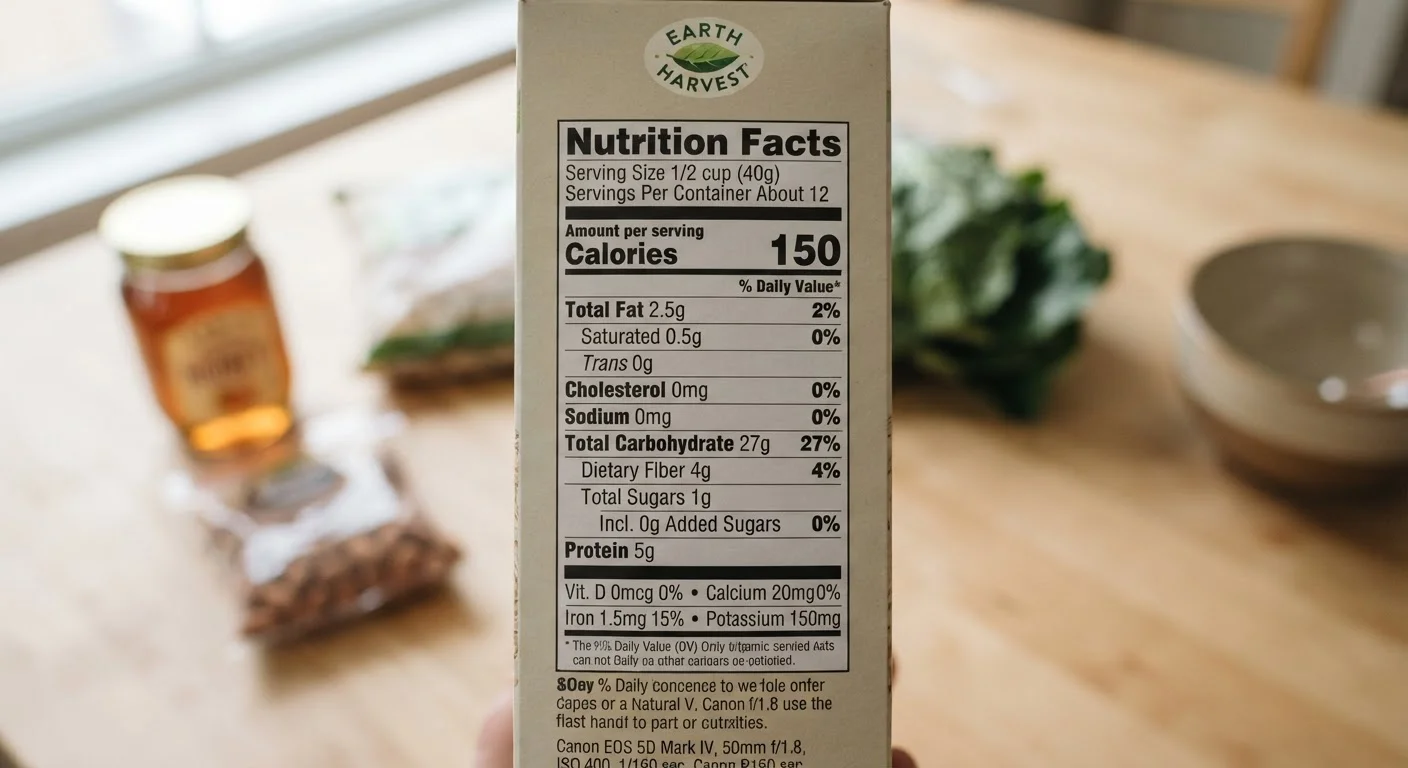
Photo credit: InfoHorizon.net | Access To Informative Content
In this article
Learn how to decode every section of a nutrition facts panel so you can compare foods with confidence.
Key Takeaways
- Always check the serving size first — all other numbers on the label are based on it.
- The % Daily Value column tells you whether a nutrient amount is high or low at a glance.
- Nutrients like fiber, protein, and vitamins are worth seeking out; sodium and added sugars are worth limiting.
- Ingredients are listed by weight, so the first few ingredients dominate the product's composition.
- One label reading habit — checking serving size before anything else — can immediately improve food decisions.
Why the Nutrition Facts Panel Exists
The Nutrition Facts panel is a federally mandated label required on most packaged foods sold in the United States. Introduced in 1994 and significantly updated in 2020, the format is standardized so that every product — whether a box of crackers or a can of beans — presents information the same way. That consistency is the label's biggest strength: once you know how to read one, you can read them all.
The panel is designed to help consumers compare similar products and understand what they are consuming per serving. It does not tell you whether a food belongs in your diet — that depends on your overall eating pattern, health goals, and individual needs. What it does provide is a reliable, factual snapshot of a food's nutritional composition.
Understanding these labels pairs well with the broader skill of building a balanced plate — knowing what nutrients a food delivers helps you see where it fits in a complete meal.
Nutrition Labels Are a Tool, Not a Verdict
Reading a nutrition label helps you compare and understand food — it does not define a food as "good" or "bad." Overall dietary patterns matter far more than any single product. If you have specific health conditions or dietary needs, consult a registered dietitian or your healthcare provider for personalized guidance.
How to Read the Label: Step by Step
Follow these steps the next time you pick up a packaged food. You do not need to memorize every number — the goal is to build a quick mental checklist that becomes second nature.
What you will need
Packaged food product
Provides a real nutrition facts panel to practice reading as you follow each step.
Pen and notepad (or notes app)
Useful for jotting down key numbers when comparing multiple products.
Find the Serving Size and Servings Per Container
The very top of any nutrition facts panel lists the serving size (e.g., "1 cup" or "28g") and the number of servings per container. Every single number on the rest of the label — calories, fat, sodium, everything — is calculated for that one serving, not the whole package.
If a bag of chips lists 7 chips as a serving and the bag contains 3 servings, eating the whole bag means tripling every number you see.
Check the Calorie Count
Calories represent the total energy one serving provides. The updated FDA label format displays calories prominently in large type. This number combines energy from all three macronutrients: fat (9 calories per gram), carbohydrates (4 cal/g), and protein (4 cal/g).
For a broader look at what calorie figures actually mean for your body, see our guide to understanding calories.
Review the Macronutrient Breakdown
Below calories, the label lists the three macronutrients:
- Total Fat — broken down into saturated fat and trans fat. Most health authorities recommend keeping saturated fat moderate and trans fat as close to zero as possible.
- Total Carbohydrate — includes dietary fiber and total sugars (with added sugars listed separately). Dietary fiber is a nutrient most Americans fall short on and is worth prioritizing.
- Protein — no % Daily Value is required for protein on most labels, so you'll see just the gram amount.
Interpret the % Daily Value Column
The right-hand column shows % Daily Value (% DV) for most nutrients. These percentages are based on a reference diet of 2,000 calories per day — a general benchmark established by the FDA, not a prescription for any individual.
% DV tells you how much one serving contributes toward the daily recommended amount of that nutrient. It is a quick comparison tool.
Identify Nutrients to Seek and Nutrients to Limit
The label is organized to draw attention to two categories:
- Nutrients to get enough of: Dietary fiber, vitamin D, calcium, iron, and potassium are highlighted because many Americans fall short. Higher % DV values here are generally favorable.
- Nutrients to limit: Saturated fat, sodium, and added sugars. Regularly consuming these in high amounts is associated with increased health risk according to dietary guidelines. Look for lower % DV on these lines.
For a deeper look at vitamins and minerals on the label, the micronutrients at a glance guide covers what each one does and where to find it.
Glance at the Ingredient List
The ingredient list appears below or beside the nutrition facts panel. Ingredients are listed in descending order by weight — the first ingredient makes up the largest proportion of the product. A quick scan of the first three to five ingredients gives you a reliable sense of what a food is primarily made of.
For a full breakdown of how to interpret this list, see reading an ingredient list — it explains what position, quantity, and common label terms actually tell you.
Use the 5% and 20% Rule
A quick way to interpret % Daily Value: 5% or less means a nutrient is low in that food; 20% or more means it is high. Use this shortcut when scanning for nutrients you want more of (like fiber) or less of (like saturated fat and sodium). It works for any nutrient listed with a % DV.
Serving Size Is Not a Recommendation
The serving size on a label reflects a typical amount consumed, not a prescribed portion for your needs. A package may contain two or three servings, meaning all nutrient values must be multiplied if you eat the whole package. Always check servings per container before drawing any conclusions from the numbers.
Putting Label Reading Into Practice
Label reading is most useful as a comparison tool. When choosing between two similar products — say, two brands of yogurt — pull both labels and compare serving sizes first, then sodium, added sugars, and protein side by side. Small differences compound over repeated purchases.
At the grocery store, the goal is not to find a "perfect" food but to make more informed choices overall. A product high in saturated fat may still fit into a nutritious diet if the rest of your meals are balanced. Conversely, a product with a clean-looking label can still be low in fiber and high in sodium. Labels give you data; context gives you judgment.
If you want to extend these skills to the ingredient list — which reveals things the nutrition panel doesn't, like the type of sweetener used or whether whole grains are present — the guide to spotting added sugars on ingredient lists is a useful next step. And if budget is a factor in your grocery decisions, eating well on a budget offers practical strategies for choosing nutritious foods without overspending.
This article is for informational purposes only and is not a substitute for personalized dietary or medical advice. Consult a registered dietitian or qualified healthcare professional for guidance specific to your health needs.

Author
Health Editorial Team
Health Editorial Team is the collective byline for our editorial team and contributor network. Articles published under this byline or an editorial pen name are researched, written, and reviewed according to our editorial standards for clarity, consistency, and independence before publication.
View all articles →