
Vitamins and Minerals: A Plain-English Reference Guide
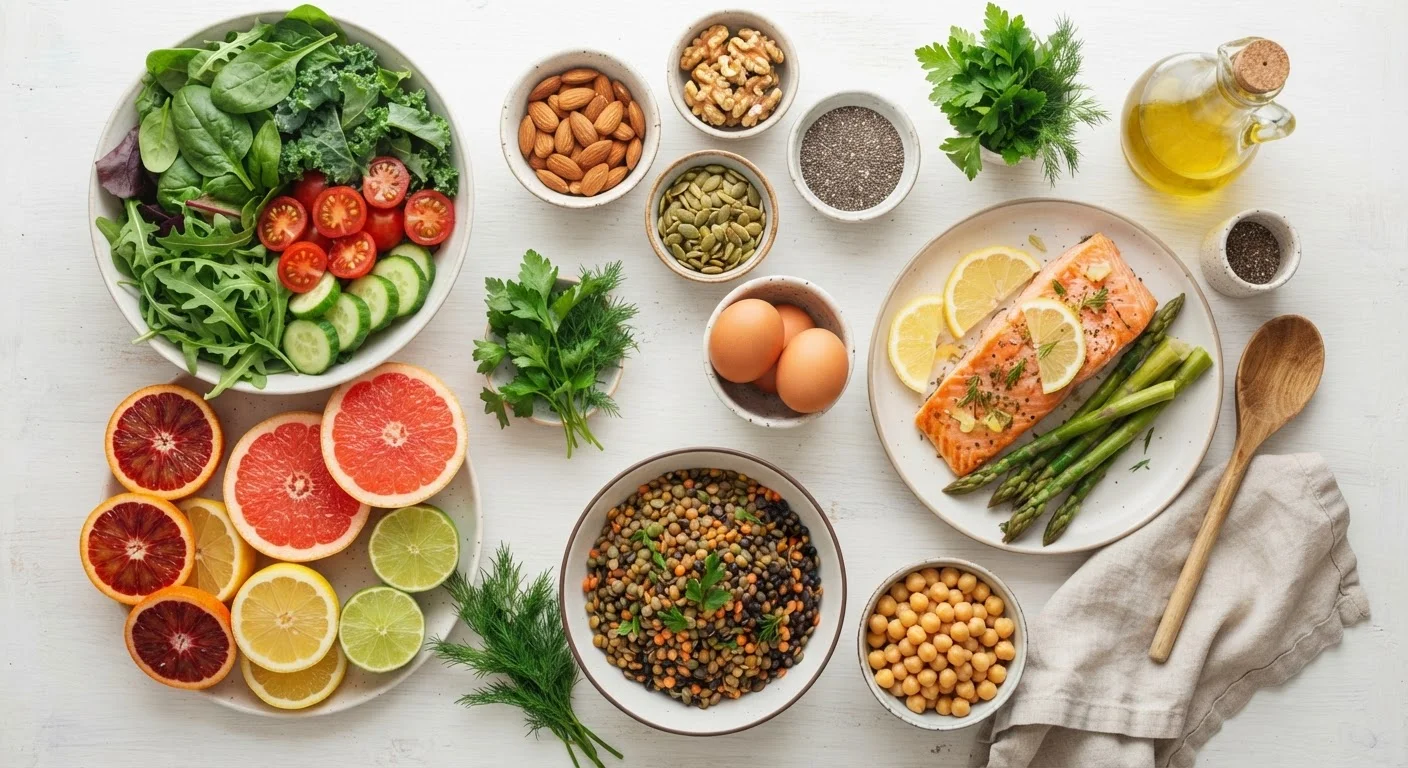
Photo credit: InfoHorizon.net | Access To Informative Content
In this article
A quick-lookup guide covering the key vitamins and minerals, what each one does, and common food sources for each.
Why Vitamins and Minerals Matter
Vitamins and minerals are micronutrients — nutrients your body needs in small amounts to function properly. Unlike carbohydrates, proteins, and fats, they supply no calories, but they are essential for nearly every process in your body: converting food into energy, building bones, supporting immunity, and keeping your nervous system running.
The distinction between the two groups matters. Vitamins are organic compounds made by plants or animals. Minerals are inorganic elements that originate in soil and water and reach us through the foods that absorb them. Both categories are further divided: vitamins split into fat-soluble (A, D, E, K) and water-soluble (B vitamins and C), while minerals split into macrominerals (needed in larger amounts, like calcium) and trace minerals (needed in tiny amounts, like iron).
For a broader foundation on eating well, see our Nutrition Basics hub and The Beginner's Map to Building a Balanced Plate.
Fat-soluble vitamins
Vitamins (A, D, E, and K) that dissolve in fat and are stored in body tissues. Because they accumulate, very high supplemental doses can become harmful over time.
Water-soluble vitamins
Vitamins (C and the B vitamins) that dissolve in water. Excess amounts are typically excreted in urine, so regular dietary intake is important.
Macrominerals
Minerals the body needs in relatively larger amounts — typically more than 100 mg per day — including calcium, magnesium, and potassium.
Trace minerals
Minerals required in very small amounts but still essential for health, including iron, zinc, and iodine.
Bioavailability
How well a nutrient is absorbed and used by the body. Factors such as food preparation, pairing with other nutrients, and individual gut health all affect bioavailability.
Antioxidant
A compound that helps neutralize unstable molecules called free radicals, which can damage cells. Vitamins C and E are well-known dietary antioxidants.
Key Vitamins: What They Do and Where to Find Them
The table below summarizes the major vitamins, their primary roles, and reliable food sources. Use it as a quick reference when planning meals or building your grocery list.
| Fat-soluble vitamins | A, D, E, K — stored in body fat and liver |
| Water-soluble vitamins | B1, B2, B3, B5, B6, B7, B9, B12, and C — not stored long-term |
| Vitamin most Americans fall short on | Vitamin D (National Institutes of Health, Office of Dietary Supplements) |
| B12 for plant-based diets | Supplementation or fortified foods are typically necessary |
| Iron absorption tip | Pair plant-based iron with vitamin C to boost uptake |
| Best single-food mineral source | Oysters — extremely high in zinc and iron |
Fat-Soluble Vitamins (A, D, E, K)
Vitamin A supports vision, immune defense, and skin cell renewal. Find it as preformed vitamin A in liver and dairy, or as beta-carotene (which your body converts) in orange and dark-green vegetables like sweet potatoes and spinach.
Vitamin D helps your body absorb calcium and supports bone density and immune function. Fatty fish, fortified dairy or plant milks, and sunlight exposure are the main sources. Many Americans fall short of adequate intake — a healthcare provider can test your levels if you have concerns.
Vitamin E is an antioxidant that protects cell membranes. Nuts, seeds, and vegetable oils are rich sources.
Vitamin K is essential for blood clotting and bone metabolism. Leafy greens — kale, collards, spinach — are the most concentrated sources.
Water-Soluble Vitamins (B Complex and C)
B vitamins work as a team to release energy from food and support red blood cell production. Key members include B12 (found almost exclusively in animal products and fortified foods — important for anyone following a plant-based diet), folate (crucial during pregnancy; found in legumes, leafy greens, and fortified grains), and B6 (in poultry, fish, bananas, and potatoes). Learn how to spot these on packaging with our guide to reading a nutrition label.
Vitamin C supports collagen production, wound healing, and iron absorption. Citrus fruits, bell peppers, strawberries, and broccoli are excellent sources. Because it is water-soluble, your body does not store large amounts — regular intake matters.
Key Minerals: Roles and Food Sources
Minerals are often overlooked, but deficiencies in even trace amounts can have significant effects on health. Here are the most important ones for everyday eating.
40%
U.S. adults with insufficient vitamin D intake
Estimated by the National Institutes of Health based on dietary intake data from NHANES.
3x
Better heme iron absorption vs. non-heme iron
Heme iron from animal sources is generally absorbed at a higher rate than plant-based non-heme iron, per established nutritional research.
300+
Body processes dependent on magnesium
Magnesium acts as a cofactor in over 300 enzymatic reactions, according to the NIH Office of Dietary Supplements.
Macrominerals
Calcium is the primary mineral in bones and teeth and also plays a role in muscle contractions and nerve signals. Dairy products, fortified plant milks, tofu made with calcium sulfate, and leafy greens are good sources.
Magnesium supports over 300 enzymatic reactions — including energy production and blood pressure regulation. Find it in whole grains, legumes, nuts, and dark chocolate.
Potassium helps maintain fluid balance and healthy blood pressure. Bananas get all the fame, but white potatoes, beans, and avocados are equally strong sources.
Trace Minerals
Iron carries oxygen in red blood cells. Heme iron (from meat and fish) is absorbed more efficiently than non-heme iron (from legumes, fortified cereals, and tofu). Pairing plant-based iron sources with vitamin C significantly improves absorption.
Zinc supports immune function and wound healing. Oysters, red meat, poultry, pumpkin seeds, and legumes are the top sources.
Iodine is essential for thyroid hormone production. Seafood, dairy, and iodized table salt are the most consistent sources in the American diet.
Planning meals that cover these nutrients consistently is easier with a structured approach — our Weekly Meal Planning checklist can help.
Supplements vs. Food Sources
For most healthy adults, a varied diet is the most effective way to meet vitamin and mineral needs. Supplements can fill genuine gaps — particularly for vitamin D, B12, and folate during pregnancy — but they do not replicate the full nutritional matrix of whole foods. Before starting any supplement, consult a registered dietitian or your healthcare provider, especially if you take medications or have a health condition, as some nutrients interact with common drugs.

Author
Food Editorial Team
Food Editorial Team is the collective byline for our editorial team and contributor network. Articles published under this byline or an editorial pen name are researched, written, and reviewed according to our editorial standards for clarity, consistency, and independence before publication.
View all articles →