
Building a Balanced Plate Without Counting Every Calorie
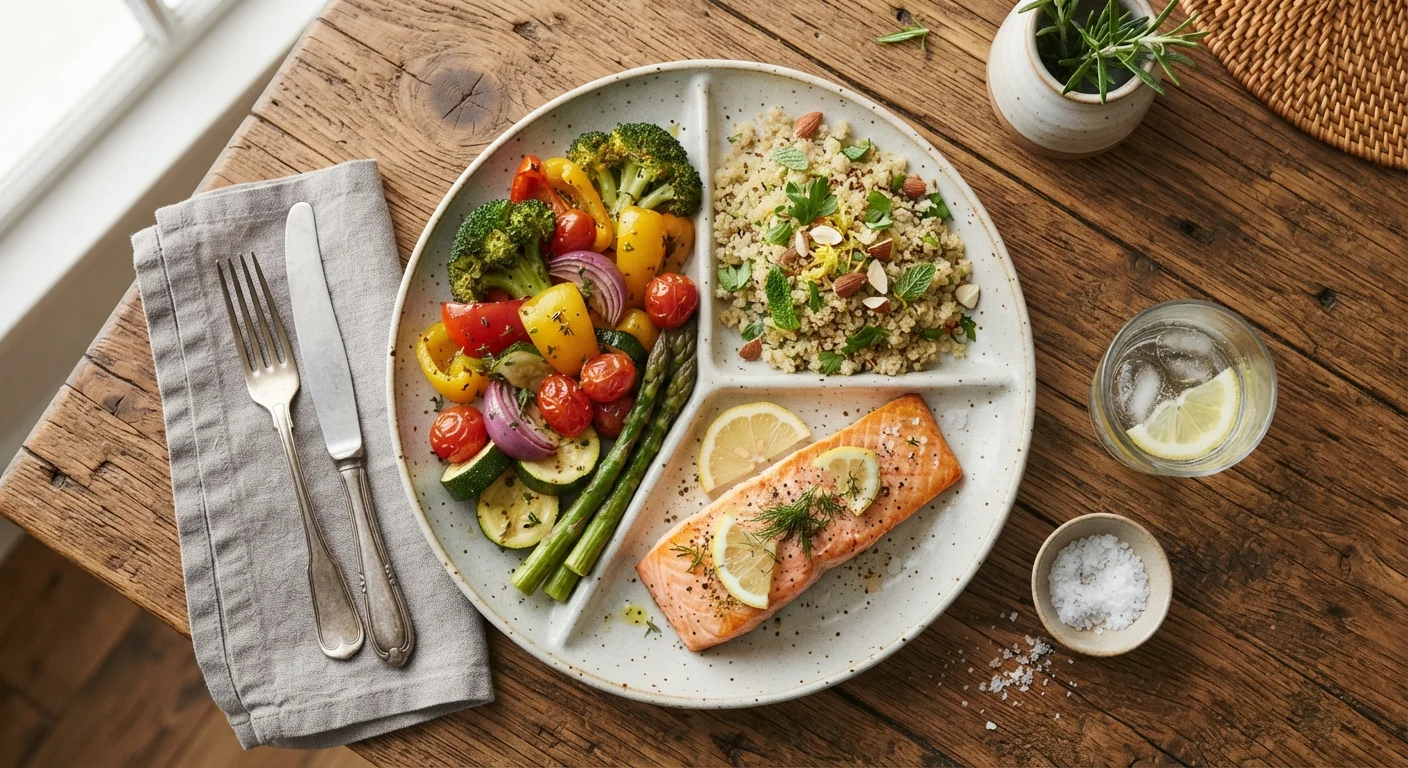
Photo credit: InfoHorizon.net | Access To Informative Content
How to structure meals using portion proportions and food group variety rather than obsessive tracking.
Key Takeaways
- Half your plate should be vegetables and fruit; one quarter each for protein and whole grains.
- Visual cues — your hand, your plate's surface area — replace the need for a food scale.
- Variety across food groups over a day matters more than perfection at any single meal.
- Healthy fats, hydration, and minimally processed foods round out a balanced approach.
- This method works in real kitchens and on real schedules without apps or calorie math.
Why Proportions Beat Calorie Math
Calorie counting works for some people — but it demands sustained attention, access to accurate food labels, and a tolerance for constant arithmetic. For most home cooks, that level of tracking isn't sustainable long-term. The good news: nutrition science offers a simpler framework that gets you most of the same benefits without the spreadsheet.
The plate-proportion method — popularized through public health guidance and backed by decades of dietary research — shifts focus from individual nutrients to food group balance. It accounts for the fact that whole foods carry nutrients that interact with each other, and that eating patterns over time matter more than any single meal's macros. If you're curious about what's actually on a nutrition label, our guide to reading a nutrition label without getting lost is a useful companion — but you won't need it to follow the steps below.
This Is General Education, Not Medical Advice
The guidance here is intended for generally healthy adults looking to build better everyday habits. It is not a substitute for personalized medical or dietary advice. If you have a chronic health condition, food allergy, or specific nutrition concern, please consult a registered dietitian or your healthcare provider before making significant changes to your diet.
The approach below gives you a practical structure to follow at any meal. It works whether you're cooking a sheet pan dinner on a weeknight or assembling a quick lunch from whatever's in the fridge.
Putting It Together: Your Plate in Practice
Follow the five steps above at your next meal. You don't need every component represented perfectly every time — the goal is a consistent pattern, not a rigid formula.
Fill Half Your Plate with Vegetables and Fruit
Start by mentally dividing your plate in half. That entire left side belongs to vegetables — and occasionally fruit. Prioritize non-starchy vegetables like leafy greens, broccoli, bell peppers, carrots, and tomatoes, which deliver fiber, vitamins, and minerals with relatively little energy density. Fruit counts here too, especially at breakfast or as part of a lighter meal.
Variety is the point: different colors signal different nutrients, so rotating your choices across the week matters more than picking the single "best" vegetable.
Dedicate One Quarter to Quality Protein
The upper-right quarter of your plate is for protein. This includes lean meats, poultry, fish, eggs, legumes (beans, lentils, chickpeas), tofu, tempeh, or dairy foods like plain Greek yogurt. A palm-sized portion — roughly 3 to 4 ounces of cooked meat or fish, or about half a cup of cooked legumes — fits this zone.
Plant proteins like beans and lentils do double duty by also contributing fiber, making them especially useful for building a satisfying meal. Varying your protein sources across the week broadens your nutrient intake.
Fill the Remaining Quarter with Whole Grains or Starchy Vegetables
The bottom-right quarter goes to complex carbohydrates: brown rice, quinoa, whole wheat pasta, oats, barley, whole grain bread, or starchy vegetables like sweet potatoes, corn, or peas. These foods provide sustained energy through fiber and slower-digesting starches, compared to refined grain equivalents.
A cupped handful — roughly half a cup cooked — is a reasonable visual reference for this portion. You don't need to eliminate refined grains entirely; simply making whole grains the default puts you ahead nutritionally without much effort.
Add a Small Amount of Healthy Fat
Fat is not the enemy — it supports nutrient absorption and helps you feel satisfied. A thumb-sized portion (roughly a teaspoon) of olive oil for cooking, a small handful of nuts or seeds, a quarter of an avocado, or some natural nut butter added to a meal covers this need without dominating the plate.
These fats often come embedded in other foods — the salmon on your plate, the chickpeas dressed in olive oil — so you rarely need to add much separately.
Account for Beverages and Small Additions
What you drink alongside a meal matters. Water is the baseline; unsweetened coffee and tea are fine. Be aware that sugary drinks — soda, juice, sweetened coffee — add significant energy without contributing the fiber or protein that signal fullness. Dairy milk or fortified plant-based alternatives can round out calcium and protein if they fit your plate.
Condiments, sauces, and dressings deserve a quick scan — not elimination. A tablespoon of a flavorful dressing goes a long way; a heavy pour of a high-sodium sauce can quietly shift a balanced meal. For a deeper look at where sodium adds up, see our piece on managing daily sodium intake.
Think Across the Whole Day
No single meal has to be perfectly balanced. If lunch was mostly grains and protein, lean into vegetables and fruit at dinner. Aiming for variety across the full day — not perfection plate by plate — keeps eating flexible and sustainable.
If your schedule makes this feel out of reach, our article on eating well on a busy schedule addresses exactly that. And once this plate-building habit feels natural, weekly meal planning is a logical next step for maintaining balance without thinking about it daily.
Don't Ignore Persistent Hunger or Fatigue
A balanced plate should leave you comfortably satisfied, not chronically hungry. If you find yourself regularly fatigued, light-headed, or unable to feel full using these proportions, something else may be at play. Talk with a healthcare professional rather than simply eating less or pushing through.
This article is for general informational and educational purposes only and is not a substitute for professional medical or dietary advice. Consult a qualified healthcare provider before making significant changes to your diet, especially if you have any health conditions.

Author
Food Editorial Team
Food Editorial Team is the collective byline for our editorial team and contributor network. Articles published under this byline or an editorial pen name are researched, written, and reviewed according to our editorial standards for clarity, consistency, and independence before publication.
View all articles →