
Dry Heat vs. Moist Heat Cooking: Choosing the Right Method
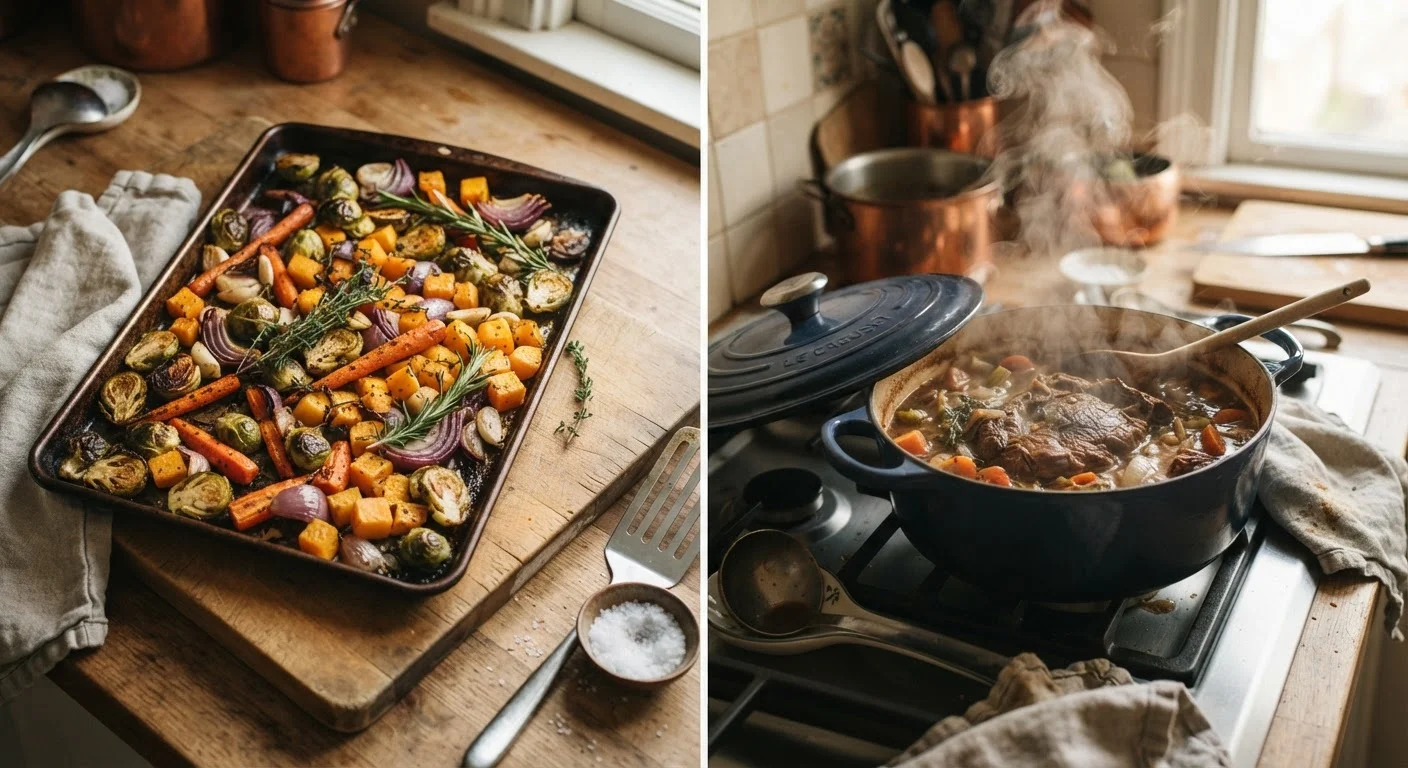
Photo credit: InfoHorizon.net | Access To Informative Content
In this article
Roasting, steaming, braising, sautéing — understand the difference between dry and moist heat cooking and which suits different ingredients.
Key Takeaways
- Dry heat methods use hot air or direct contact to create browning and crispy textures.
- Moist heat methods use liquid or steam to gently cook and tenderize ingredients.
- Tough cuts of meat benefit from moist heat; tender cuts shine with dry heat.
- Many dishes combine both methods — searing then braising, for example — for layered results.
- Matching the method to the ingredient is the single biggest lever for better cooking outcomes.
What Separates Dry Heat from Moist Heat
Every cooking method falls into one of two camps: dry heat or moist heat. The distinction isn't about whether you add water to a pan — it's about the medium that actually transfers heat to your food.
With dry heat, the cooking agent is hot air, hot metal, or radiant energy from a flame or heating element. Think roasting, baking, grilling, broiling, sautéing, and pan-frying. Temperatures typically run high, and the surface of the food dries out and browns through a chemical process called the Maillard reaction — the same browning that gives a seared steak or a roasted carrot its deep, complex flavor. For a deeper look at what's actually happening when you brown meat, see the science behind searing.
With moist heat, water or steam is the conductor. Braising, simmering, poaching, steaming, and stewing all work this way. Temperatures are limited by the boiling point of water (212°F at sea level), which keeps food from over-browning but creates entirely different results: softer textures, dissolved connective tissue, and a gentler flavor profile.
When to Use Dry Heat
Dry heat is your go-to when you want surface browning, crispiness, or concentrated flavor. Because these methods operate at higher temperatures, they're best suited to ingredients that are already tender — or thin enough to cook through quickly before the outside overcooks.
- Roasting and baking use oven-circulated hot air. Vegetables caramelize at the edges; chicken skin crisps up. Sheet pan cooking is a practical application of roasting technique that maximizes browning through proper spacing.
- Sautéing and pan-searing use a hot pan with a small amount of fat. Speed and high heat are the point — thin cuts of protein, tender vegetables, and aromatics all benefit. The choice of fat matters here; see how smoke points affect different cooking applications.
- Grilling and broiling apply radiant heat directly to food, producing char and smokiness alongside browning.
Pat Food Dry Before Dry Heat Cooking
Surface moisture is the enemy of browning. Before roasting, grilling, or searing, pat proteins and vegetables dry with paper towels. Even a thin film of water causes steaming at the surface, which delays the Maillard reaction and leaves you with pale, softened food rather than a proper crust.
Dry heat works poorly on tough, collagen-heavy cuts like chuck roast or pork shoulder. These cuts need time and moisture to break down — high, dry heat will make them chewy and dry, not tender.
When to Use Moist Heat
Moist heat excels at tenderizing, hydrating, and gently cooking ingredients that would toughen under direct, high heat. The liquid doesn't just transfer heat — it often becomes part of the dish itself.
- Braising starts with a quick sear (dry heat) then finishes submerged or partially covered in liquid at low heat. Collagen in tough cuts slowly converts to gelatin, creating fork-tender meat and a rich sauce. The liquid you choose matters — understanding when to use stock versus broth will directly affect your braise's depth of flavor.
- Steaming preserves water-soluble nutrients better than boiling and keeps delicate fish or vegetables from breaking apart.
- Poaching cooks food in liquid held just below a simmer (around 160–180°F), ideal for eggs and lean proteins where texture control is critical.
- Simmering and stewing keep liquid in gentle motion, cooking dried legumes or stew cuts evenly over time.
| Dry Heat | Moist Heat | |
|---|---|---|
| Heat source | Hot air, metal, or radiant flame | Water, steam, or liquid |
| Temperature range | 300°F–550°F+ | 140°F–212°F (boiling point cap) |
| Surface browning | Yes — Maillard reaction occurs | No — browning does not occur |
| Best proteins | Tender cuts: steak, chicken breast, fish fillets | Tough cuts: chuck, short rib, pork shoulder |
| Best vegetables | Root veg, brassicas (caramelizes edges) | Delicate greens, asparagus, broccoli |
| Resulting texture | Crispy, caramelized, concentrated | Tender, soft, moist |
| Common methods | Roasting, sautéing, grilling, broiling | Braising, steaming, poaching, stewing |
Combining Both Methods for Better Results
Some of the most reliable cooking techniques aren't purely one or the other — they deliberately sequence both. Braising is the clearest example: searing the meat first with dry heat builds a browned crust and flavor compounds that enrich the finished dish, then moist heat finishes the job over time.
Similarly, many home cooks steam vegetables until just tender, then finish them briefly in a hot pan with butter or oil to add a little color and richness. This hybrid approach gives you the textural benefits of moist heat and the flavor development of dry heat.
Before you tackle any multi-step recipe, it helps to have your kitchen organized. A kitchen prep checklist can prevent the mid-recipe scrambles that happen when method-switching requires different equipment or temperatures on the fly.
Understanding which method to reach for — and why — is one of the most transferable skills in cooking. Once you internalize the logic, you can troubleshoot a dish, adapt a recipe, or improvise with what's in your refrigerator far more confidently.

Author
Food Editorial Team
Food Editorial Team is the collective byline for our editorial team and contributor network. Articles published under this byline or an editorial pen name are researched, written, and reviewed according to our editorial standards for clarity, consistency, and independence before publication.
View all articles →