
The Myths Around Searing Meat That Won't Go Away
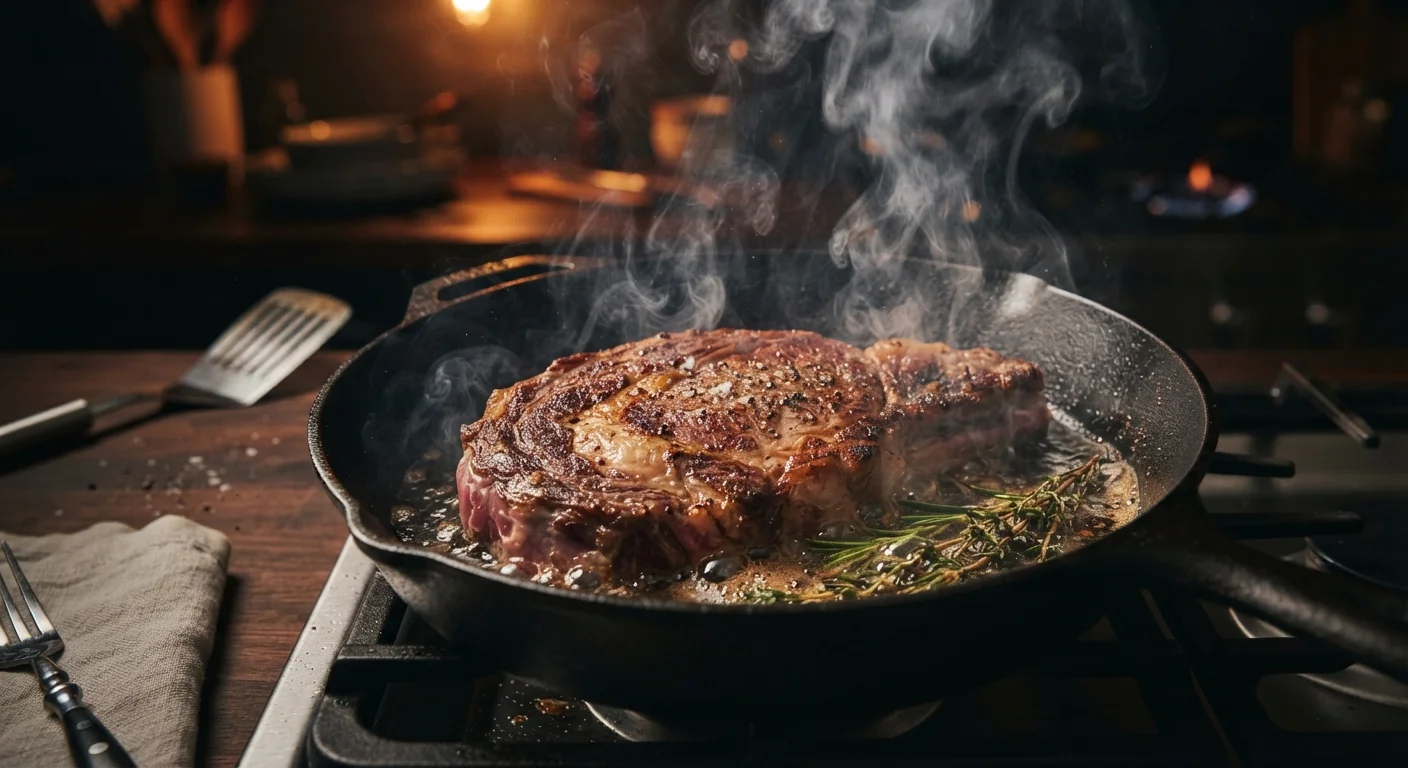
Photo credit: InfoHorizon.net | Access To Informative Content
In this article
Does searing really seal in juices? Separating cooking folklore from the actual science behind the Maillard reaction and crust formation.
Key Takeaways
- Searing does not seal in juices — that claim has been disproven by food science.
- The Maillard reaction is what makes searing worthwhile: it creates hundreds of flavor compounds.
- Resting meat after cooking reduces juice loss far more than searing does.
- A dry surface and a very hot pan are the two non-negotiables for a good crust.
- Searing can happen at the beginning or end of cooking — both approaches work.
Where the "Sealing" Myth Came From
The idea that searing meat seals in its juices goes back to the 19th century, when German chemist Justus von Liebig proposed that high heat could create a physical barrier on the surface of meat that trapped moisture inside. The theory sounded logical, and it spread fast — through cookbooks, culinary schools, and kitchen folklore — until it became accepted wisdom.
The problem? It isn't true. Food scientists have tested this directly by weighing cuts of meat before and after searing, and seared meat loses at least as much moisture during cooking as unseared meat. There is no impermeable crust. Steam escapes through the surface no matter how dark the sear.
So why does seared meat sometimes taste juicier? That's a perception question, not a physics one. The intensely savory, complex crust produces flavors that read as richness — and resting the meat properly before cutting, not the sear itself, is what genuinely limits juice loss on the plate.
280°F+
Minimum temperature to trigger the Maillard reaction
The Maillard reaction — responsible for browning and flavor development — requires sustained dry surface temperatures above approximately 280°F (140°C).
~30%
Moisture lost by weight during cooking
Research on meat cookery consistently shows cuts can lose roughly 25–35% of their starting weight in moisture regardless of whether they are seared first.
What Searing Actually Does (And Why It's Still Worth Doing)
Even though searing doesn't seal in juices, it absolutely belongs in your cooking toolkit — just for the right reasons. The real mechanism at work is the Maillard reaction: a chemical process that occurs when amino acids and sugars in meat are exposed to high, dry heat (generally above 280°F / 140°C). The reaction produces hundreds of new flavor and aroma compounds that give browned meat its savory depth, its complexity, and that characteristic crust texture you simply can't get from gentle heat alone.
That's a completely legitimate reason to sear. It's just a different one than the myth suggests. Think of it less as a preservation technique and more as a flavor-building step — one that transforms the surface of meat from pale and mild into something deeply aromatic. For more on how dry heat transforms food differently than moist methods, see our guide to dry heat vs. moist heat cooking.
Myth
Searing meat seals in the juices, keeping it moist throughout cooking.
Fact
Searing creates no moisture barrier. Seared and unseared cuts lose comparable amounts of liquid during cooking.
This is the most persistent myth in meat cookery. High heat does cause proteins on the surface to contract and firm up, but this does not form a watertight seal. Steam and moisture continue to escape through the crust. Studies measuring moisture loss in seared versus unseared cuts have found no significant difference. The perception of juiciness from a seared piece of meat comes from flavor intensity and proper resting, not from trapped liquid.
Myth
A gray, unseared interior means the meat is undercooked.
Fact
Interior color is determined by temperature, not searing. A properly cooked steak can be gray on the inside and still be safe and well-done — or pink inside and fully safe at the right temperature.
Color is an unreliable guide to doneness. Myoglobin — the protein that gives red meat its color — changes from red to gray as temperature rises, but the exact point varies by cut, age, and pH of the meat. A meat thermometer is the only reliable way to confirm internal temperature. The USDA recommends 145°F for whole muscle beef with a three-minute rest.
Myth
You need oil with a very high smoke point to sear meat properly.
Fact
A moderately high smoke point oil is helpful, but the pan temperature and surface dryness matter far more than the exact oil choice.
While it makes sense to avoid oils that smoke heavily at lower temperatures (like unrefined flaxseed oil), most neutral cooking oils — including refined avocado, grapeseed, or canola — work well for searing. Butter alone burns quickly at searing temperatures, but adding it at the end of a sear for basting brings flavor without scorching. The key variable is the pan's heat level and a dry meat surface, not a specific oil.
Myth
You should move the meat frequently while searing to develop a better crust.
Fact
Leaving meat undisturbed is what produces a proper crust. Moving it repeatedly interrupts the Maillard reaction.
When you place meat on a hot surface, contact is what drives browning. Lifting and repositioning the meat resets the thermal contact and releases steam that was building at the surface. A good rule of thumb: if the meat is sticking to the pan, it isn't ready to flip. Well-seared meat will release naturally when the crust has formed. Patience here pays off in both appearance and flavor.
Getting the Best Sear: What Actually Matters
Understanding the science helps you make better decisions at the stove. Here are the factors that genuinely affect crust quality:
- Dry the surface first. Moisture on the surface of meat turns to steam before browning can occur. Pat the meat thoroughly dry with paper towels — or, for thick cuts, let it rest uncovered in the refrigerator for several hours beforehand. A dry surface browns; a wet one steams.
- Use a very hot pan. The Maillard reaction needs sustained high heat. A cast iron or stainless steel pan preheated until it's nearly smoking will give you a crust in 2–3 minutes per side. A lukewarm pan just stews the surface. If you're cooking with cast iron regularly, our guide to seasoning cast iron covers how to keep the surface in peak condition for high-heat cooking.
- Don't crowd the pan. Multiple pieces trap steam and lower the pan temperature. Sear in batches if needed.
- Rest before cutting. This step genuinely affects juiciness. When meat rests off heat, muscle fibers relax and reabsorb some of the pooled juices, so less runs out when you slice. A 5–10 minute rest for a steak makes a real difference.
Don't Skip the Thermometer
Crust color and texture tell you nothing about internal doneness. A beautifully seared steak can be undercooked at its center, and a pale, unseared piece can be fully cooked through. Use an instant-read thermometer to verify the internal temperature of any meat before serving, especially for poultry and ground beef where undercooking poses a food safety risk.
Searing order — before or after oven cooking — is largely a matter of preference and logistics. The "reverse sear" technique (oven first, then a quick pan sear) produces excellent results and can be easier to time when cooking for guests. Neither sequence seals moisture; both deliver good browning if the surface is dry and the heat is high enough.

Author
Food Editorial Team
Food Editorial Team is the collective byline for our editorial team and contributor network. Articles published under this byline or an editorial pen name are researched, written, and reviewed according to our editorial standards for clarity, consistency, and independence before publication.
View all articles →