
Stock vs. Broth: What the Difference Actually Means for Your Cooking
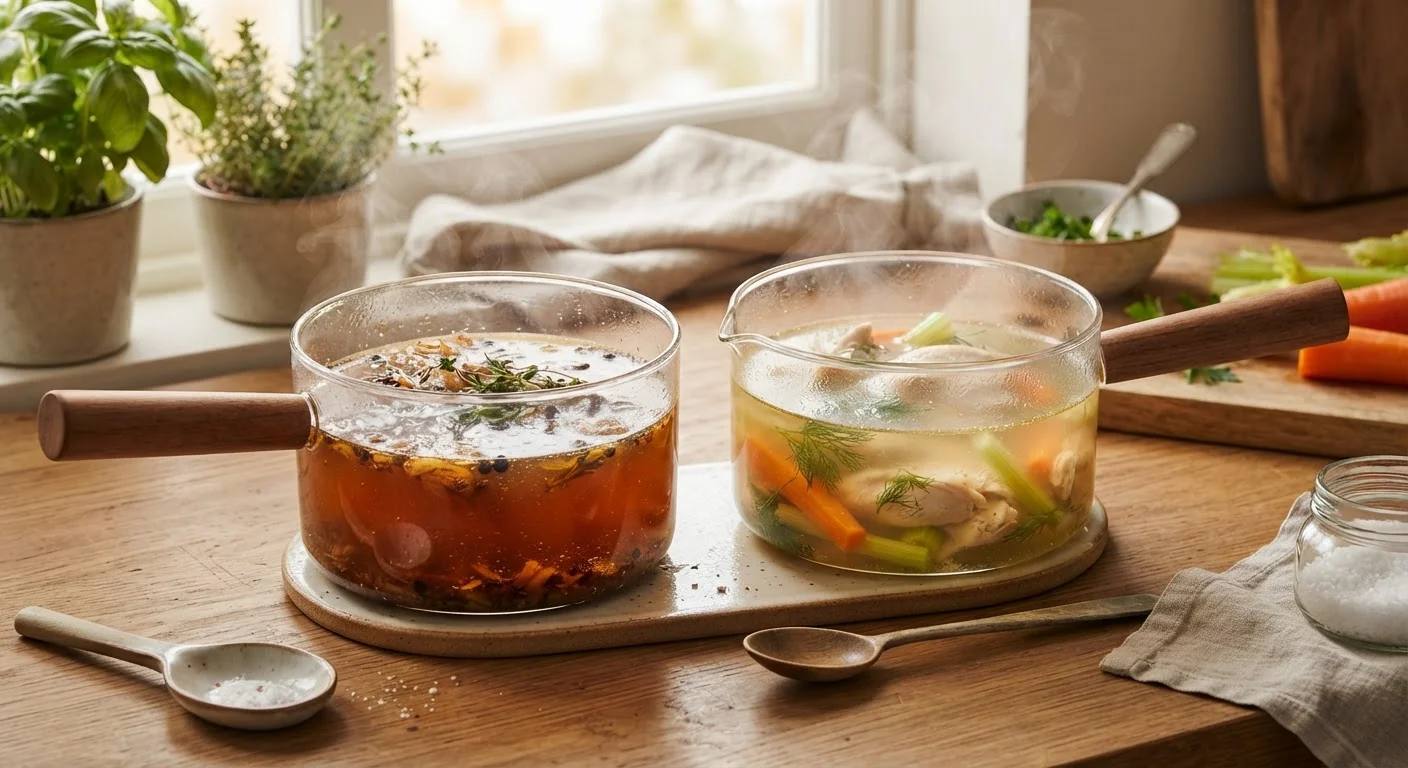
Photo credit: InfoHorizon.net | Access To Informative Content
In this article
Stock and broth aren't interchangeable. Here's how they differ in ingredients, texture, and when to use each in soups, sauces, and braises.
Key Takeaways
- Stock is made from bones; broth is made from meat, giving each a distinct texture and flavor.
- Stock becomes gelatinous when chilled due to collagen released from bones during cooking.
- Broth is typically seasoned with salt; stock is usually unseasoned for versatile use.
- Use stock when you need body and richness; use broth when you want lighter, forward flavor.
- Both can be made at home or purchased, but label-reading matters since terms are often used loosely.
The Core Difference: Bones vs. Meat
The simplest way to understand the stock-vs-broth distinction is to look at what goes into the pot. Stock is made primarily from bones — often with some cartilage, connective tissue, and aromatic vegetables (called a mirepoix: onion, carrot, and celery). Broth is made from meat, sometimes with bones included, but always with enough flesh to deliver a pronounced, savory flavor.
This difference in raw ingredients drives everything else — texture, flavor, nutrition, and best use. Bones contain collagen, a structural protein that, when simmered for several hours, converts into gelatin. Gelatin is what gives a properly made stock that signature jelly-like wobble when it's chilled. That gel is also what gives sauces their body and makes braising liquids so luscious.
Broth lacks that collagen load. It tastes meatier and more immediately flavorful, but it stays thin and liquid even when cold. That lightness is actually an advantage in the right context — but it's a limitation when you need structural richness.
Seasoning: The Other Big Divide
Beyond ingredients, there's another meaningful difference: stock is traditionally unseasoned (or very lightly seasoned), while broth is seasoned with salt. This isn't arbitrary. Stock is a building block — a foundational liquid meant to be used in recipes where seasoning happens at the end. If you salt your stock heavily and then reduce it into a sauce, you risk a dish that's far too salty to eat.
Broth, by contrast, is designed to taste finished. It's pleasant to sip straight from a mug or ladle into a bowl of noodles without further adjustment. This makes broth more convenient for quick weeknight cooking, but less flexible when you need control over your final seasoning.
| Criterion | Stock | Broth |
|---|---|---|
| Primary ingredient | Bones and cartilage | Meat (sometimes with bones) |
| Texture when chilled | Gelatinous, jiggly | Stays liquid |
| Typical seasoning | Unseasoned or lightly salted | Seasoned with salt |
| Flavor profile | Mild, rich, neutral | Savory, forward, meaty |
| Best use | Sauces, braises, reductions | Soups, grains, drinking |
| Cook time (homemade) | 2–6 hours | 1–2 hours |
When you're shopping at the grocery store, this distinction matters. Read the label carefully — sodium content is your clue. A store-bought product labeled "broth" with 800–900 mg of sodium per cup is very different from a low-sodium stock with under 100 mg. Many manufacturers use the terms interchangeably, so the nutrition label tells you more than the name on the front.
When to Use Each One
Matching the right liquid to the right technique makes a real difference. Here's how to think about it:
- Use stock for pan sauces, gravies, braises, risotto, and any recipe where you'll be reducing or simmering for a long time. The gelatin concentrates as liquid evaporates, giving you body and gloss.
- Use broth for soups where clarity and bright flavor matter, for cooking grains like rice or farro, or for deglazing a pan quickly when you don't need a thick final result.
- Either works for simple weeknight soups, stews with lots of other components, or any recipe where the liquid is just providing moisture and background flavor.
If a recipe calls for stock and you only have broth, go ahead and use it — the dish will taste a little lighter and may need less added salt. The reverse substitution (using stock where broth is called for) usually works fine too, especially if you dilute it slightly or hold back on salt until the end.
Understanding how heat and liquid interact is part of the bigger picture — our guide to dry heat vs. moist heat cooking explains how braising, simmering, and other moist-heat techniques depend on a quality liquid foundation.
~6–8 hrs
Simmer time for a full bone broth
Longer cooking extracts more collagen from bones, producing a more gelatinous, body-rich stock — a key reason professional kitchens simmer stock low and slow.
~140 mg
Sodium per cup in typical low-sodium stock
Compared to 800–900 mg in standard commercial broth, choosing low-sodium stock gives you significantly more control over the final seasoning of your dish.
Making Your Own vs. Buying It
Homemade stock is genuinely worth making if you roast chicken or cook meat regularly — save the carcass or bones in the freezer, then simmer them with aromatics for two to four hours. The result is richer, more gelatinous, and more flavorful than most store-bought options, with zero added sodium. Broth is quicker to make at home since meat cooks faster than bones break down, usually ready in an hour or two.
Store-bought options have improved significantly and are entirely acceptable for everyday cooking. Look for low-sodium versions of both so you retain control over seasoning. If a carton of chicken stock sits flat in your fridge when cold (liquid, not gel), it's likely closer in body to broth — useful to know when you're planning a reduction.
"Bone Broth" Is Closer to Stock
Despite its name, bone broth is made from bones simmered for a long time — which technically makes it a stock by traditional culinary definition. It tends to be gelatinous, rich, and low in sodium, more like homemade stock than commercial broth. The term "bone broth" became popular through wellness circles, but in the kitchen, treat it as you would a rich stock.
Whether you make it or buy it, proper storage matters: refrigerate for up to five days, or freeze in cup-sized portions for up to three months. Ice cube trays work well for small amounts you'd use for deglazing or finishing a sauce.

Author
Food Editorial Team
Food Editorial Team is the collective byline for our editorial team and contributor network. Articles published under this byline or an editorial pen name are researched, written, and reviewed according to our editorial standards for clarity, consistency, and independence before publication.
View all articles →