
Cooking Oils Compared: Smoke Points, Flavor, and Best Uses
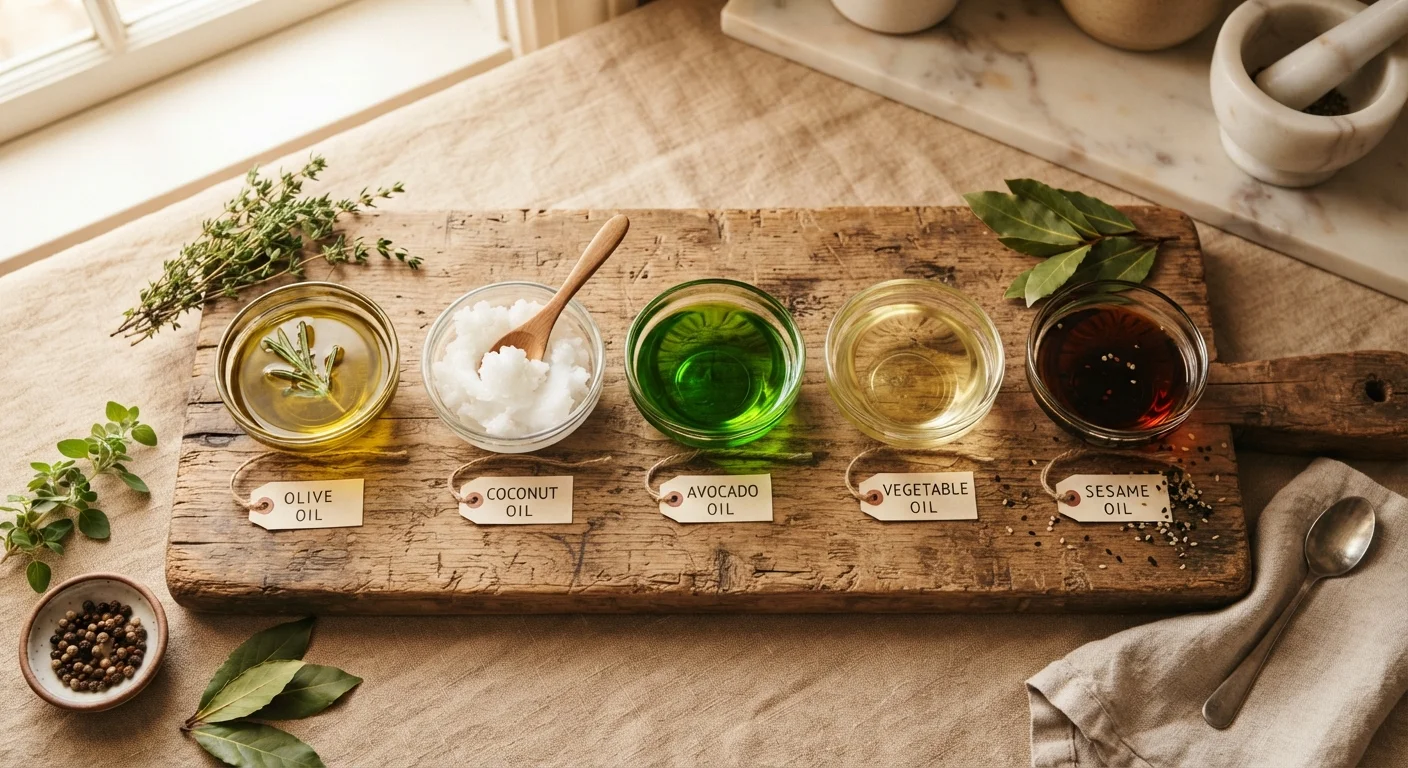
Photo credit: InfoHorizon.net | Access To Informative Content
In this article
Olive, avocado, vegetable, coconut — compare cooking oils by smoke point, flavor profile, and which applications each handles best.
Key Takeaways
- Smoke point determines the safe upper heat limit for any cooking oil — exceeding it produces harmful compounds and off flavors.
- Avocado oil has one of the highest smoke points, making it ideal for high-heat searing and roasting.
- Extra-virgin olive oil excels at lower-heat cooking and finishing dishes where its fruity flavor can shine.
- Coconut oil adds distinct flavor and is best reserved for recipes where that character complements the dish.
- Vegetable and canola oils are neutral, affordable options suited to a wide range of everyday cooking tasks.
Why Smoke Point Matters More Than You Think
The smoke point of an oil is the temperature at which it begins to visibly smoke — and more importantly, to break down chemically. Once an oil crosses its smoke point, it produces acrolein and other compounds that give food a bitter, acrid taste and degrade the oil's nutritional quality. Cooking consistently above an oil's smoke point is something to avoid both for flavor and general wellness reasons.
This is why the method you're using matters as much as the ingredient. Dry-heat techniques like searing and roasting can push pan temperatures well above 400°F, which rules out many delicate oils. Moist-heat methods like steaming or braising rarely exceed 212°F and are compatible with virtually any oil.
| Extra-Virgin Olive Oil | Avocado Oil | Coconut Oil | Vegetable/Canola Oil | |
|---|---|---|---|---|
| Smoke Point | ~375°F | ~520°F | ~350–450°F (unrefined/refined) | ~400–450°F |
| Flavor | Fruity, peppery | Mild, buttery | Tropical, sweet | Neutral |
| Best Heat Level | Low to medium | High | Medium (refined) | Medium to high |
| Best Uses | Dressings, sautéing, finishing | Searing, roasting, stir-fry | Baking, curries | Frying, baking, everyday cooking |
| Dominant Fat Type | Monounsaturated | Monounsaturated | Saturated | Polyunsaturated |
| Relative Cost | Moderate to high | Moderate to high | Moderate | Low |
Flavor Profiles: From Neutral to Bold
Smoke point is only half the equation. Flavor is the other deciding factor, especially when oil is used raw or lightly cooked.
Start With Two Oils, Not One
Most home kitchens are well-served by keeping a neutral high-heat oil (such as avocado or canola) and a flavorful finishing oil (such as EVOO) on hand. These two cover the majority of everyday cooking situations without overstocking your pantry. Add specialty oils like toasted sesame or walnut as your cooking expands.
- Extra-virgin olive oil (EVOO) carries grassy, peppery, sometimes fruity notes from the cold-pressing process. It's excellent in vinaigrettes, drizzled over soups, or used to finish pasta.
- Avocado oil has a mild, buttery flavor that is largely neutral — it adds richness without competing with other ingredients.
- Coconut oil brings a noticeable tropical sweetness. Refined coconut oil is more neutral than unrefined, but both carry some character.
- Vegetable oil and canola oil are designed to be flavorless, making them workhorses for baking and frying where you don't want the fat to register on the palate.
- Sesame oil (particularly toasted) is an intensely flavored finishing oil — a few drops transform a dish. It should not be used as a cooking fat in large quantities.
Matching Each Oil to the Right Application
Understanding oil characteristics translates directly into better cooking decisions:
- High-heat searing and stir-frying (400–500°F)
- Reach for avocado oil (smoke point ~520°F) or refined coconut oil (~450°F). These hold up under intense, direct heat without smoking or souring.
- Oven roasting (375–425°F)
- Avocado oil, canola oil (~400°F), and light/refined olive oil (~465°F) all perform reliably here. Avoid extra-virgin olive oil at the upper end of this range.
- Sautéing and pan sauces (300–375°F)
- EVOO (smoke point ~375°F) is well-suited here and contributes flavor. This is its home kitchen sweet spot.
- Baking
- Neutral oils like vegetable or canola keep flavors clean. Melted coconut oil works in recipes where a hint of richness is welcome.
- Dressings, dips, and finishing
- EVOO and toasted sesame oil shine here. Heat is not a factor, so you can prioritize flavor entirely.
For a broader understanding of how cooking method shapes your results, see our guide on choosing between dry and moist heat cooking.
~520°F
Avocado oil smoke point
Avocado oil's high smoke point makes it one of the most heat-stable common cooking oils available.
~375°F
Extra-virgin olive oil smoke point
EVOO is best kept at or below medium heat to preserve its flavor compounds and avoid degradation.
A Note on Nutrition and Storage
All cooking oils are calorie-dense fats, and their fatty acid composition differs meaningfully. EVOO and avocado oil are rich in monounsaturated fats; vegetable and canola oils provide polyunsaturated fats including omega-6 fatty acids. Coconut oil is predominantly saturated fat. For context on how dietary fat choices fit into broader eating patterns, see the comparison of plant-based and omnivorous diets for a nutritional overview.
Don't Reuse Oil Repeatedly for Frying
Reheating oil multiple times accelerates breakdown and lowers its effective smoke point with each use. Discard frying oil that has darkened significantly, smells off, or has been heated more than two or three times. Using degraded oil produces unpleasant flavors and introduces oxidation byproducts into your food.
Proper storage extends oil life and preserves quality. Keep oils away from direct light and heat — a cool, dark cabinet is ideal. Most oils last 12–18 months unopened; once opened, aim to use them within 3–6 months. Smell is your best guide: rancid oil has a distinctly stale, crayon-like odor and should be discarded.
This article provides general food education and is not intended as medical or nutritional advice. Consult a registered dietitian for personalized dietary guidance.

Author
Food Editorial Team
Food Editorial Team is the collective byline for our editorial team and contributor network. Articles published under this byline or an editorial pen name are researched, written, and reviewed according to our editorial standards for clarity, consistency, and independence before publication.
View all articles →