
The Science Behind Stopping Distance (And Why Speed Changes Everything)
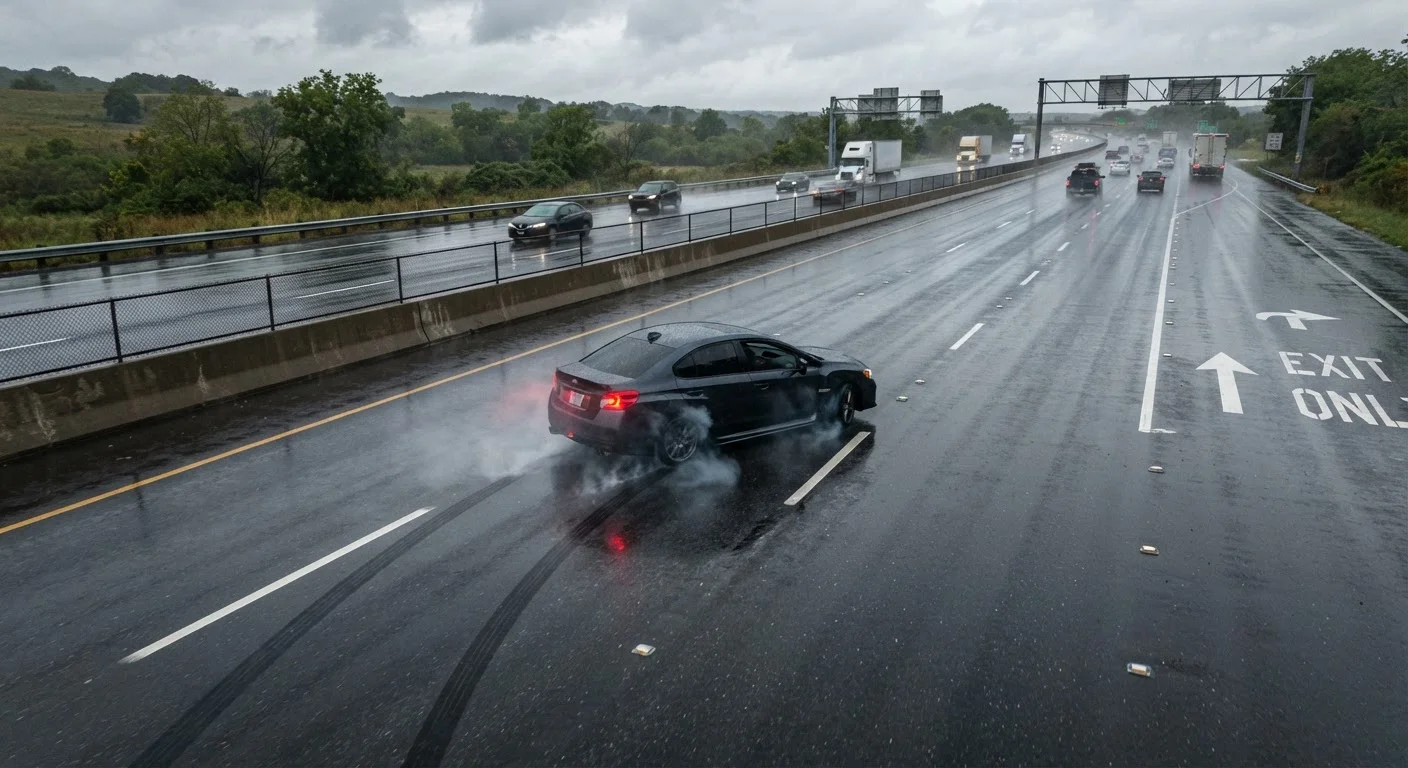
Photo credit: InfoHorizon.net | Access To Informative Content
In this article
Learn how vehicle speed, road conditions, and reaction time combine to determine how far your car travels before stopping.
Key Takeaways
- Stopping distance has two parts: reaction distance and braking distance - both increase with speed.
- Doubling your speed roughly quadruples the braking distance required, due to kinetic energy physics.
- Wet, icy, or gravel-covered roads can extend stopping distance by 2-4 times compared to dry pavement.
- Average driver reaction time is 1.5 seconds, during which a car at 60 mph travels about 132 feet.
- Maintaining adequate following distance is the most practical way to account for stopping distance in real driving.
Two Phases That Together Determine Your Fate
Every stop your car makes is actually two separate events happening in sequence. The first is reaction distance - the ground covered between when your eyes register a hazard and when your foot physically depresses the brake pedal. The second is braking distance - the ground covered from the moment brakes engage until the wheels stop turning.
Under typical conditions, a driver's reaction time averages about 1.5 seconds. At 60 mph, that means roughly 132 feet of travel before braking even begins. Add the braking distance on top, and total stopping distance at that speed on dry pavement is commonly cited around 240-300 feet - nearly the length of a football field.
Fatigue, distraction, or impairment stretch reaction time further. A driver who is even mildly distracted may take 2-3 seconds to respond, effectively doubling or tripling the reaction-phase distance. This is why defensive driving principles emphasize scanning ahead and eliminating distractions as foundational habits.
Use the 3-Second Rule Every Time
Choose a stationary roadside marker and count the seconds between when the car ahead passes it and when you do. Aim for at least three seconds in clear, dry conditions - and six or more in rain, fog, or at freeway speeds. This simple habit automatically adjusts your following distance to account for both reaction time and braking distance.
Why Speed Changes Everything: The Physics Explained
The relationship between speed and stopping distance is not intuitive because it is not proportional - it is exponential. Kinetic energy, the force your brakes must overcome, equals one-half of the vehicle's mass multiplied by the square of its velocity. When velocity doubles, kinetic energy quadruples.
Consider a straightforward comparison on dry pavement:
- 20 mph: approximately 40 feet total stopping distance
- 40 mph: approximately 120 feet - three times the distance for twice the speed
- 60 mph: approximately 240-300 feet
This exponential curve is why a 10 mph speed reduction in a school zone or construction area is far more meaningful than it may feel behind the wheel. The pedestrian who steps off the curb at the wrong moment has a dramatically better chance of survival if the approaching car was traveling at 25 mph rather than 40 mph.
~300 ft
Total stopping distance at 60 mph on dry pavement
This estimate from traffic safety engineering accounts for a 1.5-second reaction time plus braking distance on typical dry asphalt.
2-4×
Stopping distance increase on ice vs. dry road
Ice dramatically reduces tire friction, meaning vehicles traveling at the same speed may need two to four times the distance to stop compared to dry pavement.
1.5 sec
Average driver reaction time
Commonly cited in traffic safety research as the baseline for an alert, unimpaired driver under normal conditions.
Road Conditions: The Multiplier Most Drivers Underestimate
Pavement friction - what engineers call the coefficient of friction - varies significantly with surface type and condition. Dry asphalt offers high friction. Add water, and grip drops considerably. Ice reduces friction to a fraction of dry-pavement values, meaning a car traveling at 30 mph on black ice may require the same distance to stop as one traveling at 65 mph on dry pavement.
Gravel, sand, fallen leaves, and worn road markings all reduce available friction in ways that are invisible until a driver needs to stop suddenly. For a detailed look at adjusting speed and spacing across different weather scenarios, see our guide on driving in rain, ice, snow, and fog.
Vehicle condition matters too. Tire tread depth directly affects how much rubber contacts the road and how efficiently water is displaced. Brake pad wear and brake fluid condition affect how quickly hydraulic pressure translates to stopping force. Routine maintenance is not just about reliability - it directly influences the physics of stopping.
Brake Maintenance Affects Stopping Physics
Worn brake pads, degraded brake fluid, or out-of-adjustment calipers can meaningfully extend braking distance even on dry pavement. If your vehicle pulls to one side when braking, takes longer to slow than it used to, or produces grinding or squealing sounds, have the brake system inspected by a qualified mechanic before those issues become emergencies.
Translating Physics Into Safer Driving Habits
Understanding stopping distance science leads to a few clear, practical habits that every driver can implement immediately.
Follow the 3-second rule - and extend it. Pick a fixed point on the road ahead. When the vehicle in front passes it, count three seconds before you pass the same point. In adverse conditions or at highway speeds, double that gap. This simple habit accounts for both your reaction time and braking distance.
Reduce speed proactively, not reactively. By the time you can see a hazard clearly, you may already be within your stopping distance at higher speeds. Slowing down before entering intersections, school zones, curves, or fog banks means your reaction phase begins from a safer baseline. This connects closely to the distinction between posted limits and genuinely safe speeds - a topic explored in depth in speed limits vs. safe speeds.
Night driving demands extra space. Your headlights illuminate only a finite distance ahead. At 60 mph, you are traveling faster than your ability to see and stop within the lit zone - a condition called overdriving your headlights. Night driving visibility challenges are among the most consistently underestimated hazards on American roads.
When emergency situations do arise despite these precautions, knowing how to respond matters just as much. Understanding what to do during brake failures and skids can make the difference in the critical first seconds of a vehicle emergency.
Frequently Asked Questions

Author
Cars Editorial Team
Cars Editorial Team is the collective byline for our editorial team and contributor network. Articles published under this byline or an editorial pen name are researched, written, and reviewed according to our editorial standards for clarity, consistency, and independence before publication.
View all articles →