
Why First-Time Visitors to New York City Often Miss What Makes It Interesting
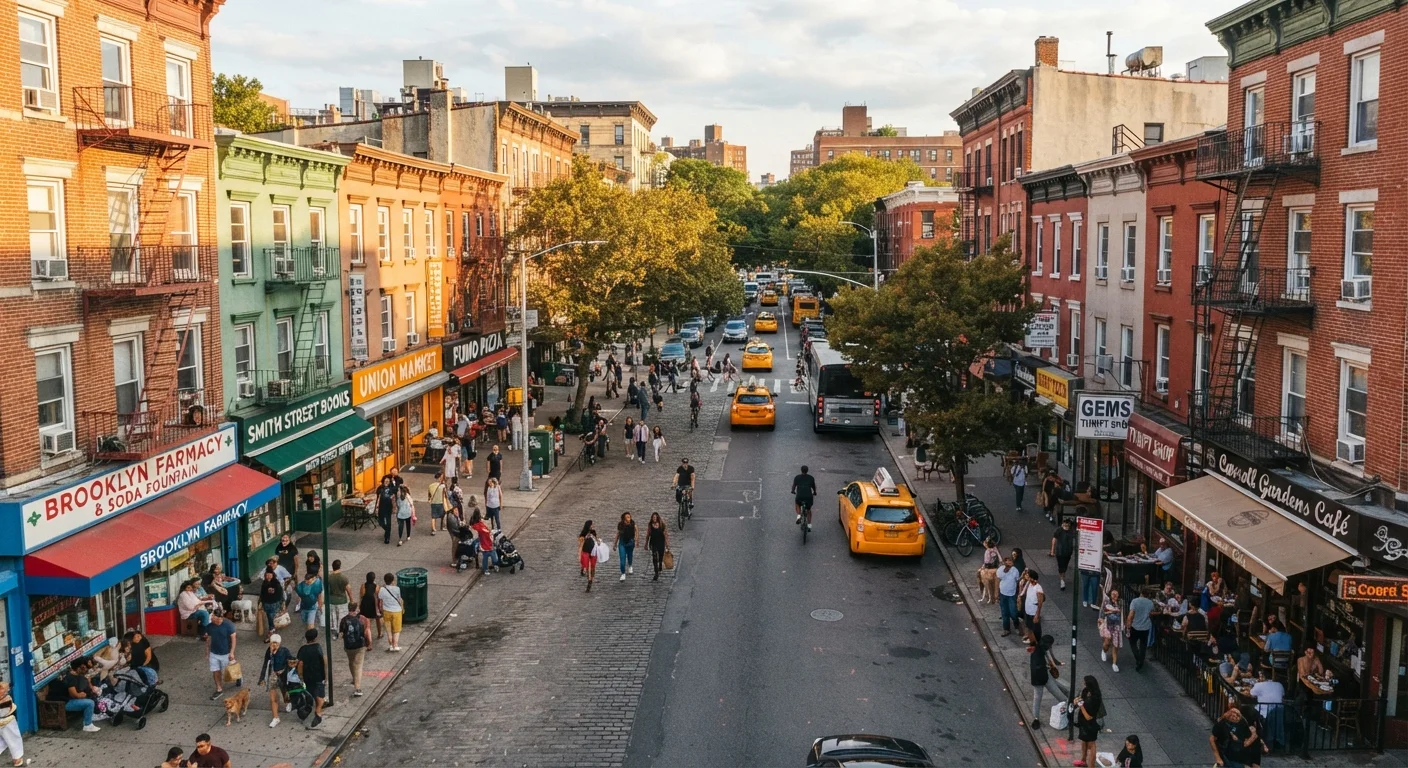
Photo credit: InfoHorizon.net | Access To Informative Content
In this article
Times Square is crowded for a reason—but it's rarely the reason people say they love New York. Here's where first-timers tend to go wrong.
Key Takeaways
- Most first-timers over-schedule landmark visits and miss the neighborhoods that define the city's real character.
- New York's subway is one of the most efficient ways to travel between boroughs — avoiding it wastes time and money.
- Eating near major tourist attractions is almost always a trade-off in quality and value.
- Brooklyn, Queens, and the Bronx each offer experiences Manhattan simply cannot replicate.
- Staying flexible with your itinerary often leads to the most memorable New York moments.
The Landmark Trap: Why Checking Boxes Backfires
First-time visitors to New York City tend to arrive with a mental checklist: Times Square, the Statue of Liberty, the Empire State Building, Central Park. None of those are bad choices — but treating them as the purpose of a trip rather than brief stops along the way is where things go sideways.
New York is fundamentally a city of neighborhoods, each with its own rhythm, culinary identity, and social texture. Spending the majority of your time at heavily photographed landmarks means spending most of your trip surrounded almost exclusively by other tourists — in places optimized for foot traffic rather than genuine experience.
Approaching a new city as a traveler rather than a tourist is a habit worth building before you book anything. In New York, that shift might mean swapping one morning at a crowded observation deck for a walk through Astoria, Bed-Stuy, or Arthur Avenue in the Bronx.
Over-scheduling every hour of the trip around famous landmarks.
Why it happens: Travel guides and social media naturally emphasize the most iconic, photographable spots, making them feel mandatory.
Relying exclusively on rideshares or taxis to get around.
Why it happens: Visitors unfamiliar with subway maps assume it will be confusing or unsafe, so they default to what feels familiar.
Eating at restaurants chosen purely for proximity to the next attraction.
Why it happens: When you're tired and on the move, convenience wins — and tourist-area restaurants know this.
Skipping Brooklyn, Queens, and the Bronx entirely.
Why it happens: Manhattan dominates the cultural image of New York, and visitors often run out of time before venturing across borough lines.
Trying to see too many neighborhoods in a single day.
Why it happens: New York looks compact on a map but moves slowly on the ground — distances between neighborhoods are deceptive when you factor in transit and walking.
Getting Around, Eating Well, and Leaving Room to Wander
Beyond the landmark trap, a few practical missteps consistently flatten what should be a dynamic trip.
5
Distinct boroughs in New York City
New York City comprises five boroughs — Manhattan, Brooklyn, Queens, the Bronx, and Staten Island — each with its own neighborhoods, food culture, and character.
3.5M+
Average weekday subway riders
The MTA reports that the New York City subway regularly serves millions of riders on weekdays, making it one of the busiest transit systems in the Western Hemisphere.
Avoiding the subway is one of the costliest errors, both financially and experientially. Rideshares in Manhattan are subject to heavy congestion and can take far longer than a direct train. The subway connects all five boroughs and runs around the clock — learning even a basic map before you arrive turns what feels intimidating into a genuine asset.
Eating only near tourist corridors is another common drain. Midtown restaurants near major attractions are rarely representative of what New York actually does well. The city's food culture is one of its defining strengths — but it's concentrated in neighborhoods, not in blocks adjacent to national monuments. A bowl of hand-pulled noodles in Flushing, dim sum in Sunset Park, or a slice from a neighborhood pizzeria will almost certainly outperform a meal chosen out of convenience near Times Square.
Finally, under-exploring the outer boroughs leaves a substantial portion of the city unseen. Just as New Orleans rewards visitors who venture beyond Bourbon Street, New York opens up significantly once you cross a bridge or take a train into Brooklyn, Queens, or the Bronx. These aren't secondary experiences — for many long-time visitors, they're the primary ones.
Don't Confuse Familiarity With Quality
Chain restaurants and tourist-adjacent eateries in high-traffic areas are rarely where New York's culinary reputation is built. The city's food scene thrives in neighborhoods with lower foot traffic and higher local loyalty. Spending a little time researching one or two spots per area before you go pays off far more than walking into whatever is nearest when hunger hits.
If you're still deciding whether a dense urban trip suits your travel style at all, the city break vs. wide-open spaces guide is a useful starting point before you commit to New York as your next destination.

Author
Travel Editorial Team
Travel Editorial Team is the collective byline for our editorial team and contributor network. Articles published under this byline or an editorial pen name are researched, written, and reviewed according to our editorial standards for clarity, consistency, and independence before publication.
View all articles →