
The Real Story Behind Companion Planting
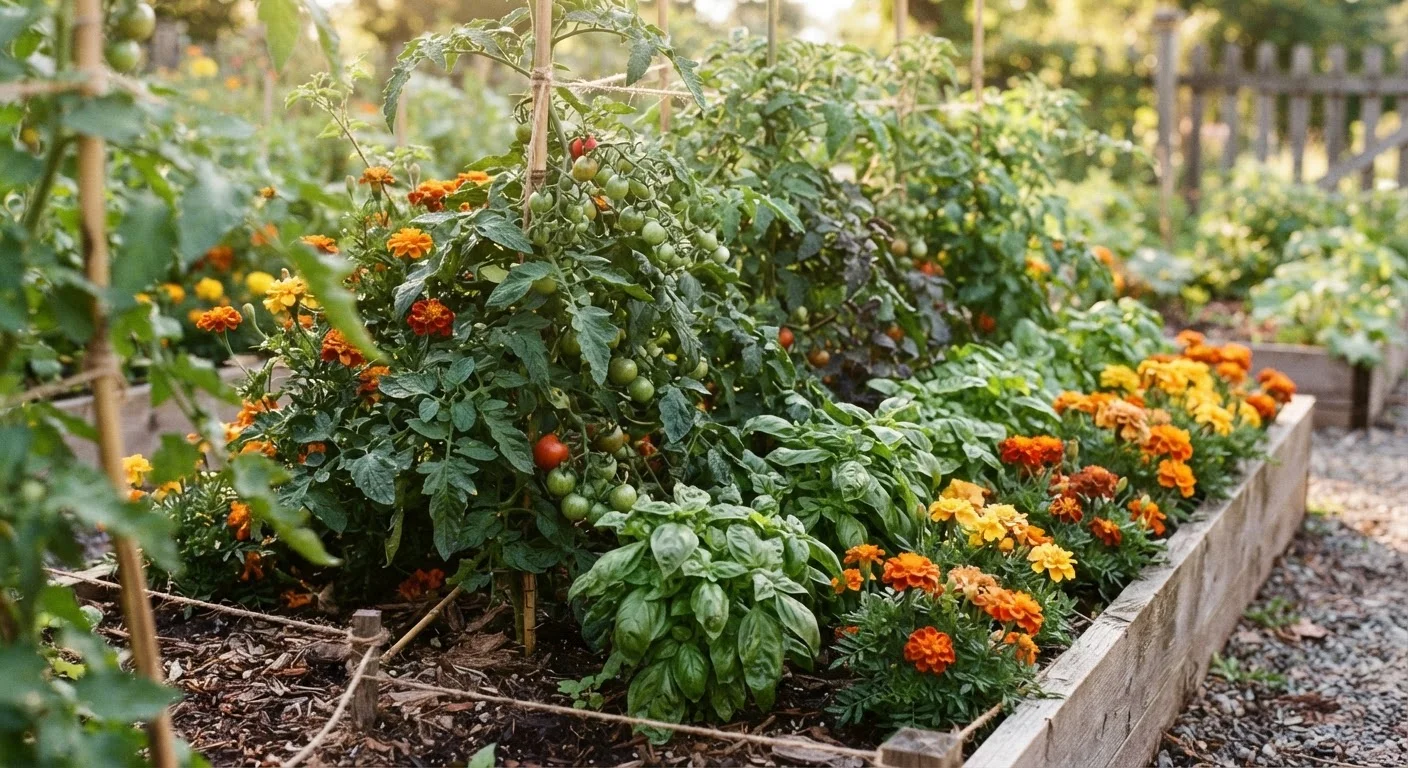
Photo credit: InfoHorizon.net | Access To Informative Content
In this article
Some companion planting claims are well-supported; others are garden folklore. Here's what the evidence actually says about pairing plants.
Key Takeaways
- Some companion planting combinations have genuine research support; many are based on tradition alone.
- Marigolds do repel certain nematodes, but results vary widely by species and soil conditions.
- The 'Three Sisters' planting method has solid agronomic reasoning behind it.
- Pest deterrence claims for most herb-vegetable pairings lack strong experimental evidence.
- Good soil, spacing, and water management matter more than most companion combinations.
Where Companion Planting Comes From
Companion planting — the practice of growing different plants close together for mutual benefit — has roots in agricultural traditions stretching back centuries. Indigenous farming practices, European cottage gardens, and early organic gardening movements all contributed ideas about which plants help or harm their neighbors. The problem is that useful observation and hopeful folklore got bundled together over time, making it hard for home gardeners to know what's worth trying.
Today, companion planting sits somewhere between proven agronomy and garden mythology. Some pairings have been studied and validated under controlled conditions. Others get repeated in gardening books simply because someone wrote them down first. Understanding the difference helps you make smarter choices in your own yard — without wasting bed space on combinations that don't deliver.
If you're planning a new planting layout, it's worth thinking about your garden's overall structure first. Our guide on raised beds vs. in-ground gardens can help you decide which setup gives companion planting the best chance to work.
Common Myths and What the Evidence Says
Let's look at the most widely repeated companion planting claims — and what research and practical experience actually support.
Myth
Planting basil next to tomatoes will repel pests and improve tomato flavor.
Fact
There is no reliable scientific evidence that basil repels tomato pests or changes fruit flavor when grown nearby.
This is one of the most popular companion planting claims, and one of the least supported by research. While basil does contain aromatic compounds, studies have not demonstrated that growing it adjacent to tomatoes meaningfully deters aphids, hornworms, or whiteflies at garden scale. The flavor-improvement claim has no established mechanism. That said, basil and tomatoes share similar sun and water needs, so they make practical neighbors — just don't count on basil as pest control.
Myth
Marigolds planted near vegetables will keep all pests away from the entire bed.
Fact
Marigolds do suppress specific soil-dwelling nematodes, but their pest-repelling effect is narrow and depends heavily on species and planting density.
French marigolds (Tagetes patula) produce a root compound called alpha-terthienyl that has been shown in peer-reviewed studies to reduce populations of root-knot nematodes in the surrounding soil — but only with dense planting and over a full growing season. Above-ground pest deterrence is much less consistent. Marigolds won't reliably repel aphids, beetles, or caterpillars from neighboring plants. They're still worth growing for pollinators and their visual appeal, but treat the pest-control claims as a bonus, not a guarantee.
Myth
The 'Three Sisters' method (corn, beans, squash) is just a cultural legend with no real agricultural benefit.
Fact
The Three Sisters system has well-documented agronomic advantages including nitrogen fixation, ground cover, and vertical structure.
The Three Sisters planting method — developed by Indigenous peoples of North America — is one of the most scientifically validated companion systems. Beans fix atmospheric nitrogen into the soil, which feeds the corn. Squash leaves shade the ground, reducing moisture loss and suppressing weeds. Corn provides a natural trellis for bean vines. Each plant fills a distinct ecological role. Agricultural researchers have studied this polyculture and confirmed its efficiency in managing soil fertility and ground cover simultaneously.
Myth
Companion planting can replace fertilizing and pest management entirely.
Fact
Companion planting is a supplement to good garden practice, not a substitute for soil nutrition and active pest management.
Even well-supported companion combinations won't compensate for depleted soil, chronic pest pressure, or poor watering habits. Nitrogen-fixing plants like beans enrich soil gradually, but a severely depleted bed will still need amended compost or appropriate fertilization. Similarly, no plant pairing reliably eliminates pest problems — it may reduce them marginally in some contexts. Treat companion planting as one layer of a broader garden strategy, not a standalone solution.
Myth
Roses planted near garlic will be completely protected from aphids.
Fact
Garlic's aphid-repelling effect on roses has anecdotal support but limited controlled evidence at garden scale.
Garlic contains sulfur compounds that have demonstrated pest-deterrent properties in laboratory settings. However, translating that to open-garden conditions — where aphids can approach from any direction and the compounds don't form a continuous barrier — is a much bigger leap. Some gardeners report fewer aphid problems with garlic nearby; others see no difference. If aphids are a consistent problem, a direct intervention like insecticidal soap is better supported than relying solely on a garlic border.
~70%
Gardeners who practice some form of companion planting
National Gardening Association surveys consistently show companion planting is among the most widely adopted organic gardening techniques in the U.S.
1 full season
Time needed for marigolds to reduce nematode populations
Research on French marigolds shows nematode suppression requires dense planting maintained across an entire growing season, not just a few weeks.
What Actually Makes a Difference in Your Garden
Even where companion planting has limited scientific support, thoughtful plant combinations can still serve real purposes: filling vertical space efficiently, shading out weeds, or simply making a garden more visually appealing. The key is managing expectations. Don't rely on basil to save your tomatoes from aphids — but do enjoy growing them together.
The fundamentals still matter most. Healthy soil, correct plant spacing, consistent moisture, and timely intervention against pests will outperform any companion combination. If weed pressure is a concern in your beds, natural weed control strategies like mulching and solarization are far better supported than relying on a neighboring plant to suppress weeds on its own.
For gardeners working with limited space, smart plant selection becomes even more important. Our article on starting a vegetable garden in a small backyard covers how to layer plants efficiently without overcrowding — which is, in practice, one of the most valuable lessons companion planting has to teach.
Don't Overcrowd Based on Companion Claims
One common mistake is planting too densely because companion plants are expected to help each other. Overcrowding reduces airflow, increases disease pressure, and creates competition for water and nutrients. Always respect each plant's spacing requirements even when pairing them. Good air circulation around plants is a more reliable disease preventive than any companion combination.

Author
Home & Garden Editorial Team
Home & Garden Editorial Team is the collective byline for our editorial team and contributor network. Articles published under this byline or an editorial pen name are researched, written, and reviewed according to our editorial standards for clarity, consistency, and independence before publication.
View all articles →