
Sugar in Disguise: How to Spot Added Sugars on Any Ingredient List
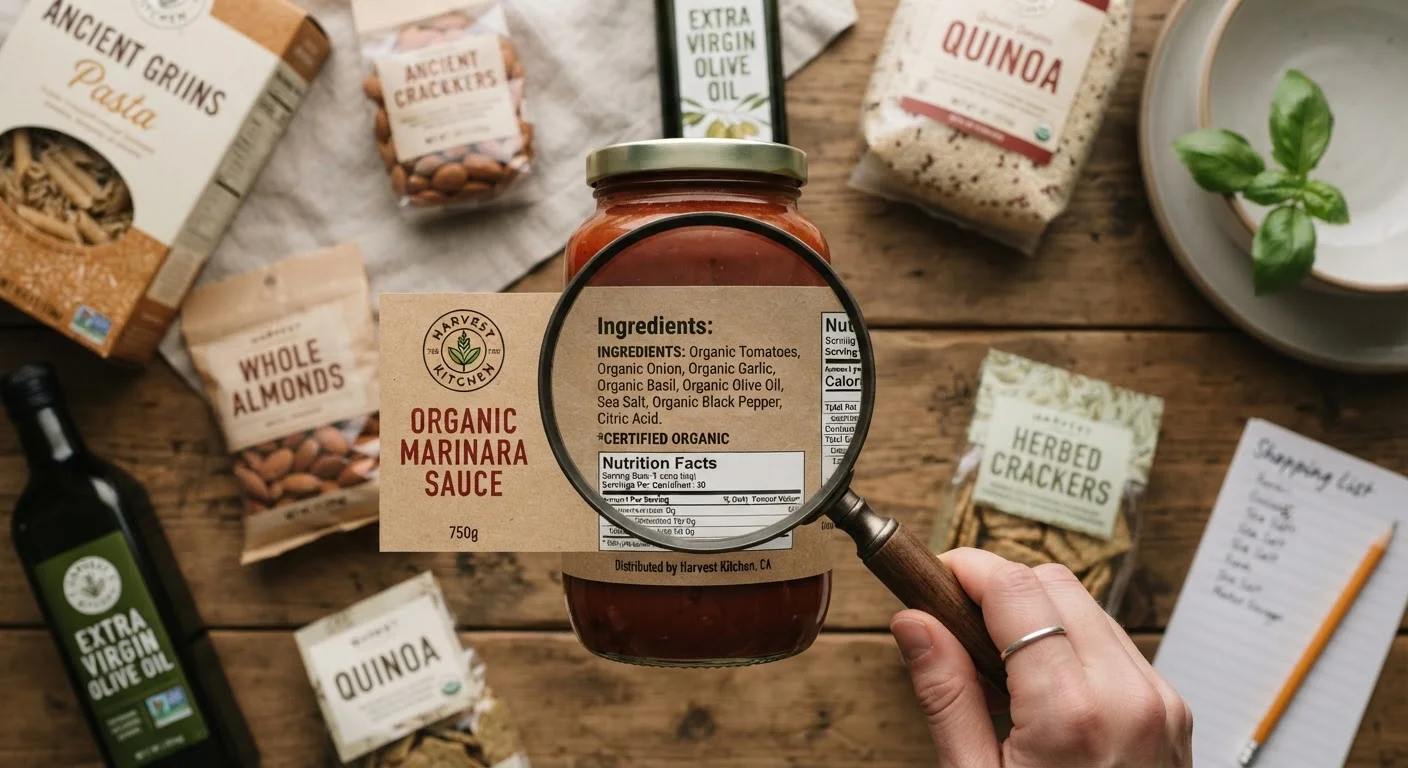
Photo credit: InfoHorizon.net | Access To Informative Content
In this article
Added sugar appears under dozens of names. Learn to identify them and understand how much is considered too much.
Key Takeaways
- Added sugars appear under more than 60 different names on ingredient lists.
- The FDA requires food labels to list "Added Sugars" separately in grams on the Nutrition Facts panel.
- The American Heart Association recommends limiting added sugars to 25g per day for women and 36g for men.
- Ingredients ending in "-ose" and any syrup or "juice concentrate" are almost always added sugars.
- Position in the ingredient list matters: the closer to the top, the greater the quantity in the product.
Why Added Sugar Is So Easy to Miss
If you've ever scanned an ingredient list looking for "sugar" and felt confident when you didn't see it, you may have missed dozens of other forms of the same ingredient. Food manufacturers use a wide variety of sweeteners — each with a technically distinct name — that collectively function as added sugar in your diet.
Understanding how ingredient lists are structured is the first step. The rules behind ingredient lists require that ingredients appear in descending order by weight. This means a product can contain several different sweeteners, each in a small enough amount to rank lower on the list individually — even though they add up to a significant combined quantity.
This is a key reason the FDA updated the Nutrition Facts panel to require a dedicated "Added Sugars" line, expressed in grams and as a percentage of the Daily Value. That number captures the total regardless of how many different names are used. For a full breakdown of how to read every section of that panel, see what a nutrition label is actually telling you.
Start With the Nutrition Facts Panel
The "Added Sugars" line on the Nutrition Facts panel gives you a single, consolidated number regardless of how many aliases appear in the ingredient list. Use it as your baseline before diving into the ingredient list. It removes the guesswork of tallying multiple sweetener names.
The Many Names of Added Sugar
Recognizing added sugar means building familiarity with its aliases. They fall into a few recognizable categories:
- Words ending in "-ose": fructose, sucrose, dextrose, maltose, lactose (when added, not naturally occurring), galactose
- Syrups: high-fructose corn syrup, brown rice syrup, malt syrup, tapioca syrup, agave syrup, maple syrup, golden syrup
- "Juice" forms: fruit juice concentrate, evaporated cane juice, sugarcane juice
- "Natural" sweeteners: honey, molasses, coconut sugar, date sugar, turbinado sugar, raw sugar, panela
- Less obvious names: dextrin, maltodextrin, caramel, invert sugar, treacle, barley malt, carob syrup
None of these categories is inherently more harmful than plain table sugar — they are all metabolized similarly by the body. Calling a sweetener "natural" or using an unfamiliar name does not make it nutritionally distinct from added sugar in practical terms.
"Natural" Does Not Mean Low in Added Sugar
Honey, coconut sugar, agave syrup, and date syrup are frequently marketed as healthier alternatives to refined sugar. From a metabolic standpoint, the body processes these similarly to other added sugars. The American Heart Association's general public health guidance does not distinguish between "natural" and refined added sugars when calculating daily intake. Always check the Added Sugars gram amount rather than relying on front-of-package health claims.
How to Read Any Label for Added Sugar
Follow these steps every time you evaluate a new packaged food. You don't need to memorize every alias — these habits will catch most hidden sources.
Check the "Added Sugars" line on the Nutrition Facts panel first
Before reading the ingredient list, look at the Nutrition Facts panel. Find the "Added Sugars" line directly beneath "Total Sugars." The gram amount reflects all added sweeteners combined, regardless of how many different names they carry in the ingredient list. The % Daily Value uses a reference of 50g per day, based on a 2,000-calorie diet.
Scan the ingredient list for "-ose" endings
Any ingredient ending in "-ose" is almost certainly a sugar molecule. Common examples include sucrose, fructose, dextrose, and maltose. These chemical names are accurate descriptions of the compound, not marketing language, so they appear even in products that avoid using the word "sugar" prominently.
Flag every syrup and juice concentrate
Syrups and juice concentrates are concentrated sugar sources, regardless of their origin. High-fructose corn syrup is the most widely recognized, but brown rice syrup, tapioca syrup, agave syrup, and fruit juice concentrates function comparably in terms of added-sugar content. Treat any "syrup" or "concentrate" in the list as an added sugar.
Watch for "natural" sweeteners listed by their familiar names
Honey, molasses, maple syrup, coconut sugar, and date sugar are metabolized as added sugars even though they come from natural sources. Their position in the ingredient list — closer to the top means more by weight — tells you how significant a contribution they make to the product's sugar content.
Count how many sugar aliases appear in total
A useful shortcut: count the number of distinct sugar forms in the ingredient list. The more aliases present, the more likely the manufacturer has distributed sugar across multiple ingredients to keep each one lower on the list. Three or more sweetener entries is a reliable signal to check the Added Sugars gram count carefully.
For a broader look at how added sugar is distributed across common food categories, where added sugar hides in everyday foods breaks down which products tend to carry the most. And if you want to apply these skills more broadly, reading a nutrition label without getting lost walks through the full Nutrition Facts panel in detail.
This article is for general informational and educational purposes only. It is not medical or dietary advice. Consult a qualified healthcare or nutrition professional for guidance tailored to your individual health needs.

Author
Health Editorial Team
Health Editorial Team is the collective byline for our editorial team and contributor network. Articles published under this byline or an editorial pen name are researched, written, and reviewed according to our editorial standards for clarity, consistency, and independence before publication.
View all articles →