
The Anatomy of a Well-Made Espresso
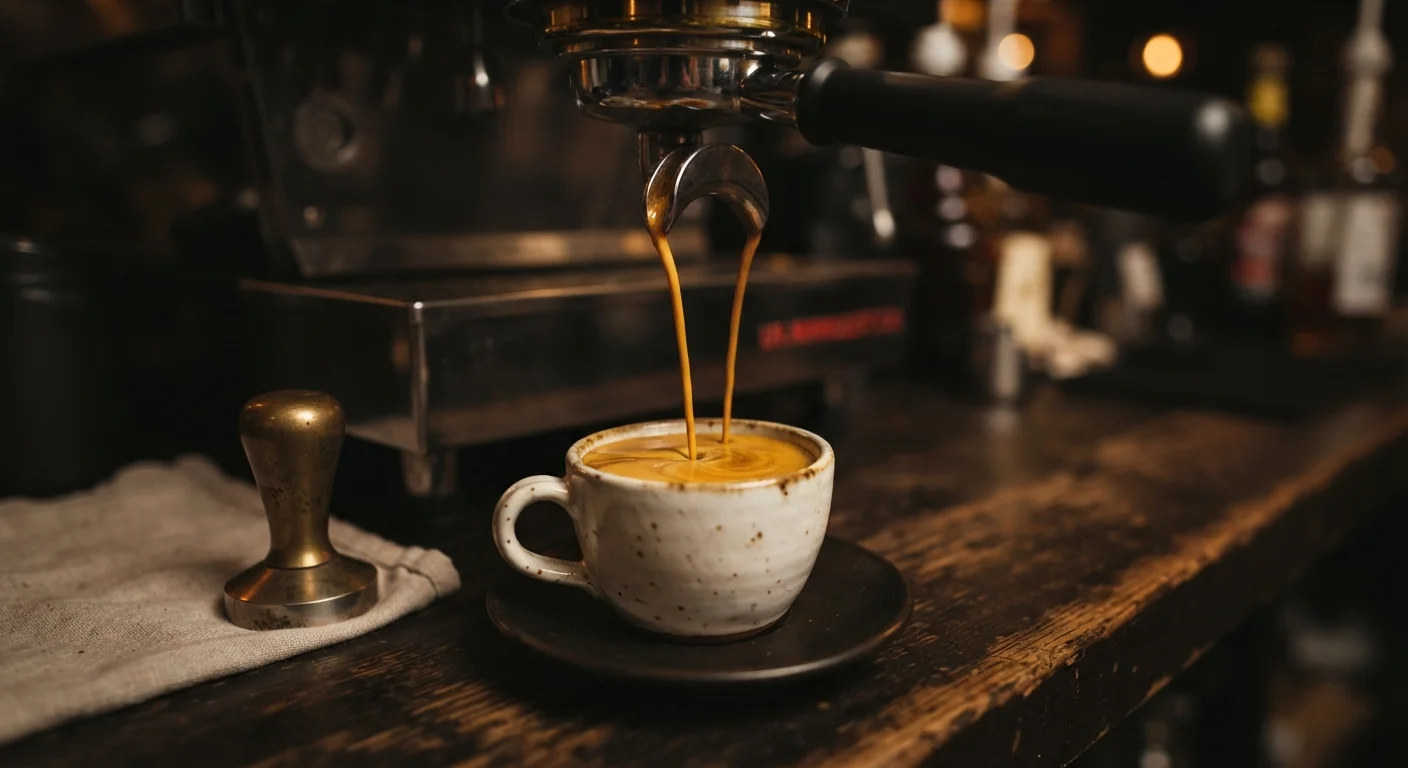
Photo credit: InfoHorizon.net | Access To Informative Content
In this article
Understand what actually happens inside an espresso machine — pressure, grind size, extraction time, and why each variable shapes your cup.
Key Takeaways
- Espresso requires consistent pressure, grind size, dose, and extraction time to taste balanced.
- Crema is a sign of fresh coffee and proper pressure, but it alone doesn't guarantee quality.
- A grind that's too fine causes over-extraction (bitter); too coarse causes under-extraction (sour and weak).
- Roast level significantly shapes espresso flavor — darker roasts produce bolder, less acidic shots.
- Small adjustments in one variable ripple across the entire cup, so change one thing at a time when dialing in.
What's Actually Happening Inside the Machine
Every espresso shot is a small feat of applied physics. When you press the brew button, a pump forces water — held between 195°F and 205°F — through a tightly packed bed of finely ground coffee at roughly 9 bars of pressure. That's about nine times the pressure of the atmosphere around you.
In those 25 to 30 seconds, water dissolves hundreds of flavor compounds from the grounds: acids, sugars, oils, and bitter-tasting melanoidins. The order matters. Acids and fruity compounds extract first, sweetness follows, and bitter compounds come last. A well-timed shot captures the first two categories in full and the third in just the right amount. Pull too fast, and you get sourness. Run too long, and bitterness takes over.
The crema — that reddish-gold foam floating on top — forms when dissolved CO2 rapidly depressurizes as the shot exits the portafilter. It traps aromatic compounds and gives espresso its characteristic texture. Crema is a useful signal that your beans are reasonably fresh and your machine is generating adequate pressure, but it's a byproduct of good conditions, not the goal itself.
9 bars
Pressure required for true espresso
Nine times atmospheric pressure is the standard used by espresso machines to force water through compacted coffee grounds.
25–30 sec
Target extraction window
Most specialty coffee professionals consider this the ideal time range for a balanced double shot.
1:2
Standard espresso brew ratio
A common starting point is 18 grams of coffee in to 36 grams of liquid espresso out, yielding a balanced double shot.
The Four Variables That Shape Every Shot
Espresso is controlled by four interlocking variables. Change one, and the others respond.
Grind Size
This is the most sensitive dial. Finer grinds slow water flow, extending contact time and increasing extraction. Coarser grinds let water rush through, cutting extraction short. Most troubleshooting starts here: a sour, thin shot calls for a finer grind; a harsh, bitter one calls for coarser.
Dose
Dose refers to how many grams of dry coffee go into the portafilter basket. Most double shots use 18–20 grams. More coffee increases resistance and can slow extraction; less does the opposite. Weighing your dose — rather than eyeballing it — removes one major source of inconsistency.
Yield and Ratio
Yield is how many grams of liquid espresso come out. The ratio of dry coffee in to liquid coffee out is called the brew ratio. A common starting ratio is 1:2 — 18 grams in, 36 grams out. Ristretto shots use a tighter ratio (1:1.5); lungo shots use a looser one (1:3 or beyond). Each tastes distinctly different from the same beans.
Water Temperature
Lower temperatures extract less aggressively and can highlight acidity, making them useful for lighter roasts. Higher temperatures push harder on bitter compounds, which may suit darker roasts. Most machines operate in a range you can adjust if the hardware allows it.
To learn how roast level interacts with all of these variables, see our guide on coffee roast levels.
Weigh Everything When Starting Out
A small kitchen scale removes two major guesswork variables at once: your dry dose and your liquid yield. Even a basic, inexpensive scale accurate to 0.1 grams will give you a repeatable starting point. Once you know a ratio that tastes good to you, you can replicate it every time rather than chasing a moving target.
Dialing In: How to Adjust When Your Shot Is Off
"Dialing in" is barista shorthand for systematically adjusting variables until a shot tastes balanced. The most important rule: change only one variable at a time. Otherwise, you won't know which adjustment fixed the problem.
Start with taste. A shot that's sour, thin, or finishes quickly (under 20 seconds) is under-extracted — grind finer. A shot that's harsh, dry, or runs long (over 35 seconds) is over-extracted — grind coarser. Once your timing lands in range, check the flavor again. If it still tastes off, revisit your dose or yield.
Consistency in your preparation matters as much as the settings themselves. Distribute grounds evenly in the basket before tamping, and tamp with steady, level pressure — roughly 30 pounds of force. An uneven puck creates channels where water finds the path of least resistance, bypassing much of the coffee and producing an uneven extraction.
Espresso troubleshooting shares a similar logic with other brewing methods. If you've ever wrestled with a bitter French press, you'll recognize the pattern — the same principles of over-extraction apply.
“Espresso is not a roast, not a bean, not a blend — it's a method. Any coffee can be brewed as espresso, but the method demands precision that other brewing styles simply don't.”
— Scott Rao, Coffee researcher and author of professional barista training texts
Beyond the Shot: Building Espresso-Based Drinks
A well-pulled shot is the foundation, but espresso's real versatility shows up in how it combines with other ingredients. Milk-based drinks like lattes and cappuccinos depend on the shot's intensity to stand up to dilution. A weak or under-extracted shot disappears into steamed milk; a balanced shot cuts through cleanly and adds complexity.
When you're thinking about serving espresso alongside food, the same logic that applies to any beverage pairing holds: consider weight, acidity, and sweetness. A bright, lightly roasted shot can lift a rich dessert; a bold, dark-roasted shot can anchor a lighter one. Our guide on pairing drinks with food walks through the underlying principles that make these combinations work.
Understanding espresso also deepens your appreciation for just how many different directions a single ingredient can go — something you'll find mirrored across food and beverage traditions worldwide, from the global diversity of tea culture to handmade pasta techniques explored in our cooking and recipes hub.
Frequently Asked Questions

Author
Food Editorial Team
Food Editorial Team is the collective byline for our editorial team and contributor network. Articles published under this byline or an editorial pen name are researched, written, and reviewed according to our editorial standards for clarity, consistency, and independence before publication.
View all articles →