
Why Your French Press Coffee Tastes Bitter
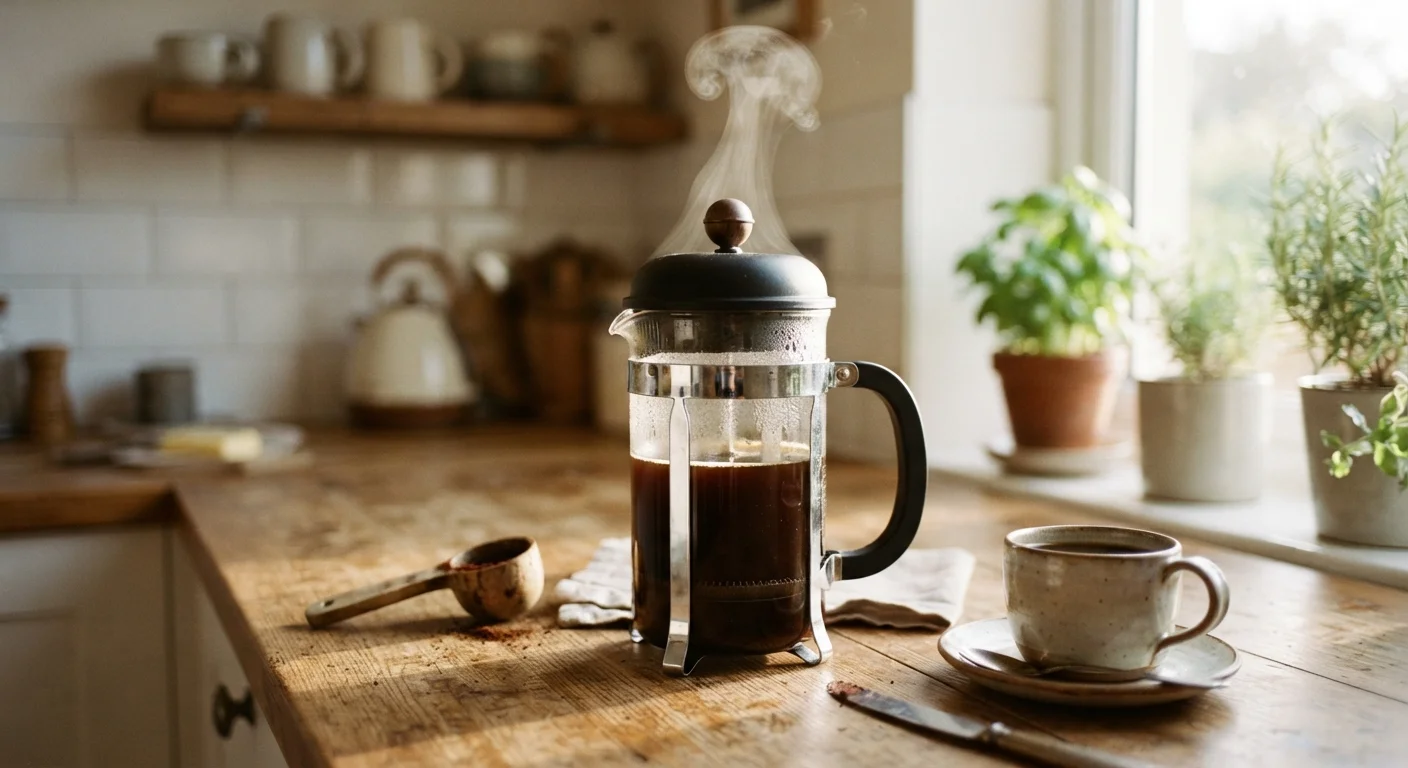
Photo credit: InfoHorizon.net | Access To Informative Content
In this article
Bitterness in French press coffee usually traces back to a few fixable variables. Learn what's going wrong and how to dial it in.
Key Takeaways
- Over-steeping is the single most common cause of bitterness in French press coffee.
- Water temperature above 205°F extracts harsh, bitter compounds too aggressively.
- Grind size matters — too fine clogs the filter and prolongs unwanted extraction.
- Using the wrong coffee-to-water ratio throws off balance before brewing even starts.
- Pouring immediately after pressing prevents continued extraction in the carafe.
What Bitterness Actually Tells You About Your Brew
A well-made French press should taste rich, full-bodied, and balanced — with a pleasant bitterness that lingers briefly without overwhelming your palate. When bitterness is sharp, coating, or makes you want to add sugar just to get through the cup, that's a sign of over-extraction: too many compounds have been pulled from the grounds, including ones that taste harsh and astringent.
French press brewing uses full immersion — grounds sit in water for the entire brew time — which makes it highly sensitive to small changes in time, temperature, grind, and ratio. The good news is that these variables are easy to control once you know what to look for. Compare this to espresso, where pressure adds another layer of complexity (see our breakdown of espresso extraction for how those variables differ). With a French press, your kitchen timer and a coarse grinder can solve most problems.
Boiling Water Damages the Coffee
Water pulled straight from a boiling kettle (212°F / 100°C) scorches coffee grounds, extracting bitter chlorogenic acids and other harsh compounds almost instantly. Always let boiling water rest off heat for 30–45 seconds before pouring, or target a thermometer reading of 195–205°F. This single habit change has an outsized effect on cup quality.
The Most Common Mistakes — and How to Fix Them
Every variable in French press brewing affects extraction rate. The mistakes below are the most frequent culprits behind bitter coffee, and fixing even one of them can make a noticeable difference in your next cup.
Steeping the coffee for too long — typically beyond four minutes.
Why it happens: Many people set the French press and walk away, letting it sit on the counter for five, seven, or even ten minutes while they get ready for work.
Using water that is too hot — at or near a full boil.
Why it happens: Boiling water is what most kettles produce, so it's the default. The connection between water temperature and extraction chemistry isn't obvious to someone who hasn't encountered it before.
Grinding coffee too fine for a French press.
Why it happens: Finer grinds seem more intuitive — more surface area should mean more flavor. Many people also use whatever grind setting they have on hand, often intended for drip machines.
Using the wrong coffee-to-water ratio, usually too little coffee.
Why it happens: Under-dosing is common because people try to stretch their coffee supply, or follow rough estimates rather than weighing. Less coffee relative to water can paradoxically lead to more bitterness because the brew over-extracts the limited grounds.
Leaving brewed coffee in the French press carafe after pressing.
Why it happens: The French press looks like a natural serving vessel, so it's common to pour from it cup by cup over 20–30 minutes.
Don't Let Coffee Sit on the Grounds
Even after you press the plunger, the grounds at the bottom of your French press continue extracting into the coffee above them. Bitter, astringent compounds accumulate quickly. Pour all the coffee into a separate carafe or your cup immediately after pressing — never leave it sitting in the French press.
195–205°F
Ideal water temperature for coffee brewing
The Specialty Coffee Association recommends this temperature range as optimal for full flavor extraction without producing excessive bitterness.
1:15
Recommended coffee-to-water ratio by weight
This ratio is widely cited by coffee educators as a balanced starting point for immersion brewing methods like the French press.
One More Factor: Your Coffee Itself
Even with perfect technique, some coffees are more prone to bitterness than others. Dark roasts contain more of the bitter-tasting compounds produced during the roasting process, so they are less forgiving of even slight over-extraction. If you consistently struggle with bitterness despite good brewing habits, try a medium roast from a fresh bag — coffee starts losing its nuanced flavors within a few weeks of roasting, and stale coffee often tastes harsh and flat rather than bright and balanced.
Freshness matters too. Look for a roast date on the bag rather than a best-by date, and try to use coffee within four weeks of that date. Store it in an airtight container away from light and heat — not in the freezer, which introduces moisture through repeated thawing cycles.
Small, consistent habits compound quickly with French press brewing. Dial in your grind, respect your timer, and get your water temperature right — most bitter cups are just a few adjustments away from being genuinely good ones.

Author
Food Editorial Team
Food Editorial Team is the collective byline for our editorial team and contributor network. Articles published under this byline or an editorial pen name are researched, written, and reviewed according to our editorial standards for clarity, consistency, and independence before publication.
View all articles →