
Coffee Roast Levels: What Light, Medium, and Dark Actually Tell You
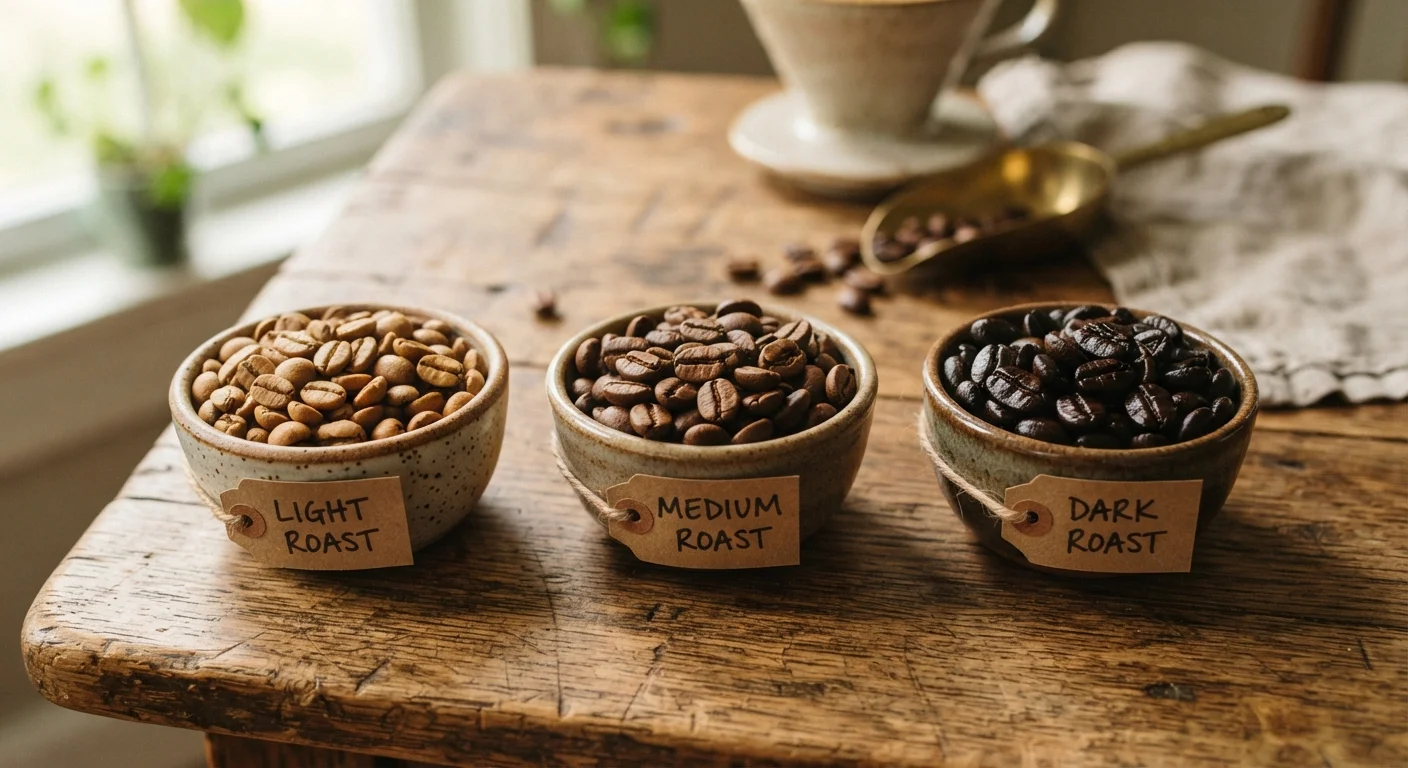
Photo credit: InfoHorizon.net | Access To Informative Content
In this article
Roast level shapes flavor, caffeine content, and aroma in ways that aren't always obvious. Here's what each roast level really means.
What Roasting Actually Does to a Coffee Bean
Green coffee beans are dense, grassy-smelling seeds with little of the flavor complexity found in a finished cup. Roasting changes everything. When heat is applied — typically between 350°F and 480°F — the beans undergo a series of chemical reactions that develop sugars, acids, and aromatic compounds. Two key events define the process: first crack, where moisture escaping the bean causes an audible pop, and second crack, where the bean's cellular structure begins to break down.
Roasters use these benchmarks, along with bean temperature and color, to decide when to stop the roast. Light roasts are pulled before or just after first crack. Medium roasts are stopped after first crack but before second crack begins. Dark roasts push into or past second crack. These aren't arbitrary labels — they mark genuine differences in the bean's chemistry.
| Light roast internal temp | ~355–400°F (180–205°C) (Specialty Coffee Association guidelines) |
| Medium roast internal temp | ~400–430°F (205–220°C) (Specialty Coffee Association guidelines) |
| Dark roast internal temp | ~430–480°F (220–250°C) (Specialty Coffee Association guidelines) |
| Caffeine difference by roast | Minimal — under 1% difference in most cases (Journal of Analytical Toxicology, general research consensus) |
| Bean surface appearance | Light: dry / Medium: dry–slightly oily / Dark: visibly oily |
| Best brew method for light roast | Pour-over, drip, Aeropress |
Light, Medium, and Dark: What Each Roast Delivers
Light roast beans retain most of the compounds developed during the growing season. That means the origin characteristics of the bean — fruity, floral, or tea-like notes — come through clearly. Light roasts tend to have higher acidity (the bright, tangy quality, not harshness) and a lighter body. They also preserve more chlorogenic acids, a class of antioxidants naturally present in coffee.
Medium roast is the most common style in American homes. The extended heat tames some acidity and builds more caramel and nutty sweetness as sugars caramelize. Body becomes fuller. Origin notes are still detectable but are balanced with roast-developed flavors. Most grocery-store and diner coffee lands in this range.
Dark roast pushes the bean's oils to the surface, producing the shiny appearance and bold, smoky, bittersweet flavor associated with espresso-style or French roast coffees. Acidity is low, body is heavy, and origin character is largely replaced by roast-driven flavors — think dark chocolate, char, or tobacco. See our guide to espresso extraction for how dark-roasted beans behave under pressure.
First crack
An audible popping sound during roasting caused by steam and CO₂ escaping the bean. It signals that the bean has reached a roastable state and marks the entry point for light roasts.
Second crack
A second, quieter cracking sound during roasting as the bean's cell structure fractures. It indicates the transition into dark roast territory.
Origin character
The flavor notes imparted by the coffee plant's growing environment — soil, altitude, and climate. These are most detectable in lighter roasts and diminish as roasting progresses.
Chlorogenic acids
A family of antioxidant compounds naturally found in green coffee beans. They decrease in concentration as roast level increases due to heat degradation.
Body
The perceived weight or texture of coffee on the palate — often described as light, medium, or full. Body tends to increase with roast level.
The Caffeine Question — and Other Common Myths
One of the most persistent misconceptions about roast is that darker means more caffeine. In reality, the difference is minimal and depends on how you measure. By weight, light roast has slightly more caffeine per gram because the bean loses mass during roasting but retains most of its caffeine. By volume (scoops), dark roast can edge slightly higher because its beans are less dense and you're scooping more beans. For practical home brewing, the difference is negligible.
Another myth: dark roast is stronger. Strength is a function of brew ratio — how much coffee you use relative to water — not roast level. A light roast brewed strong will deliver more intensity than a dark roast brewed weak. If you want a cold, diluted version of your preferred roast, cold brew and iced coffee handle different roasts in different ways worth understanding.
Roast Names Are Not Standardized
Terms like "French roast," "Italian roast," "breakfast blend," and "city roast" are used inconsistently across the coffee industry. One roaster's medium-dark may be another's dark. Rather than relying on the name, look at the bean's color, the roaster's temperature notes if provided, and the tasting descriptors on the bag to understand what you're actually getting.
Roast names like "French," "Italian," "breakfast," or "city" are not standardized across the industry. One roaster's medium may be another's medium-dark. The best guide is the bean's color and the flavor description on the bag.

Author
Food Editorial Team
Food Editorial Team is the collective byline for our editorial team and contributor network. Articles published under this byline or an editorial pen name are researched, written, and reviewed according to our editorial standards for clarity, consistency, and independence before publication.
View all articles →