
Mise en Place: The Kitchen Habit That Changes How You Cook
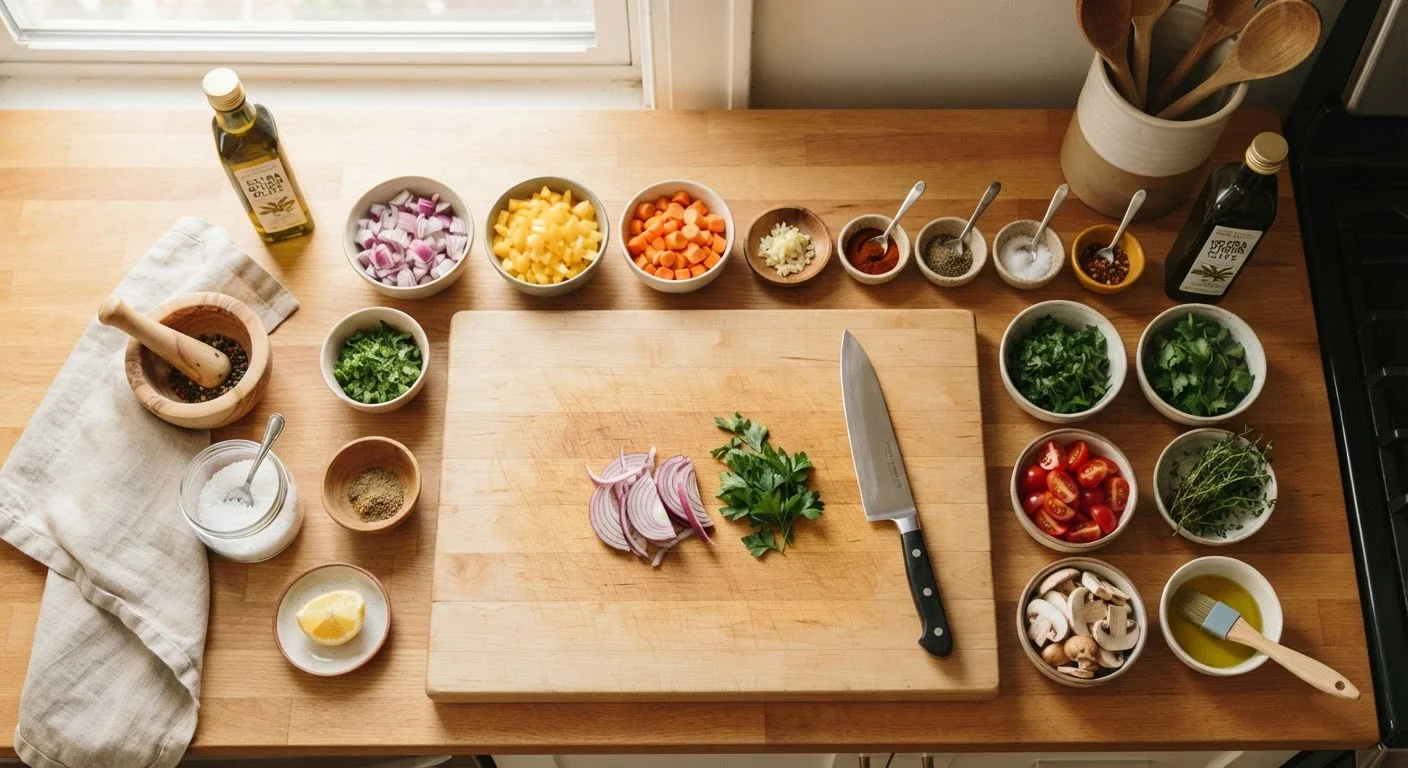
Photo credit: InfoHorizon.net | Access To Informative Content
In this article
Mise en place is more than a chef's ritual — it's a practical framework for organized, stress-free cooking at any skill level.
Key Takeaways
- Mise en place means prepping and organizing everything before you start cooking.
- It reduces cooking errors, missed steps, and mid-recipe stress significantly.
- Home cooks can apply the principle without any special equipment.
- Good knife skills and a clean counter are the foundation of effective mise en place.
- This habit pairs naturally with weekly meal prep and organized kitchen routines.
What Mise en Place Actually Means
Professional cooks treat mise en place as non-negotiable — not because culinary school demands it, but because cooking without it is simply harder. When everything you need is chopped, measured, and within arm's reach before the burner ignites, you can move fluidly through a recipe instead of constantly pausing to catch up.
For home cooks, the payoff is just as real. Have you ever burned garlic because you were still peeling onions? Forgotten to add an ingredient until two steps too late? Those are mise en place problems, and they're entirely preventable.
The practice doesn't require a culinary degree or a perfectly stocked kitchen — just a shift in when you do the prep work. Instead of prepping as you go, you front-load it. Read the recipe fully, gather your tools, prep all your ingredients into small bowls or piles, and only then start cooking.
Mise en Place Is a Mindset, Not a Formula
There's no single "correct" way to set up your station. Some cooks prefer bowls; others use small plates, ramekins, or parchment squares. What matters is that every ingredient and tool is ready before you start cooking — the specific method is up to you. Adapt the habit to your kitchen and your workflow.
The Core Steps of Setting Up Your Station
Mise en place has a natural sequence that makes it efficient:
- Read the full recipe first. Understand every step before touching a single ingredient. This prevents surprises — like discovering you needed to marinate something overnight.
- Gather your equipment. Pull out pans, measuring tools, colanders, and anything else you'll use. A pre-cooking checklist can help you catch what's missing before the heat is on.
- Prep your ingredients in order. Work from longest prep time to shortest. Aromatics like onions and garlic usually come first; delicate fresh herbs last.
- Measure and stage everything. Dry spices can go into a single bowl if they're added together. Liquids can stay in measuring cups. The goal is that each item is ready to grab without a second thought.
Strong knife skills make this step dramatically faster and produce more consistent cuts, which also means more even cooking.
Use a Damp Towel Under Your Cutting Board
Placing a damp kitchen towel beneath your cutting board keeps it from sliding during prep — a small safety detail that also speeds up your work. A stable surface means faster, more controlled cuts. Pair this with sharp knives and your mise en place setup time drops noticeably.
Why It Makes You a Better Cook
Mise en place does more than reduce stress — it changes what you can actually pay attention to during cooking. When you're not chopping mid-sauté, you can focus on heat management, timing, and flavor development.
~20 min
Typical mise en place setup time before cooking
Most home recipe prep sessions, when organized in advance, fall within a 10–20 minute window before active cooking begins.
3–5x
Faster active cooking with staged ingredients
Culinary educators commonly cite that organized prep can reduce the hands-on cooking phase to a fraction of disorganized cook times, particularly for multi-component dishes.
This is especially true when cooking multiple dishes at once, like during holiday meals or batch cooking sessions. If you're working on a sheet pan dinner, for example, having every vegetable and protein prepped before anything goes into the oven lets you layer flavors and stagger roasting times with confidence.
Mise en place also builds a mental model of the recipe. The act of measuring and arranging ingredients cements the steps in your memory so you're not re-reading the same paragraph four times mid-cook.
Over time, this habit scales naturally into broader kitchen organization. Cooks who practice mise en place consistently find it easier to build a weekly meal prep routine because they're already accustomed to thinking about food in terms of preparation stages rather than just finished meals.
Making It Work in a Real Home Kitchen
A common objection is counter space. If your kitchen is small, staging a dozen bowls before cooking can feel impossible. The key is to be selective and scale the practice to your recipe. A simple weeknight pasta might only require three or four prep bowls, while a more involved dish could need eight or ten.
Organizing a small kitchen strategically — clearing the counter before you cook rather than while you cook — gives you the staging room mise en place requires without a full renovation.
Another practical adjustment: combine ingredients that go into the pan at the same time into a single bowl. If a recipe calls for bell pepper, zucchini, and onion all added together, they can share a container in prep. This reduces bowl count without sacrificing the core benefit.
Start small. Pick one recipe this week and fully execute mise en place before touching the stove. Notice the difference in your experience — the calm, the control, the ability to simply cook. That's the habit in action.
This article is for general informational and educational purposes only.
Frequently Asked Questions

Author
Food Editorial Team
Food Editorial Team is the collective byline for our editorial team and contributor network. Articles published under this byline or an editorial pen name are researched, written, and reviewed according to our editorial standards for clarity, consistency, and independence before publication.
View all articles →