
Your Car's Maintenance Schedule, Explained
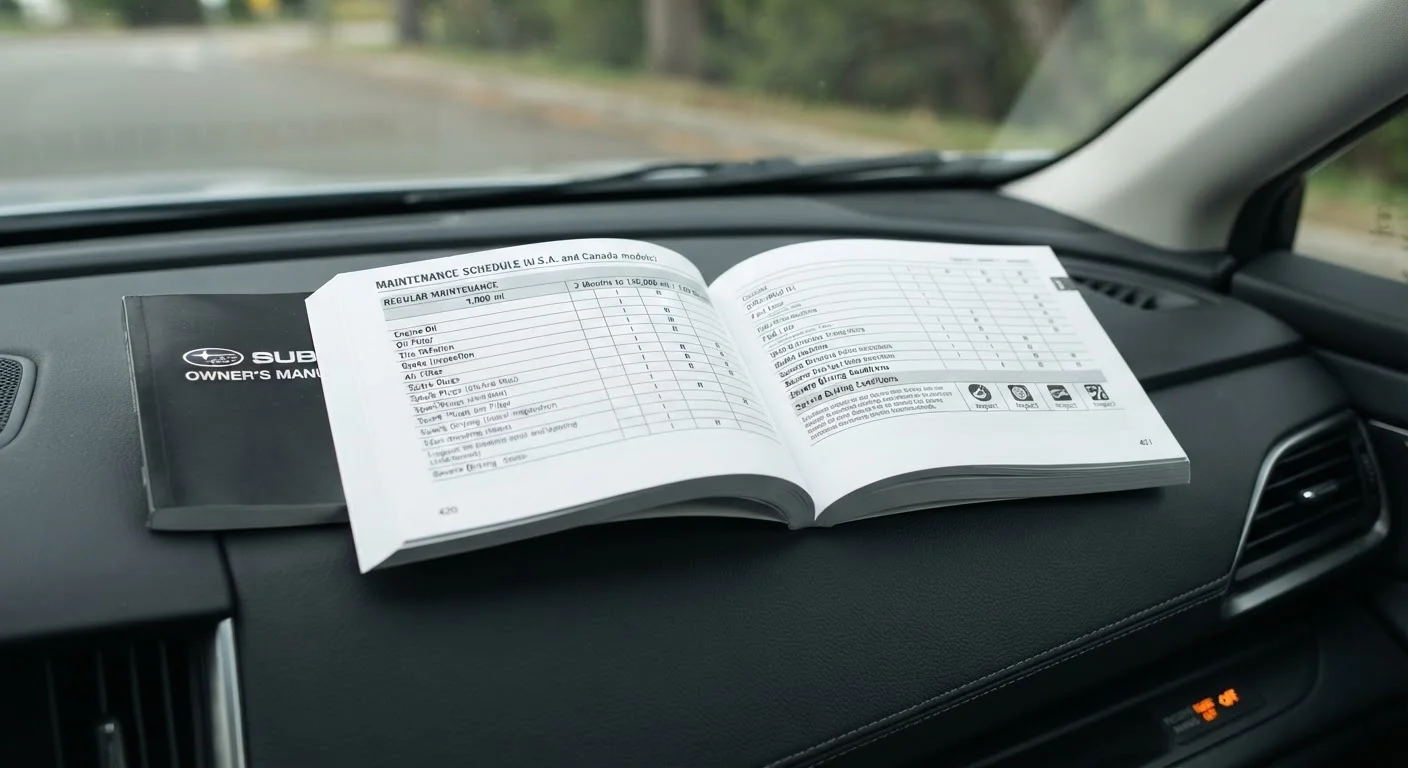
Photo credit: InfoHorizon.net | Access To Informative Content
In this article
Understand what every mileage milestone in your owner's manual actually means and why sticking to the schedule matters.
Key Takeaways
- Your owner's manual contains the most accurate maintenance schedule for your specific vehicle.
- Maintenance intervals are based on mileage, time, or both - whichever comes first.
- Skipping scheduled services can void your warranty and lead to costly repairs.
- Severe driving conditions often require shorter intervals between services.
- Dashboard warning lights are not a substitute for proactive, scheduled maintenance.
Why Your Owner's Manual Is the Starting Point
Every car comes with a maintenance schedule tailored to that specific engine, transmission, and drivetrain - and it lives in your owner's manual. Generic advice from the internet or a quick-lube shop may not match your vehicle's actual requirements. The manufacturer's schedule reflects thousands of hours of engineering testing and is the most trustworthy baseline you have.
That schedule covers two types of intervals: mileage-based (e.g., every 5,000 or 7,500 miles) and time-based (e.g., every six or twelve months). When both apply to the same service - like an oil change - the standard guidance is to act on whichever comes first. A car that sits in a garage still needs attention because fluids oxidize, rubber seals dry out, and batteries discharge over time.
If you've misplaced your manual, most automakers publish maintenance schedules on their official websites, searchable by model year and trim. Some dealers can also print one for you at no charge.
What Each Mileage Milestone Actually Covers
Maintenance schedules are structured around recurring checkpoints, each with a specific list of tasks. Here's what the most common intervals typically include:
- Every 5,000-7,500 miles: Oil and filter change (or per the oil life monitor on newer vehicles), tire rotation, and a general visual inspection of lights, belts, and fluid levels.
- Every 15,000-30,000 miles: Air filter replacement, cabin air filter check, brake inspection, and topping off or replacing fluids such as coolant and brake fluid.
- Every 30,000-60,000 miles: Transmission fluid service, spark plug replacement (on older vehicles or those with copper plugs), drive belt inspection, and battery testing.
- Every 60,000-100,000 miles: Timing belt or chain inspection, coolant flush, power steering fluid flush, and potential replacement of wear items like shocks and struts.
These ranges vary by make and model. A turbocharged engine, for instance, may call for more frequent oil changes than a naturally aspirated one. Always cross-reference with your manual rather than relying solely on mileage rules of thumb.
~$1,200
Average cost of a neglected timing belt failure
Repair costs for timing belt-related engine damage can range from several hundred dollars for a standard replacement to over $1,000 or more when internal engine components are affected.
30%
Drivers who don't follow recommended maintenance schedules
Industry surveys consistently show a significant portion of drivers delay or skip routine services, often citing cost or uncertainty about what's actually needed.
For a deeper look at services that rarely make it onto most drivers' radar, see our guide to overlooked maintenance tasks - items like differential fluid and fuel injector cleaning that quietly matter over time.
Normal vs. Severe Service Intervals
Most maintenance schedules include two tracks: normal and severe. Many drivers assume they fall into the normal category, but the reality is different. If your driving involves any of the following, you may be in the severe column:
- Frequent short trips of under five miles - especially in cold weather
- Stop-and-go city driving or extended idling
- Towing, hauling, or driving off-road
- Operating in extreme heat, cold, or dusty environments
Short trips are particularly hard on engines because the oil never fully warms up to burn off moisture and combustion byproducts. Over time, this accelerates engine wear more than highway miles do.
Match Your Interval to Your Driving Pattern
Pull up the severe service schedule in your manual and honestly assess your daily driving. If most of your trips are under ten miles or you live in a region with extreme seasonal temperatures, the severe interval likely applies to you. Using the correct schedule protects your engine without over-servicing.
Understanding your actual driving pattern helps you choose the right interval - and prevents unnecessary spending on services you don't yet need. It also counters some of the outdated advice still circulating, which our article on car maintenance myths addresses directly.
Keeping Track and Staying Ahead
A maintenance schedule only works if you can act on it. The simplest system is a log - a small notebook or phone app where you record the date, mileage, and service performed at each visit. This history is also valuable when selling the vehicle or making a warranty claim.
Dashboard service reminder lights are a helpful prompt, but they're not a complete substitute for the schedule. Some lights only trigger when a sensor detects a specific fault - by which point damage may have already begun. For a plain-language guide to what those warning symbols mean, see what your dashboard warning lights are actually telling you.
Once a year, it's worth doing a structured review of your car's overall condition. The annual car maintenance audit checklist walks through fluids, brakes, tires, and safety components in a logical order. And if your vehicle is approaching or past 100,000 miles, the priorities shift somewhat - our guide on high-mileage vehicle maintenance covers what changes and what to watch more closely.
Frequently Asked Questions

Author
Cars Editorial Team
Cars Editorial Team is the collective byline for our editorial team and contributor network. Articles published under this byline or an editorial pen name are researched, written, and reviewed according to our editorial standards for clarity, consistency, and independence before publication.
View all articles →