
Great Lakes Destinations: What Each Shoreline State Brings to the Water
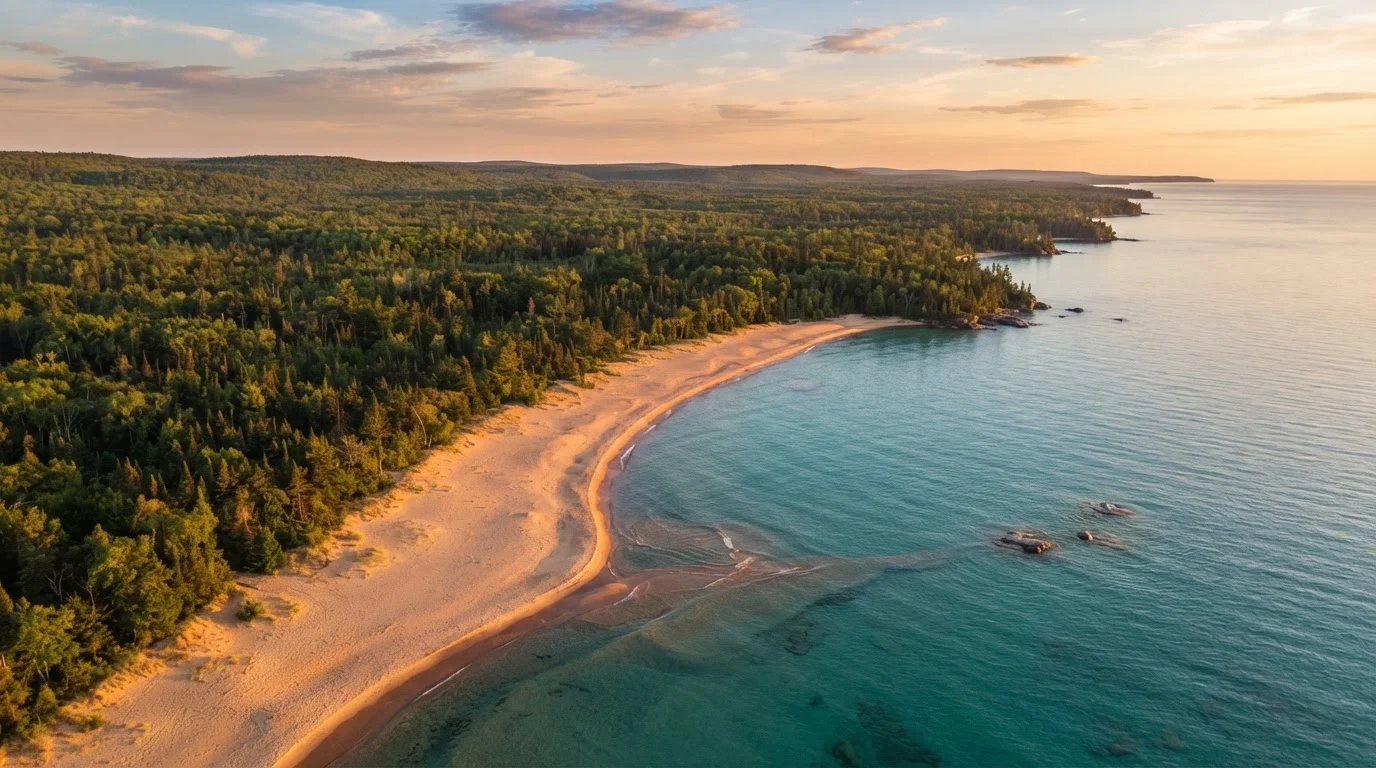
Photo credit: InfoHorizon.net | Access To Informative Content
In this article
Michigan, Wisconsin, Minnesota, Ohio, Indiana, Illinois, Pennsylvania, and New York each offer distinct Great Lakes experiences. Here's how they differ.
The Great Lakes at a Glance
The Great Lakes — Superior, Michigan, Huron, Erie, and Ontario — collectively hold about 21% of the world's surface fresh water. Eight US states share their shores, and no two deliver the same experience. Whether you're after sand dunes, urban waterfronts, wine country, or wilderness camping, the answer often comes down to which state you choose — not just which lake. Use this guide as a quick-reference compass for planning your next freshwater escape.
| Lakes Covered | Superior, Michigan, Huron, Erie, Ontario |
| US Shoreline States | 8 (MI, WI, MN, OH, IN, IL, PA, NY) |
| Total US Shoreline | Approx. 4,500 miles (NOAA Great Lakes Environmental Research Laboratory) |
| Largest State Shoreline | Michigan (~3,200 miles) |
| Smallest State Shoreline | Indiana (~45 miles) |
| Best for Sand Dunes | Michigan & Indiana |
| Best for Urban Lakefront | Illinois (Chicago) |
| Best for Wilderness | Minnesota & Wisconsin (Superior shore) |
Michigan, Wisconsin & Minnesota: The Northern Trio
Michigan is the undisputed Great Lakes heavyweight, bordered by four of the five lakes. The Lower Peninsula's west coast along Lake Michigan draws visitors to Sleeping Bear Dunes National Lakeshore — towering sand dunes rising up to 450 feet above the water's edge. The Upper Peninsula offers a wilder experience on Lake Superior, including Pictured Rocks National Lakeshore with its sandstone cliffs and sea caves. Michigan also hosts the Traverse City wine region, a genuinely surprising pairing of viticulture and lakefront scenery.
Wisconsin's Door Peninsula, jutting between Green Bay and Lake Michigan, is packed with lighthouses, state parks, and fish boils — a regional tradition where whitefish and potatoes are cooked over an open wood fire. Apostle Islands National Lakeshore on Lake Superior adds another dimension: 21 islands accessible by boat, with sea kayaking and winter ice cave hikes among the draws.
Minnesota claims only Lake Superior's northwestern tip, but it delivers outsized drama. The North Shore Scenic Drive along US Highway 61 hugs the lake from Duluth through Grand Marais, passing waterfalls, agate beaches, and the Boundary Waters gateway. Duluth itself is worth a stop — a historic port city with an active lift bridge and a genuinely walkable lakefront district. If you enjoy contrasting regions, see how the Great Lakes compare to America's national park regions for a broader wilderness planning perspective.
Lake-effect
A weather phenomenon where cold air passing over warmer lake water picks up moisture and deposits it as heavy snow or rain on the downwind shore. It dramatically shapes both climate and agriculture in Great Lakes regions.
Lakeshore vs. Lakefront
Lakeshore typically refers to the natural land bordering a lake, often including parks and undeveloped areas. Lakefront is commonly used for developed, often urban, areas immediately adjacent to the water.
Sea cave
A cave formed by wave erosion along a rocky shoreline. On Lake Superior, the Apostle Islands and Pictured Rocks are known for their dramatic sea caves, some accessible only by kayak or winter ice walk.
Moraine
A landform created by glacial deposits. Many Great Lakes sand dunes and bluffs are shaped by moraines left behind as glaciers retreated thousands of years ago.
Ohio, Indiana, Illinois, Pennsylvania & New York: Southern and Eastern Shores
Ohio stretches along Lake Erie's southern shore and punches above its weight with Cedar Point — a landmark amusement destination on a narrow peninsula — alongside the Lake Erie Islands (including Put-in-Bay and Kelleys Island), which attract kayakers, cyclists, and ferry-hoppers. Ohio also borders the western end of the Lake Erie wine region, where cool lake-effect temperatures support quality grape growing.
Indiana has just 45 miles of Lake Michigan coastline, but Indiana Dunes National Park within that stretch makes every mile count. The dunes themselves reach over 200 feet and host an ecologically rich mix of habitats — forest, prairie, and wetland — all within an hour of Chicago.
Illinois centers its Great Lakes presence almost entirely on Chicago's Lake Michigan lakefront — 18 miles of public beaches, the celebrated Lakefront Trail, and iconic skyline views. It's more urban adventure than wilderness retreat, but undeniably spectacular.
Pennsylvania holds just 51 miles of Lake Erie shoreline, anchored by the city of Erie and Presque Isle State Park, a sandy peninsula with calm swimming beaches and bird-watching recognized as among the finest in the Northeast.
New York wraps up the Great Lakes story on Lake Ontario and the eastern end of Lake Erie. The Lake Ontario shore is quieter than the state's Atlantic coast, with the Thousand Islands region and Sackets Harbor offering historic depth. Meanwhile, the Lake Erie corridor near Buffalo connects to Niagara Falls — one of the most visited natural landmarks in North America. For a sense of how Great Lakes shorelines compare in character to other dramatic US coastlines, read our comparison of New England and the Pacific Northwest.
Verify Entry Requirements and Conditions Before You Go
Water levels, park access, ferry schedules, and campsite availability can change seasonally. Always check with the relevant state park authority, the National Park Service, or local tourism offices before finalizing travel plans. Border crossings to Canada are also possible from several Great Lakes ports — verify current entry requirements with official government sources.

Author
Travel Editorial Team
Travel Editorial Team is the collective byline for our editorial team and contributor network. Articles published under this byline or an editorial pen name are researched, written, and reviewed according to our editorial standards for clarity, consistency, and independence before publication.
View all articles →