
The Honest Trade-Offs of Going Minimalist at Home
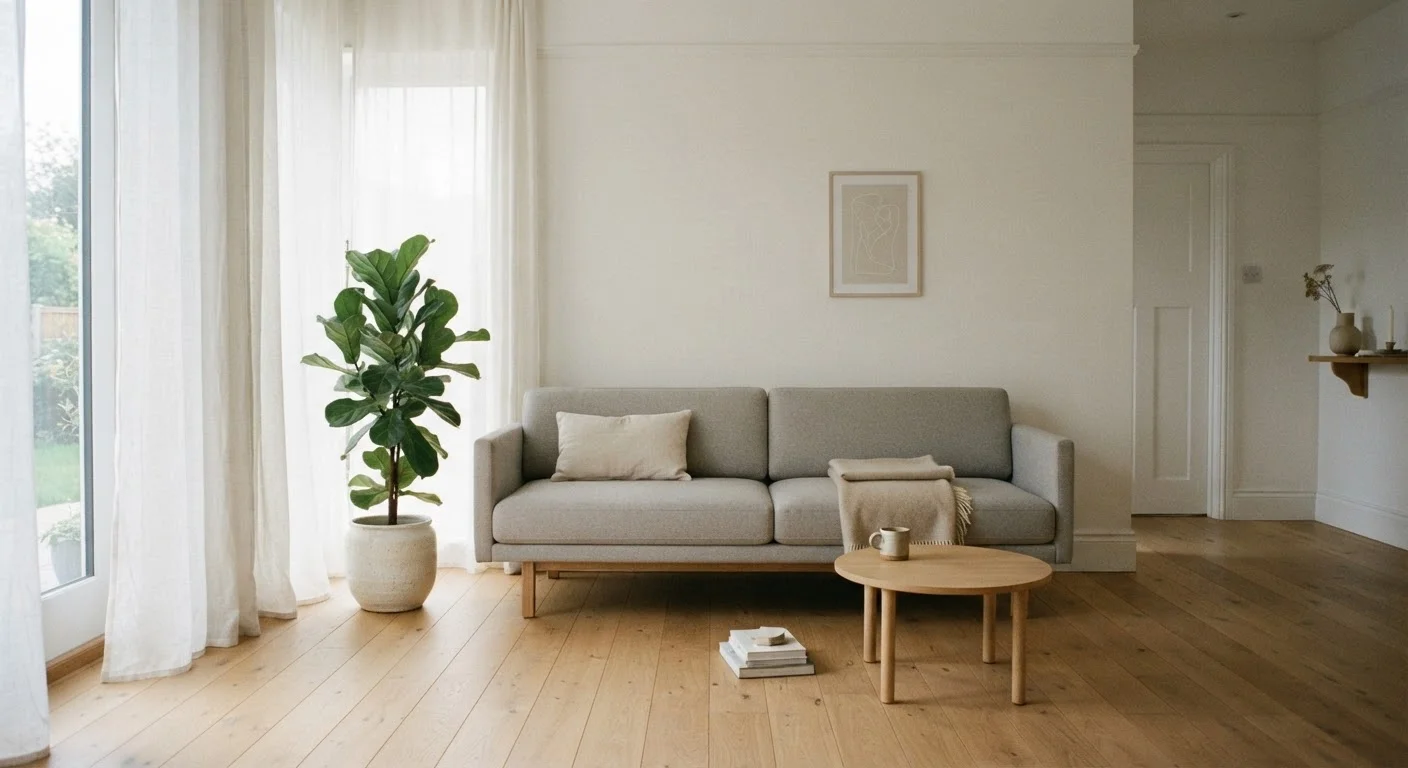
Photo credit: InfoHorizon.net | Access To Informative Content
In this article
Minimalism promises calm and clarity, but it comes with real trade-offs. A balanced look at what you gain — and give up — when you strip a home way down.
Key Takeaways
- Minimalism reduces daily cleaning time and decision fatigue by removing excess objects from your space.
- The transition requires confronting emotional attachments to possessions, which many people underestimate.
- Minimalism works best when adapted to your actual lifestyle rather than applied as a rigid aesthetic.
- Shared households face unique friction when one person wants less and another wants more.
- You can adopt minimalist principles selectively without committing to an all-or-nothing approach.
Significantly less time spent cleaning and tidying
Fewer objects on surfaces means wiping down a room takes minutes rather than half an hour. Weekly cleaning routines become faster and less mentally taxing.
Reduced visual stress and mental load
Research in environmental psychology consistently links cluttered environments to elevated cortisol levels. A stripped-down space gives the eye fewer competing signals, which many people find genuinely calming.
Easier to find what you actually own
When you keep less, items have defined homes. The time lost hunting for keys, chargers, or tools compounds surprisingly fast — minimalism largely eliminates that friction.
Moves and renovations become less disruptive
Owning less makes relocation dramatically simpler and less expensive. It also makes home improvements — like the structural changes involved in open-concept renovations — easier to plan around.
More intentional purchasing habits over time
Living with less tends to recalibrate how you shop. Most people find they buy fewer things impulsively and spend more carefully on items that genuinely serve them.
The transition is emotionally harder than expected
Parting with belongings triggers genuine grief for many people, especially items tied to memories or identity. Underestimating this can lead to regret, burnout, or abandoning the process mid-way.
Risk of discarding useful items too quickly
Enthusiastic early purges often result in repurchasing things later — tools, seasonal gear, kitchen equipment. Replacing items costs more than keeping the originals would have.
Can create friction in shared households
When one person's minimalism is imposed on a partner, child, or roommate, it tends to breed resentment rather than calm. Different people have legitimately different needs for their belongings.
Minimalist interiors can feel cold or unwelcoming
Stripping a space down too aggressively can strip out warmth and personality. A home that functions as a showroom rather than a lived-in space can feel alienating to both residents and guests.
Requires ongoing maintenance, not a one-time fix
Clutter returns without deliberate systems and habits. Minimalism is an active practice, not a destination — people who expect it to be a single project often end up frustrated.
Not compatible with all hobbies or life stages
Certain activities — crafting, gardening, cooking, collecting — require tools, materials, and supplies. A strict minimalist framework can conflict directly with the things that bring people joy.
What Minimalism Actually Means at Home
Minimalism, as a home philosophy, means intentionally keeping only what you use, need, or genuinely value — and creating systems that prevent clutter from creeping back. It isn't about owning the fewest possible objects or matching a magazine aesthetic. At its core, it's an organizational strategy with a psychological dimension.
The practical appeal is straightforward: fewer items means fewer surfaces to dust, fewer decisions about where things live, and less visual noise competing for your attention. If you've been thinking about where to begin, our guide on decluttering your home when you don't know where to start walks through the process step by step.
What minimalism is not is a universal fix. How it plays out depends heavily on your household size, life stage, hobbies, and how your space is used day to day.
The Real Advantages
People who successfully adopt a minimalist approach to their homes consistently report a handful of concrete benefits:
Significantly less time spent cleaning and tidying
Fewer objects on surfaces means wiping down a room takes minutes rather than half an hour. Weekly cleaning routines become faster and less mentally taxing.
Reduced visual stress and mental load
Research in environmental psychology consistently links cluttered environments to elevated cortisol levels. A stripped-down space gives the eye fewer competing signals, which many people find genuinely calming.
Easier to find what you actually own
When you keep less, items have defined homes. The time lost hunting for keys, chargers, or tools compounds surprisingly fast — minimalism largely eliminates that friction.
Moves and renovations become less disruptive
Owning less makes relocation dramatically simpler and less expensive. It also makes home improvements — like the structural changes involved in open-concept renovations — easier to plan around.
More intentional purchasing habits over time
Living with less tends to recalibrate how you shop. Most people find they buy fewer things impulsively and spend more carefully on items that genuinely serve them.
One often-overlooked gain is financial. When you stop buying things reflexively, spending tends to slow. You become more selective, which means less money lost to impulse purchases and duplicate items. Minimalism also pairs naturally with low-effort interior upgrades — a less cluttered room makes even small changes, like new hardware or fresh paint, land with much more impact.
40%
Of household items rarely or never used
Home organization researchers generally estimate that a significant portion of what most households own goes unused for months or years at a time — contributing to clutter without adding value.
1 hour
Average weekly cleaning time saved
Organizational experts commonly estimate that reducing household clutter can cut routine cleaning time by roughly an hour per week, depending on home size and starting point.
The Honest Disadvantages
The trade-offs are real and worth knowing before you donate half your belongings in an energetic Saturday morning sweep:
The transition is emotionally harder than expected
Parting with belongings triggers genuine grief for many people, especially items tied to memories or identity. Underestimating this can lead to regret, burnout, or abandoning the process mid-way.
Risk of discarding useful items too quickly
Enthusiastic early purges often result in repurchasing things later — tools, seasonal gear, kitchen equipment. Replacing items costs more than keeping the originals would have.
Can create friction in shared households
When one person's minimalism is imposed on a partner, child, or roommate, it tends to breed resentment rather than calm. Different people have legitimately different needs for their belongings.
Minimalist interiors can feel cold or unwelcoming
Stripping a space down too aggressively can strip out warmth and personality. A home that functions as a showroom rather than a lived-in space can feel alienating to both residents and guests.
Requires ongoing maintenance, not a one-time fix
Clutter returns without deliberate systems and habits. Minimalism is an active practice, not a destination — people who expect it to be a single project often end up frustrated.
Not compatible with all hobbies or life stages
Certain activities — crafting, gardening, cooking, collecting — require tools, materials, and supplies. A strict minimalist framework can conflict directly with the things that bring people joy.
Households with children, aging parents, or people who work from home face additional friction. Hobbies — woodworking, sewing, cooking elaborate meals — generate tools and supplies. Stripping those away in the name of minimalism can undermine the activities that make a home feel lived-in and worthwhile.
Shared living arrangements deserve special attention here. If family members or roommates have different comfort levels with tidiness, an imposed minimalist system tends to quietly collapse. Organizing a home with multiple people requires negotiation, not just decluttering.
Minimalism Isn't One-Size-Fits-All
What counts as 'enough' varies enormously by household. A single adult in a studio apartment has entirely different needs than a family of four with young children or a person working from home full time. Minimalism as a concept is worth borrowing from, but applying it rigidly without accounting for your real life tends to backfire. Treat it as a tool, not a rule.
Finding a Version That Works for You
The most durable approach is selective minimalism — applying the principle room by room or category by category rather than wholesale. Start with genuinely low-stakes areas: the junk drawer, linen closet, or bathroom cabinet. Build systems that are easy to maintain before tackling spaces with emotional weight, like a shared bedroom or a child's playroom.
It also helps to distinguish between clutter (things with no real place or purpose) and things that simply look like clutter but serve a genuine function. A well-stocked pantry, a bookshelf you actually use, or a well-organized tool storage area are not problems to be solved.
If you're weighing bigger decisions about how your home fits your life — including whether you rent or own — those structural questions involve their own trade-offs worth examining separately. See our overview of renting vs. buying a home for a grounded breakdown.
Minimalism is most useful as a recurring question — does this item earn its place here? — rather than a one-time project or a fixed identity.

Author
Home & Garden Editorial Team
Home & Garden Editorial Team is the collective byline for our editorial team and contributor network. Articles published under this byline or an editorial pen name are researched, written, and reviewed according to our editorial standards for clarity, consistency, and independence before publication.
View all articles →