
Hiring a Contractor vs. Going DIY: A Realistic Framework
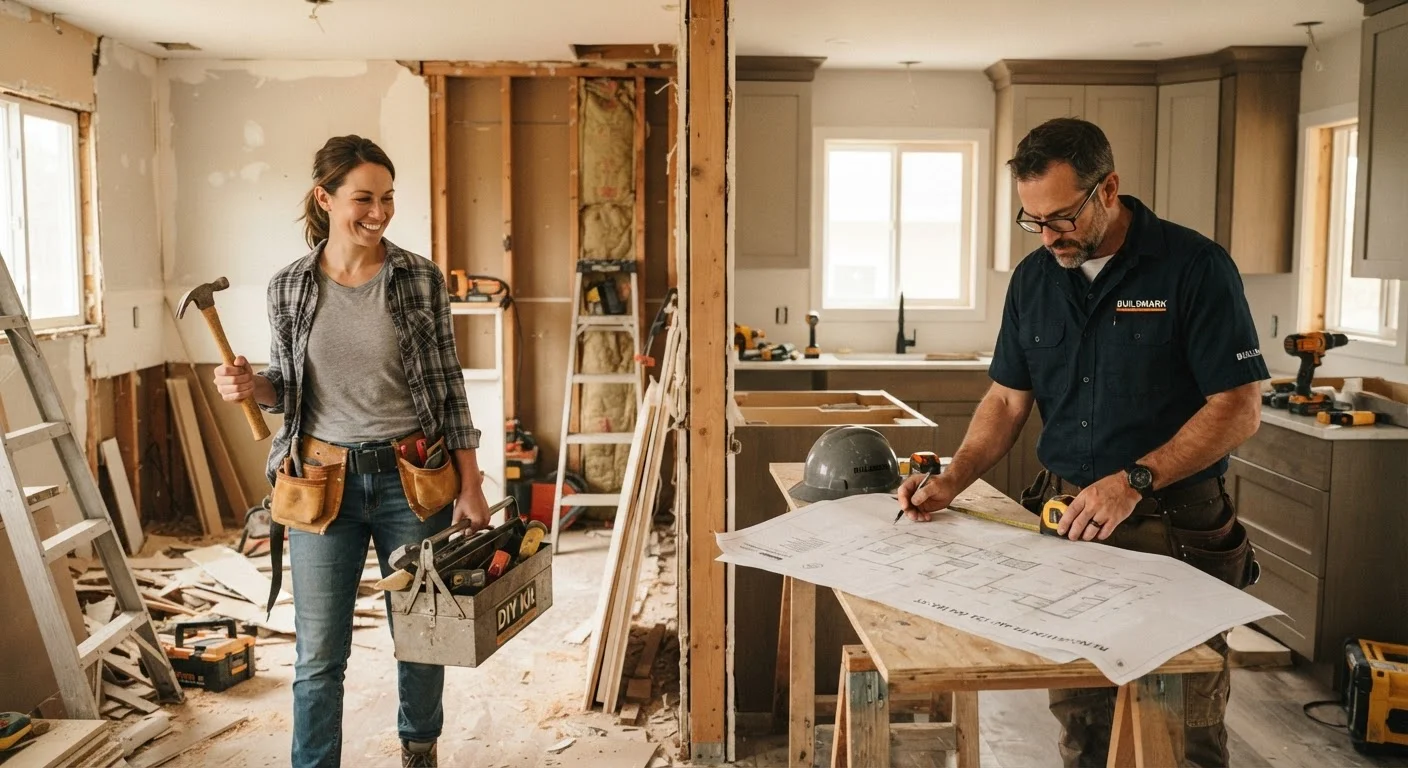
Photo credit: InfoHorizon.net | Access To Informative Content
In this article
Not every project belongs on a weekend to-do list. Here's how to honestly assess skill, risk, cost, and time before you pick up a tool or a phone.
Key Takeaways
- Not all home projects are DIY-appropriate — scope, skill level, and safety risk all matter before you decide.
- Some work legally requires licensed professionals and permits; skipping this step can affect your insurance and resale value.
- DIY often costs less upfront but can cost more if mistakes require professional correction.
- A realistic self-assessment of time, tools, and ability is the most important first step for any project.
- Structural, electrical, and gas work should almost always go to a licensed contractor.
The Real Question: What's Actually at Stake?
Before you watch a single tutorial or call a single contractor, the most useful question isn't "Can I do this?" — it's "What happens if it goes wrong?" That reframe changes the conversation entirely.
A botched paint job means a repaint. A botched electrical connection means a fire hazard. These are not equivalent risks, and treating them as if they are is where many homeowners run into serious trouble.
Start by placing your project into one of three rough categories:
- Cosmetic: Painting, caulking, installing shelving, replacing hardware. Low consequence if imperfect.
- Mechanical: Installing a ceiling fan, swapping a faucet, patching drywall. Moderate skill required; mistakes are usually fixable.
- Structural or system-level: Electrical panels, load-bearing walls, gas lines, roofing, main plumbing. High consequence; often legally requires a licensed professional.
The third category almost always warrants a licensed contractor — not because DIYers aren't resourceful, but because the downside risk (injury, code violation, voided insurance, expensive correction) is simply too high. Our companion guide on permits and inspections covers exactly when your local jurisdiction requires licensed work and inspections.
Comparing DIY and Hiring a Contractor Across Key Factors
Once you know your project category, evaluate your options across four dimensions: cost, time, skill, and risk. Here's how DIY and contractor work typically stack up.
| Factor | DIY | Hiring a Contractor | |
|---|---|---|---|
| Upfront Cost | Lower (materials only) | Higher (labor + materials) | |
| Cost of Mistakes | Can be significant if correction needed | Usually covered by warranty or liability | |
| Time Investment | High — your personal time | Low — contractor manages schedule | |
| Skill Required | Varies; you must supply it | Contractor brings expertise | |
| Permit Handling | Homeowner's responsibility | Often managed by contractor | |
| Risk Level | Higher for complex or regulated work | Lower when licensed and insured | |
| Quality Control | Dependent on your skill level | Professional standard expected |
A few notes on the table above. Cost comparisons are general — labor markets vary significantly by region, and material costs fluctuate. DIY labor is free in dollars but not in time or energy. And "risk" doesn't just mean physical danger; it also includes the risk of a code violation or a repair that fails inspection and must be redone.
Unpermitted Work Has Real Consequences
Skipping a required permit isn't just a technicality — it can void your homeowner's insurance on related claims, create legal liability if someone is injured, and require expensive demolition if flagged during a future sale inspection. Always verify local permit requirements before starting any project that modifies structure, electrical systems, plumbing, or HVAC.
For mechanical-level projects where you're on the fence, consider a hybrid approach: hire a contractor to do the permitted or technical portion, then handle finish work yourself. This keeps costs manageable while protecting you on the parts that count most.
Honest Self-Assessment: A Four-Question Test
The decision framework below works for nearly any project. Answer honestly — the goal isn't to talk yourself out of DIY, but to go in with clear eyes.
- Do I have the skills, or can I realistically acquire them? Watching a video is not the same as practicing a skill. Be specific: have you ever done anything similar before?
- Do I have the tools — or is acquiring them worth the cost? Tool rental is a practical middle ground for one-time jobs, but factor that into your cost comparison.
- Does this project require a permit or licensed work in my area? When in doubt, call your local building department — it's a free phone call that can save significant headaches.
- What is my real timeline? A bathroom out of commission for a weekend is manageable. One out of commission for three weeks because the project stalled is a different situation entirely.
If you answered confidently and positively to all four, DIY is likely a reasonable path. If one or more gave you pause, that's useful information — not a judgment. Even experienced DIYers know when to call for help. For those ready to start small, our guide on what first-time DIYers should know offers grounded, safety-first guidance.
Start Small to Build Confidence
If you're new to home improvement, choose a first project with low stakes and a clear finish line — think painting a room, replacing a light switch, or recaulking a tub. Each completed project builds both skill and the judgment to know what you can and can't handle next time. Confidence earned this way is far more reliable than confidence assumed.
When to Hire a Contractor — and How to Evaluate One
Deciding to hire a contractor is just the beginning. The quality of that hire matters enormously, and the evaluation process protects you as much as the work itself.
When vetting contractors, look for:
- Valid licensing and insurance for your state and project type. Ask for documentation — a reputable contractor will have it ready.
- Written estimates that itemize labor and materials separately. Verbal quotes leave too much room for misunderstanding.
- References from similar projects. A contractor who did excellent deck work isn't automatically the right hire for a basement waterproofing job.
- A clear payment schedule. A large upfront payment before any work begins is a red flag. Standard practice is a deposit, with payments tied to project milestones.
Never waive a permit to save money or speed up a timeline. Unpermitted work can complicate home sales, void homeowner's insurance claims, and require costly demolition if discovered during a future inspection. The short-term savings are rarely worth the long-term exposure. This parallels the kind of thinking involved in bigger financial decisions — much like how renting vs. buying requires weighing short-term cost against long-term consequence.
For projects that clearly belong in the DIY column — like a focused bathroom refresh — see our practical walkthrough: a weekend bathroom refresh you can do yourself.

Author
Home & Garden Editorial Team
Home & Garden Editorial Team is the collective byline for our editorial team and contributor network. Articles published under this byline or an editorial pen name are researched, written, and reviewed according to our editorial standards for clarity, consistency, and independence before publication.
View all articles →