
Therapy vs. Self-Help Strategies: When Each Approach Makes Sense
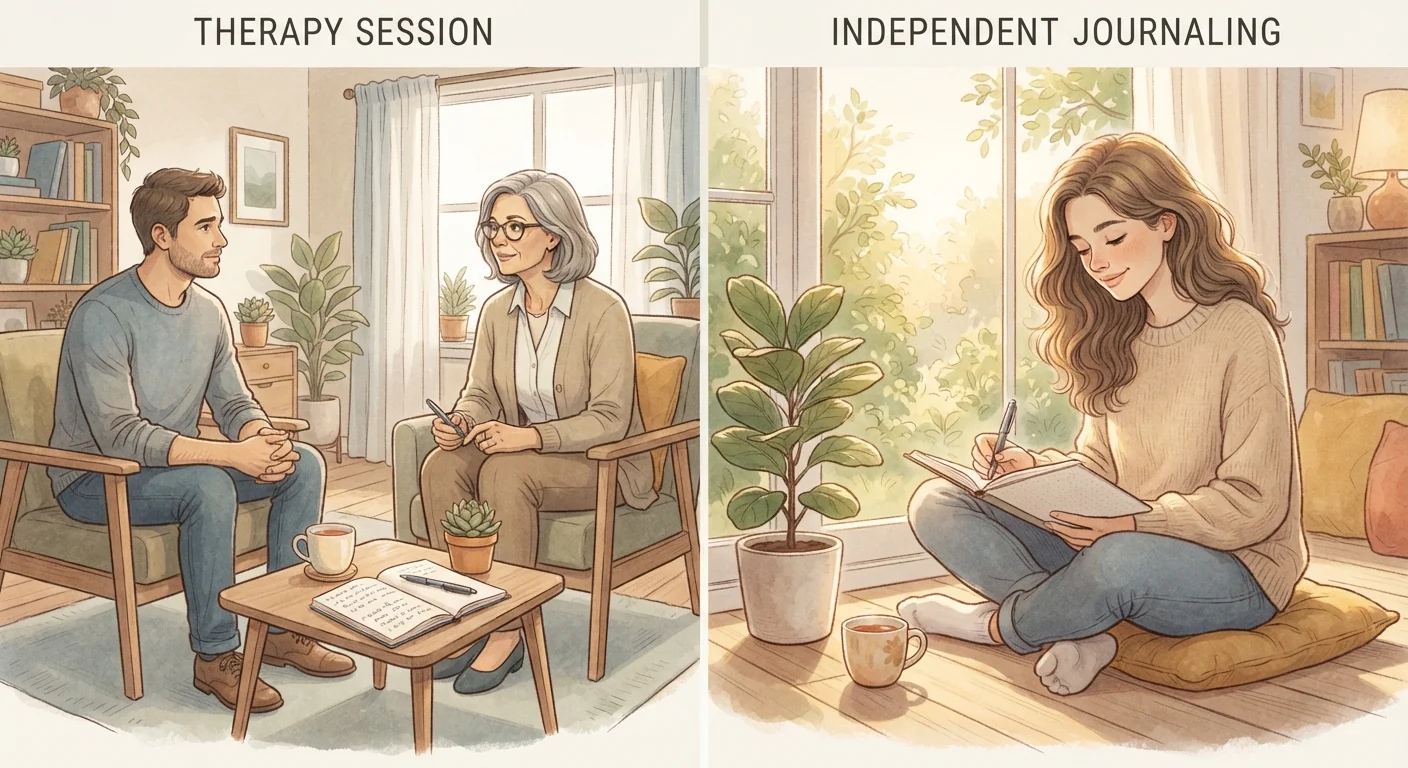
Photo credit: InfoHorizon.net | Access To Informative Content
In this article
Both professional support and personal coping tools have a role in mental well-being. A balanced look at what each can and can't do.
Key Takeaways
- Professional therapy is most effective for diagnosing and treating clinical mental health conditions.
- Self-help strategies can meaningfully support everyday stress, resilience, and emotional maintenance.
- The two approaches are not mutually exclusive — many people benefit from combining them.
- Cost, access, and severity of symptoms are all key factors in choosing an approach.
- Always consult a qualified mental health professional if symptoms are persistent or significantly impact daily life.
Accessible without a referral or waitlist
Most self-help tools — books, apps, structured online programs — are available immediately, making them practical for people who face scheduling or geographic barriers to therapy.
Builds long-term habits and daily resilience
Regular practices like journaling, mindfulness, and consistent sleep reinforce emotional regulation skills that compound over time, not just in crisis moments.
Low cost relative to professional care
Many evidence-backed self-help resources are free or low-cost, reducing a significant barrier for people who cannot sustain ongoing therapy financially.
Empowers active participation in your own well-being
Self-directed approaches can increase a sense of agency and self-efficacy, both of which are associated with better mental health outcomes.
Cannot diagnose or treat clinical conditions
Self-help has no mechanism for identifying depression, anxiety disorders, PTSD, or other diagnosable conditions — and applying the wrong tool to a clinical problem can delay effective treatment.
Risk of misinformation and ineffective approaches
The self-help space includes a large volume of unvalidated advice; without guidance, readers may invest time in strategies not supported by research.
Less effective for trauma, grief, or complex patterns
Deeply rooted emotional difficulties — particularly those involving past trauma — typically require the structured, relational context that a trained therapist provides.
Motivation and adherence can be inconsistent
Without external accountability or support, maintaining self-help practices during periods of high distress — when they're most needed — can be particularly difficult.
Understanding What Each Approach Actually Offers
The phrase "self-help" covers a wide range: journaling, mindfulness, exercise, sleep hygiene, community connection, and structured programs based on cognitive-behavioral principles. These tools are accessible, low-cost, and grounded in solid research when used appropriately. They're best understood as methods for building and maintaining emotional resilience — not as substitutes for clinical care.
Professional therapy, by contrast, involves a trained and licensed clinician who can assess symptoms, identify patterns, provide a structured therapeutic framework, and — where relevant — coordinate with medical professionals. Common modalities include cognitive-behavioral therapy (CBT), dialectical behavior therapy (DBT), and talk therapy, among others. If you're new to thinking about how psychological stress works, the stress response overview is a useful foundation before exploring either approach.
Understanding what each is genuinely designed to do helps you make a more informed choice — rather than defaulting to one out of habit, cost, or convenience.
These Approaches Are Not Mutually Exclusive
Many mental health professionals actively encourage clients to practice self-help techniques between sessions — journaling, breathing exercises, and behavioral activation are common therapeutic homework. Thinking of therapy and self-help as competing options misses the most effective model: a professional provides structure and assessment, while daily self-care practices sustain and extend those gains. The question is rarely "either/or" but rather "what combination fits your current needs?"
The Case for Self-Help: Strengths and Limitations
Accessible without a referral or waitlist
Most self-help tools — books, apps, structured online programs — are available immediately, making them practical for people who face scheduling or geographic barriers to therapy.
Builds long-term habits and daily resilience
Regular practices like journaling, mindfulness, and consistent sleep reinforce emotional regulation skills that compound over time, not just in crisis moments.
Low cost relative to professional care
Many evidence-backed self-help resources are free or low-cost, reducing a significant barrier for people who cannot sustain ongoing therapy financially.
Empowers active participation in your own well-being
Self-directed approaches can increase a sense of agency and self-efficacy, both of which are associated with better mental health outcomes.
Self-help strategies genuinely work — but within a defined range. Research supports mindfulness for reducing everyday anxiety and improving focus, exercise for mood regulation, and behavioral practices like sleep consistency for emotional stability. These aren't trivial benefits. For people managing moderate stress, navigating life transitions, or sustaining general well-being, a well-structured self-help toolkit can be highly effective.
Practices like mindfulness and meditation are often discussed interchangeably, but they serve different functions. The difference between mindfulness and meditation is worth understanding when building your personal toolkit. Similarly, social connection — even brief, low-stakes interactions — plays a more significant role in emotional health than most people realize. See how small social connections support mental health for more on this.
Cannot diagnose or treat clinical conditions
Self-help has no mechanism for identifying depression, anxiety disorders, PTSD, or other diagnosable conditions — and applying the wrong tool to a clinical problem can delay effective treatment.
Risk of misinformation and ineffective approaches
The self-help space includes a large volume of unvalidated advice; without guidance, readers may invest time in strategies not supported by research.
Less effective for trauma, grief, or complex patterns
Deeply rooted emotional difficulties — particularly those involving past trauma — typically require the structured, relational context that a trained therapist provides.
Motivation and adherence can be inconsistent
Without external accountability or support, maintaining self-help practices during periods of high distress — when they're most needed — can be particularly difficult.
The limitations become significant when symptoms are persistent, intensifying, or tied to a diagnosable condition. Self-help has no mechanism for clinical assessment, and some well-intentioned strategies — like forced positive thinking — can actually make certain emotional struggles worse. Why forced optimism often backfires explains the research behind this.
When to Seek Professional Therapy
~57%
Adults with mental illness who receive no treatment
According to SAMHSA's National Survey on Drug Use and Health, the majority of U.S. adults with a mental illness in a given year do not receive treatment.
~50%
Improvement rate with structured CBT
Meta-analyses of cognitive-behavioral therapy consistently show clinically significant improvement in roughly half of patients treated for depression or anxiety disorders.
Therapy is the appropriate choice when symptoms interfere meaningfully with daily functioning — work performance, relationships, sleep, or physical health. Signs that suggest professional support is warranted include persistent low mood lasting more than two weeks, anxiety that feels uncontrollable, trauma responses, disordered eating, and thoughts of self-harm. These are not situations where self-help alone is sufficient.
Barriers like cost and access are real. Many people cannot easily access or afford ongoing therapy, and acknowledging that is important. However, options have expanded: community mental health centers, sliding-scale practices, and employer assistance programs (EAPs) exist in many areas. Telehealth has also reduced geographic barriers considerably. For people managing prolonged or uncontrollable circumstances, the strategies for emotional balance during uncertainty article offers evidence-informed guidance that bridges both approaches.
The broader context of mental well-being — including when professional help becomes necessary — is covered in the comprehensive mental well-being overview, which is worth reading alongside this article.
This article provides general health information for educational purposes only. It is not a substitute for professional mental health advice, diagnosis, or treatment. If you are experiencing persistent or severe symptoms, please consult a qualified mental health professional.

Author
Health Editorial Team
Health Editorial Team is the collective byline for our editorial team and contributor network. Articles published under this byline or an editorial pen name are researched, written, and reviewed according to our editorial standards for clarity, consistency, and independence before publication.
View all articles →