
Natural Wine, Biodynamic Wine, and Organic Wine — What Each Label Actually Means
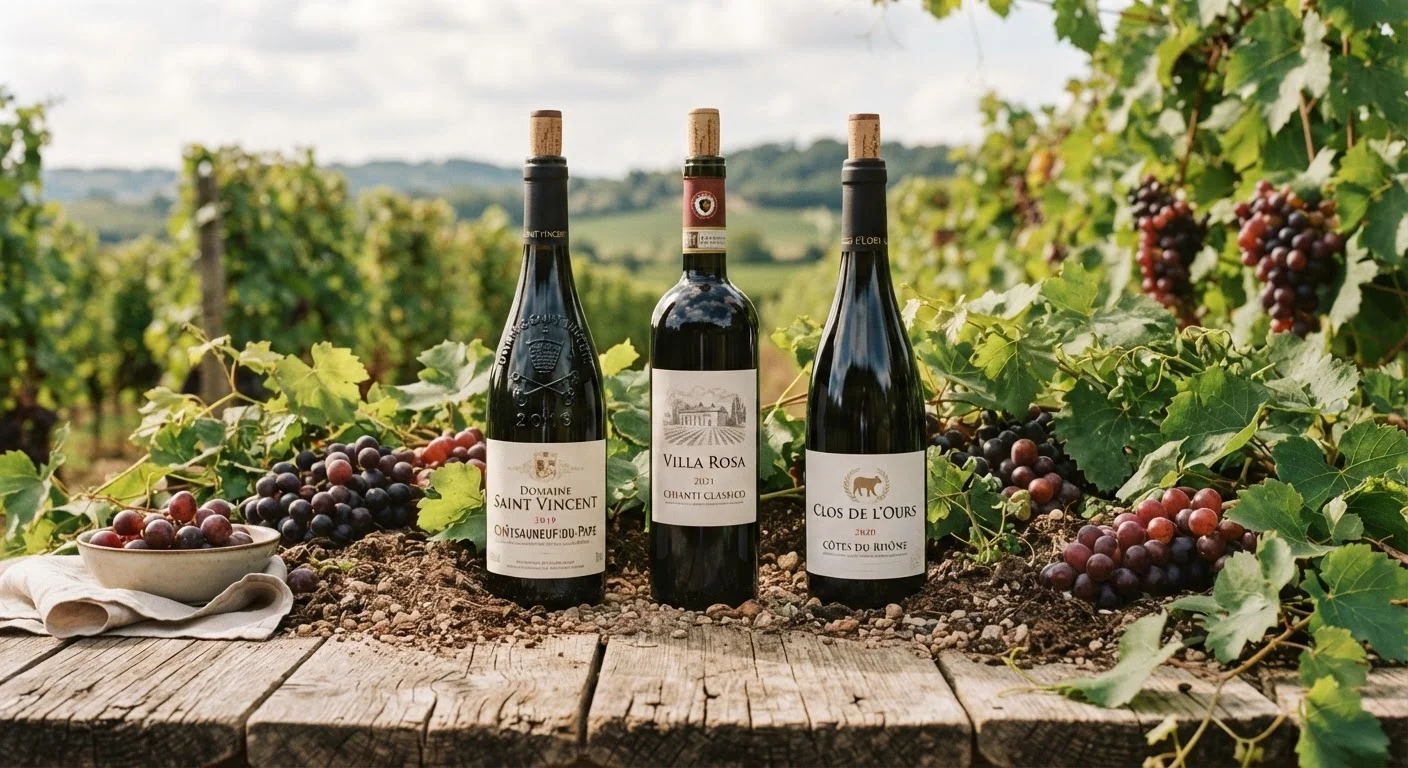
Photo credit: InfoHorizon.net | Access To Informative Content
In this article
These three wine categories are often used interchangeably, but they mean different things. Here's a clear breakdown of how each is defined.
Why These Three Terms Get Confused
Walk into any wine shop and you'll see bottles labeled organic, biodynamic, or natural sitting side by side, sometimes with overlapping imagery of farms and vines. Shoppers often treat these as synonyms for "cleaner" or "more sustainable" wine — but each term describes a genuinely different set of practices, and only some of them carry enforceable legal definitions.
Understanding what each label actually certifies (or doesn't) helps you buy with clearer intentions, whether you care about farming practices, additives, or simply what's in your glass. Just as ingredient list terms follow specific rules, wine label language has its own logic — once you know it, the distinctions become easy to spot.
| Legal definition exists | Organic: Yes (USDA NOP) | Biodynamic: Yes (Demeter) | Natural: No |
| Synthetic pesticides allowed | None for all three categories |
| Added sulfites allowed | Organic (certified): No | Biodynamic: Varies by producer | Natural: Minimal to none (self-regulated) |
| Third-party certification required | Organic: Yes | Biodynamic: Yes (Demeter) | Natural: No |
| Governing body (U.S.) | USDA NOP (organic); Demeter International (biodynamic); none (natural) |
| Key farming requirement | Organic: No synthetics | Biodynamic: No synthetics + holistic farm system | Natural: Typically no synthetics (uncertified) |
Organic Wine: The Most Regulated Category
Organic wine is the most legally defined of the three. In the United States, it's regulated by the USDA National Organic Program (NOP). To carry an organic label, both the farming and the winemaking must meet specific standards.
What organic farming requires
- No synthetic pesticides, herbicides, or fertilizers in the vineyard
- No genetically modified organisms (GMOs)
- Certified organic status for at least three years before grapes can qualify
Two different labels to know
The U.S. distinguishes between wine made from organic grapes and wine that is fully certified organic. The key difference: fully certified organic wine cannot have added sulfites (beyond trace amounts that naturally occur during fermentation). Wine made from organic grapes may still contain added sulfites up to a legal limit. This distinction explains why many winemakers who farm organically don't seek the full certified organic designation — sulfites are widely used as preservatives, and removing them affects shelf life.
Sulfites
Sulfur dioxide compounds that occur naturally during wine fermentation and are often added as preservatives. They help prevent oxidation and microbial spoilage. Some people are sensitive to added sulfites, though sulfite sensitivity is distinct from a general wine intolerance.
Native yeast fermentation
Fermentation driven by wild yeast naturally present on grape skins and in the winery environment, rather than commercially cultured yeast strains. It produces more variable and sometimes more complex flavors, but carries a higher risk of fermentation problems.
Demeter certification
An international certification body that verifies biodynamic farming and production standards. It is more stringent than most organic certifications and requires whole-farm management, not just the crop being sold.
Fining agents
Substances added to wine after fermentation to clarify it by binding with particles and causing them to settle out. Common agents include egg whites, bentonite clay, and casein. Natural wines typically avoid these.
USDA National Organic Program (NOP)
The federal regulatory framework in the United States that sets and enforces organic standards for agricultural products, including wine. Certification requires third-party verification against NOP standards.
Biodynamic Wine: Organic Plus a Holistic Philosophy
Biodynamic farming starts where organic farming does — no synthetic inputs — and adds a broader ecological philosophy. Developed in the 1920s by philosopher Rudolf Steiner, biodynamics treats the farm as a self-sustaining organism, using specific plant- and mineral-based preparations to build soil health and timing key vineyard tasks around lunar and astronomical calendars.
The most recognized certification is Demeter, an international body with standards that go well beyond organic requirements. Biodynamic vineyards must maintain biodiversity (cover crops, animals, composting), use only approved preparations, and farm the entire property — not just the grapes — biodynamically.
It's worth noting that the lunar calendar component is not supported by scientific evidence in the same way soil-health practices are. However, many biodynamic producers report healthier vine ecosystems over time, which researchers attribute to the rigorous organic practices the system requires. Biodynamic wine can still contain added sulfites, depending on the producer and market.
3 years
Transition time to earn USDA Organic certification
Vineyards must farm without prohibited substances for at least three years before their grapes can be sold as certified organic under USDA NOP rules.
10 ppm
Sulfite threshold requiring label disclosure in the U.S.
U.S. federal law (TTB regulations) requires any wine containing more than 10 parts per million of sulfites to display 'Contains Sulfites' on the label.
1924
Year biodynamic farming principles were introduced
Rudolf Steiner presented his agricultural lectures — the foundation of biodynamic farming — in 1924, making it one of the earliest formal organic farming systems.
Natural Wine: A Philosophy, Not a Certification
Natural wine is the loosest of the three categories. There is currently no legal definition or governing certification for the term in the United States or most other markets. Natural winemakers generally follow these principles:
- Grapes grown without synthetic chemicals (often organic or biodynamic, though not always certified)
- Hand harvesting
- Native or ambient yeast fermentation — no commercial yeast strains added
- Minimal or no additions in the cellar (no added sugars, acids, enzymes, or fining agents)
- Little to no added sulfites; some producers use none at all
Because there's no certifying body, "natural" is largely self-declared. Two bottles both labeled natural could be made very differently. This doesn't mean the wines are lower quality — many respected winemakers work within this philosophy — but it does mean the label alone tells you less than the organic or biodynamic designations do.
Natural wines often have a cloudy appearance and a funkier, more unpredictable flavor profile due to less intervention. If you're curious about how other beverage labels can similarly mislead, see our guide on what distinguishes sparkling water types.
How to Read the Label at the Store
Here's a quick decision framework when you pick up a bottle:
- Look for a certification seal — USDA Organic or Demeter Biodynamic seals mean the claims have been verified by a third party. No seal on a "natural" wine means you're taking the producer's word for it.
- Check the sulfite statement — U.S. law requires wines containing more than 10 parts per million of sulfites to state "Contains Sulfites." Fully certified organic wine won't carry this statement for added sulfites.
- Read the back label — Many producers who use organic or biodynamic practices but haven't pursued certification will note this on the back label. This is common and legitimate; certification is expensive and not every small producer pursues it.
Understanding what a label does and doesn't guarantee is a skill that applies across the food world. Learning what a nutrition label is actually telling you builds the same kind of critical-reading muscle for packaged foods.
Overlap Is Common — and That's Fine
Many wines fit more than one category. A producer might farm biodynamically, use natural winemaking techniques in the cellar, and still hold a USDA Organic certification. Conversely, a self-described natural wine might come from a vineyard that uses some conventional farming inputs. The labels describe different aspects of grape growing and winemaking, not a single hierarchy from least to most "pure." When in doubt, the producer's own documentation or website usually offers more detail than the front label alone.

Author
Food Editorial Team
Food Editorial Team is the collective byline for our editorial team and contributor network. Articles published under this byline or an editorial pen name are researched, written, and reviewed according to our editorial standards for clarity, consistency, and independence before publication.
View all articles →