
Why Your Pan Sauce Keeps Breaking — and What to Do About It
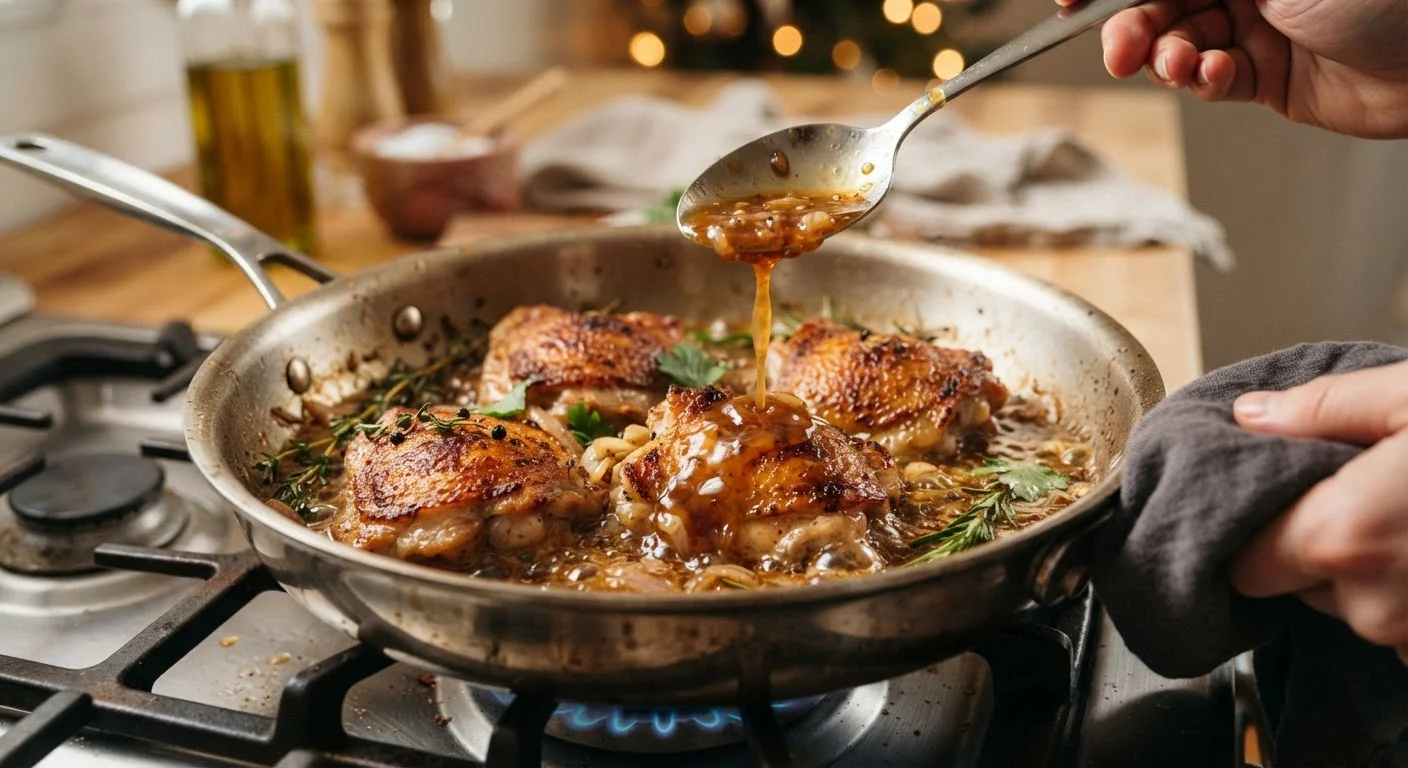
Photo credit: InfoHorizon.net | Access To Informative Content
In this article
Understand why pan sauces separate, the science behind emulsification, and the simple fixes that keep your sauce silky every time.
Key Takeaways
- Pan sauces break when fat and liquid fail to form a stable emulsion due to heat or technique errors.
- Adding butter off heat or in small increments is the single most effective way to prevent breaking.
- A broken sauce can almost always be rescued by starting with a small amount and whisking it back together.
- Reducing your liquid before finishing with fat gives you a more stable, concentrated base.
What a Pan Sauce Actually Is — and Why It Breaks
A pan sauce is built from the browned bits (called fond) left in the pan after searing meat or vegetables, combined with a liquid like stock or wine, then finished with butter or cream to add body and gloss. The end result depends on emulsification — a process where fat droplets are suspended evenly throughout a water-based liquid, creating that silky, cohesive texture you're after.
When a sauce breaks, those fat droplets separate out, leaving you with a greasy, watery mess in the pan. This happens because emulsions are inherently fragile. They require the right temperature, the right motion, and a little patience. Understanding those three variables is how you go from frustrating, broken puddles to a sauce that drapes beautifully over everything on the plate.
Adding butter to a pan that is still over high heat.
Why it happens: Cooks are often rushing and don't want to lose momentum once the liquid has reduced. High heat feels like progress.
Adding all the butter at once instead of incrementally.
Why it happens: The recipe says "2 tablespoons of butter" and it's tempting to just drop it all in together to save time.
Skipping the reduction step and finishing with fat too early.
Why it happens: Cooks mistake a thin, pale liquid for a sauce base that's ready. It isn't — watery liquid can't hold an emulsion well.
Using cold stock straight from the refrigerator to deglaze, then rushing to the butter.
Why it happens: Temperature management during sauce-making is rarely discussed, so cooks don't connect cold stock with longer reduction times.
Walking away from the pan during the finishing stage.
Why it happens: Sauce-making looks like a low-attention task once the main protein is off the heat. In reality, the finish is the most active phase.
How to Rescue a Sauce That Has Already Broken
If you catch the break early — fat pooling on the surface, sauce looking greasy — you can often pull it back. Remove the pan from the heat immediately. Let it cool for about 30 seconds, then add a small splash of cold stock or water and whisk vigorously. The fresh liquid and reduced temperature give the emulsion a new chance to form.
If the sauce has fully separated, try this: pour it into a bowl and set aside. Add a tablespoon of fresh cold stock to the pan, then slowly whisk the broken sauce back in, a tablespoon at a time, just as you would when making a vinaigrette. You're essentially re-emulsifying from scratch. It takes an extra three minutes but saves the dish.
Don't Add More Butter to Fix a Broken Sauce
When a sauce breaks, instinct says to add more fat to smooth it out — but that makes things worse. More butter without a stable liquid base just adds more separated fat to the pan. Cool the sauce first, add a small amount of fresh liquid, and re-emulsify from there.
For everyday cooking that sidesteps last-minute sauce stress entirely, sheet pan dinners offer built-in flavor without the delicate finishing step — a useful technique to have alongside your skillet skills.
Building Better Sauces from the Start
The foundation of a reliable pan sauce is a well-reduced liquid base. After searing, pour off excess fat, then deglaze with wine or stock and let it reduce by about half before you add any butter. This concentration step thickens the liquid and makes it a more hospitable environment for the fat you're about to incorporate.
50%
Liquid reduction before adding butter
Most classical French sauce techniques call for reducing the deglazing liquid by at least half to build a stable, concentrated base before finishing with fat.
~160°F
Safe butter incorporation temperature
Butter emulsifies most reliably between 130–160°F; above 180°F the milk solids separate and the emulsion breaks quickly.
When you do add butter, cut it into small pieces and whisk them in one at a time with the pan off direct heat or held over the lowest flame. This technique — called monter au beurre in French kitchens — is the professional standard for a reason. Each small piece of butter is fully incorporated before the next goes in, preventing any one addition from overwhelming the emulsion.
If you enjoy tackling kitchen fundamentals like this, the same patience and ratio-awareness behind a good sauce applies to other from-scratch techniques. Our guide to homemade pasta walks through a similar mindset: understanding the why behind each step leads to far more consistent results than following steps blindly.

Author
Food Editorial Team
Food Editorial Team is the collective byline for our editorial team and contributor network. Articles published under this byline or an editorial pen name are researched, written, and reviewed according to our editorial standards for clarity, consistency, and independence before publication.
View all articles →