
Synthetic vs. Conventional Motor Oil: What Everyday Drivers Need to Know
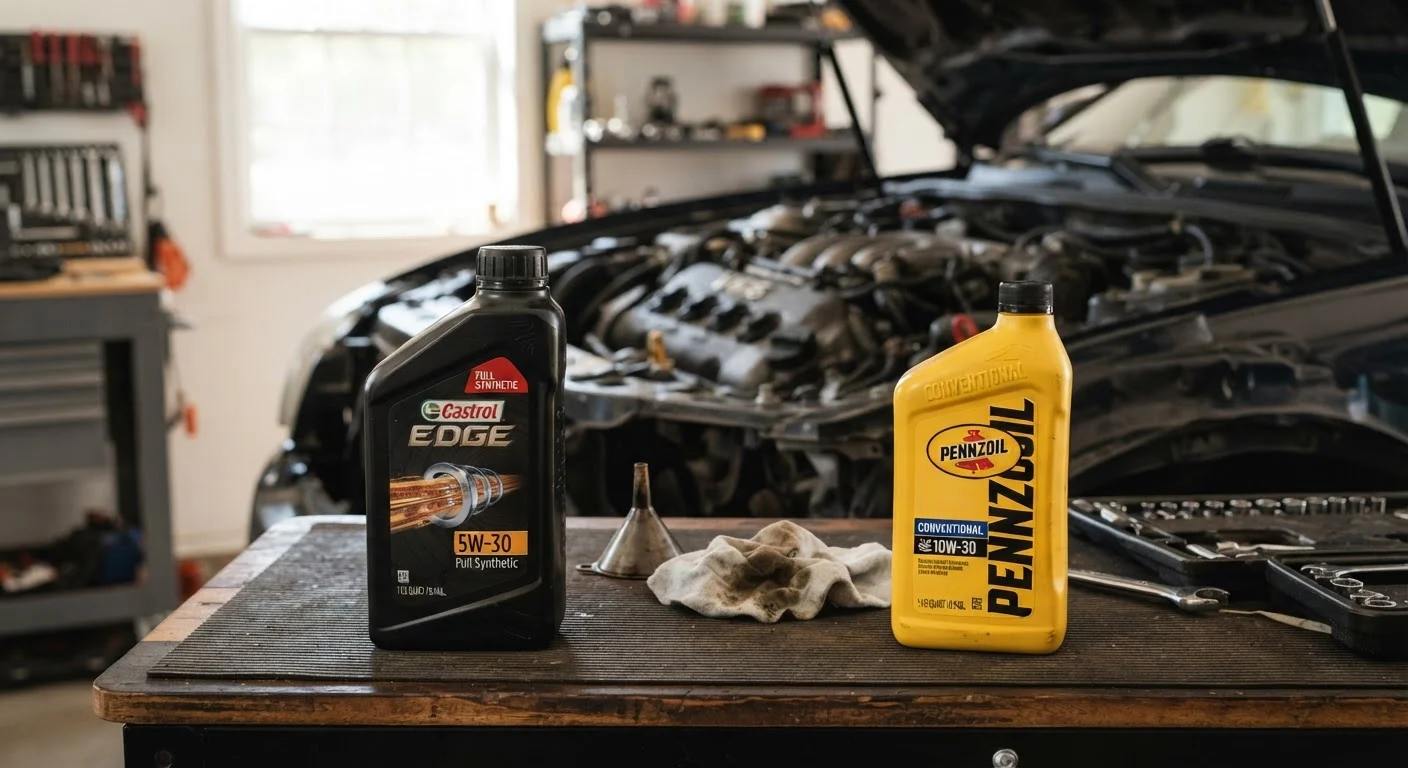
Photo credit: InfoHorizon.net | Access To Informative Content
In this article
A side-by-side look at synthetic and conventional motor oil—what sets them apart and how to choose the right type for your car.
Key Takeaways
- Synthetic oil is chemically engineered for superior performance, while conventional oil is refined directly from crude petroleum.
- Synthetic oil generally lasts longer between changes, often 7,500 to 10,000+ miles versus 3,000 to 5,000 for conventional.
- Your owner's manual - not marketing - should determine which oil type your vehicle actually requires.
- Switching from conventional to synthetic is generally safe, but consult your manual or a mechanic for older high-mileage engines.
- Synthetic oil costs more per quart but may offset costs through fewer annual oil changes.
What Actually Separates These Two Oil Types
At their core, both synthetic and conventional motor oil do the same job: lubricate your engine's moving parts, reduce friction, carry away heat, and keep internal components clean. The fundamental difference is in how each is made.
Conventional motor oil is refined from crude petroleum. It contains a mix of hydrocarbon molecules that, while effective, vary in size and shape. That variability can affect how consistently the oil performs under stress.
Synthetic motor oil is chemically engineered - either built molecule by molecule from chemical compounds (full synthetic) or created by heavily processing conventional base oil (synthetic blend). The result is a more uniform molecular structure that tends to perform more predictably across a wider range of temperatures and conditions.
A third category worth knowing: synthetic-blend oil mixes synthetic and conventional base stocks. It offers some benefits of full synthetic at a lower cost, making it a middle-ground option some drivers and manufacturers recommend.
| Criterion | Synthetic Motor Oil | Conventional Motor Oil |
|---|---|---|
| Source | Chemically engineered base stocks | Refined crude petroleum |
| Typical change interval | 7,500-10,000+ miles | 3,000-5,000 miles |
| Cold-weather performance | Flows faster at low temperatures | Can thicken in extreme cold |
| Heat resistance | Higher resistance to breakdown | More prone to oxidation under heat |
| Cost per quart | Higher (roughly 2-4× more) | Lower upfront cost |
| Best engine fit | Modern, turbocharged, high-performance | Older, simpler engine designs |
| Manufacturer requirement | Required by many newer vehicles | Acceptable for many older models |
Performance Differences That Actually Matter
For most everyday driving, both oil types protect your engine adequately - provided you use the correct viscosity grade and change the oil on schedule. But in specific conditions, the differences become meaningful.
Temperature extremes: Synthetic oil flows more readily in cold weather, which means faster lubrication when you first start the engine on a frigid morning. In high heat, synthetic is more resistant to oxidation and breakdown. Conventional oil can thicken in cold and thin out under sustained heat more quickly.
Engine cleanliness: Synthetic formulations typically carry deposits and contaminants more effectively to the filter, keeping internal surfaces cleaner over time. This matters most for turbocharged engines, where oil passages are narrow and heat is intense.
Change intervals: Conventional oil is generally recommended at intervals of 3,000 to 5,000 miles, while full synthetic often supports 7,500 to 10,000 miles or more. Always defer to your owner's manual - these are general ranges, not universal rules. For a full breakdown of what service intervals mean for your specific vehicle, see Your Car's Maintenance Schedule, Explained.
7,500-10,000+
Miles between synthetic oil changes
Most full-synthetic formulations support extended drain intervals compared to conventional oil's typical 3,000-5,000 mile recommendation, though manufacturer guidelines take precedence.
2-4×
Price premium for synthetic per quart
Synthetic oil costs significantly more per quart upfront, but the longer service interval can reduce the total number of annual oil changes required.
75,000 mi
Threshold for high-mileage oil consideration
Vehicles with over 75,000 miles may benefit from high-mileage oil formulations, which include additives designed to condition aging engine seals and gaskets.
Cost, Compatibility, and What Your Manual Actually Says
Synthetic oil typically costs two to four times more per quart than conventional. However, because synthetic lasts longer between changes, the annual cost difference is often smaller than it first appears - and may be negligible or even favorable depending on your driving habits.
Compatibility is a common concern, especially for drivers considering switching from conventional to synthetic mid-vehicle-life. For most modern engines, the switch is straightforward and safe. For older engines with significant wear or gasket deterioration, some mechanics recommend using a high-mileage oil formulation - a category designed specifically for vehicles with over 75,000 miles that may have seals and gaskets that benefit from conditioning additives.
The single most important guidance: check your owner's manual. It will specify required viscosity grades (such as 5W-30 or 0W-20) and whether synthetic is required, recommended, or optional. Using an oil that doesn't meet your manufacturer's specifications - regardless of type - is a more significant risk than the synthetic vs. conventional debate itself.
New drivers building maintenance habits should understand oil type as just one part of a broader upkeep picture. Car Maintenance for New Drivers: Building Good Habits From Day One covers oil changes alongside the other routine tasks that keep a vehicle running reliably.
A Common Myth Worth Addressing
Many drivers still believe you must change conventional oil every 3,000 miles - a rule of thumb that originated decades ago and no longer reflects current engine and oil technology. Most modern vehicles and oil formulations support longer intervals. Car Maintenance Myths That Are Costing Drivers Money unpacks this and other outdated assumptions that can lead to unnecessary expense. Your owner's manual remains the authoritative source for your specific vehicle.

Author
Cars Editorial Team
Cars Editorial Team is the collective byline for our editorial team and contributor network. Articles published under this byline or an editorial pen name are researched, written, and reviewed according to our editorial standards for clarity, consistency, and independence before publication.
View all articles →